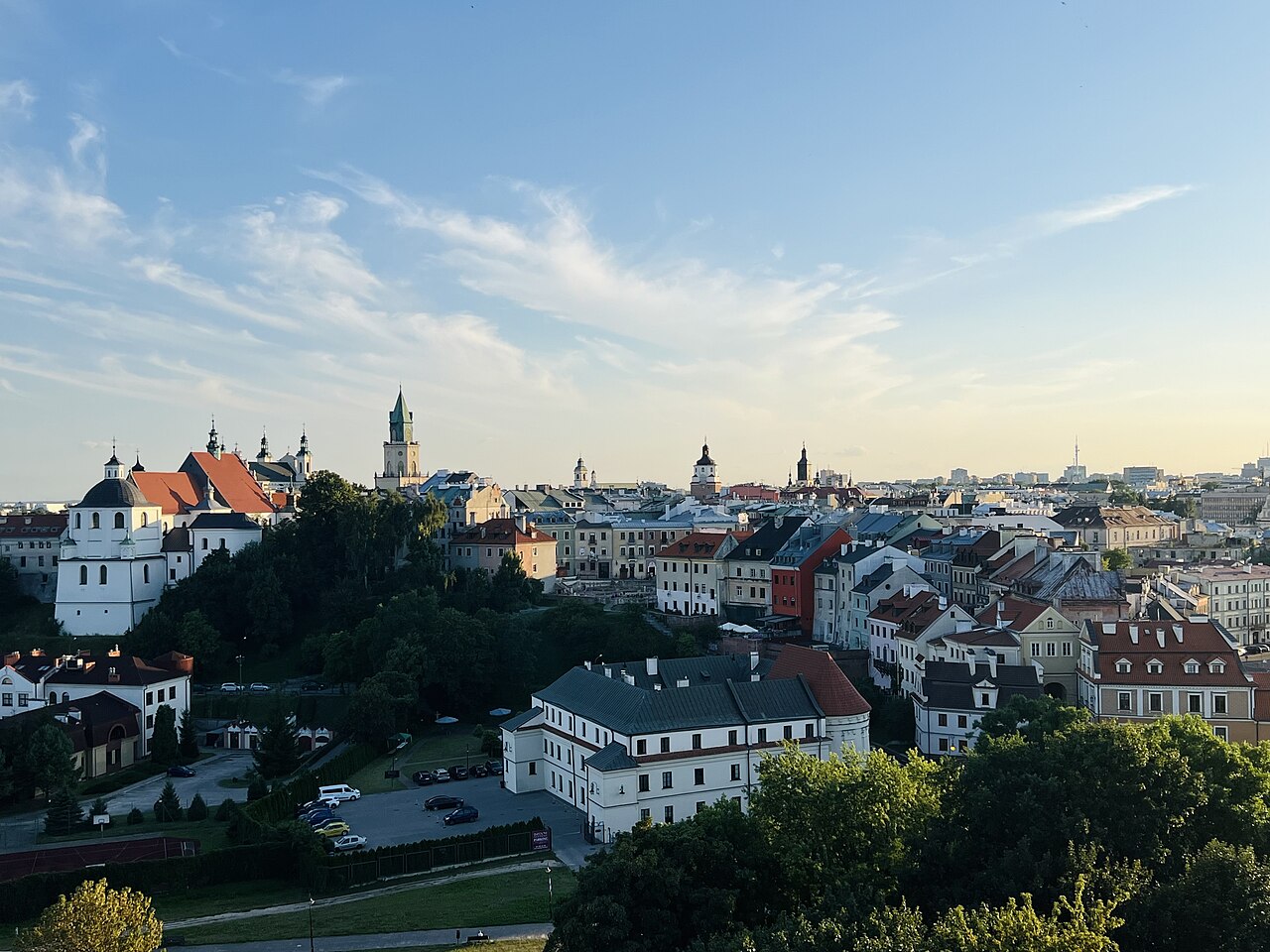
Lublin is the largest city in eastern Poland, a university town with a substantial medieval old town and a history shaped by its position on the border between Catholic and Orthodox, Polish and Ukrainian, Christian and Jewish worlds. Before the Second World War, over a third of Lublin's population was Jewish; the Nazi occupation annihilated that community and established the Majdanek extermination camp on the city's outskirts, which can still be visited as a memorial.
The old town sits on a hill above the Bystrzyca river, with a restored castle, a medieval gate tower, and a warren of streets lined with Renaissance and Baroque townhouses. The Lublin Union of 1569, which formally united Poland and Lithuania, was signed here. The city has a lively student population — the Catholic University of Lublin is one of the few Catholic universities in the world that operated throughout the communist period — and a good cafe scene in the pedestrian streets of the old town.