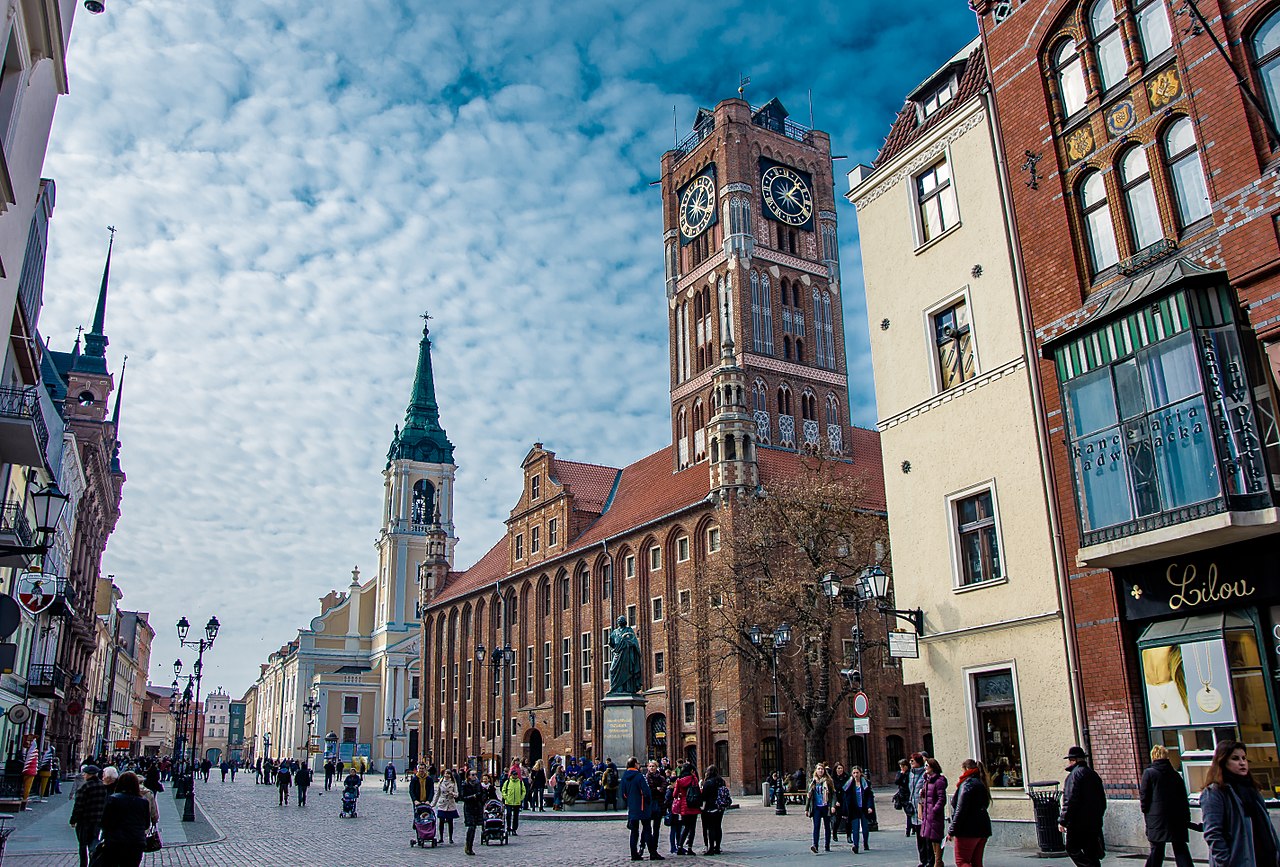
Toruń is one of the best-preserved medieval cities in Poland, a UNESCO World Heritage Site sitting on the Vistula River. It escaped the destruction of the Second World War almost entirely and its Gothic old town remains largely intact — red-brick churches, a ruined Teutonic Knights castle, and a market square lined with merchant houses. It is also the birthplace of Nicolaus Copernicus, and the Copernicus House on Kopernika Street is one of the few original medieval merchant houses still standing.
The gingerbread (pierniki) here is famous across Poland and has been made in Toruń since the Middle Ages. The Living Museum of Gingerbread runs hands-on baking sessions in costume. The Toruń Cathedral holds the baptismal font where Copernicus was christened and the Tuba Dei — the largest medieval bell in Poland. The quirky Leaning Tower near the city walls is worth a short detour. The city is quieter and less touristed than Kraków or Warsaw, which makes it a pleasant stop.
Getting there is straightforward: Toruń has regular train connections to Warsaw (about 2.5 hours) and Gdańsk (about 2 hours).