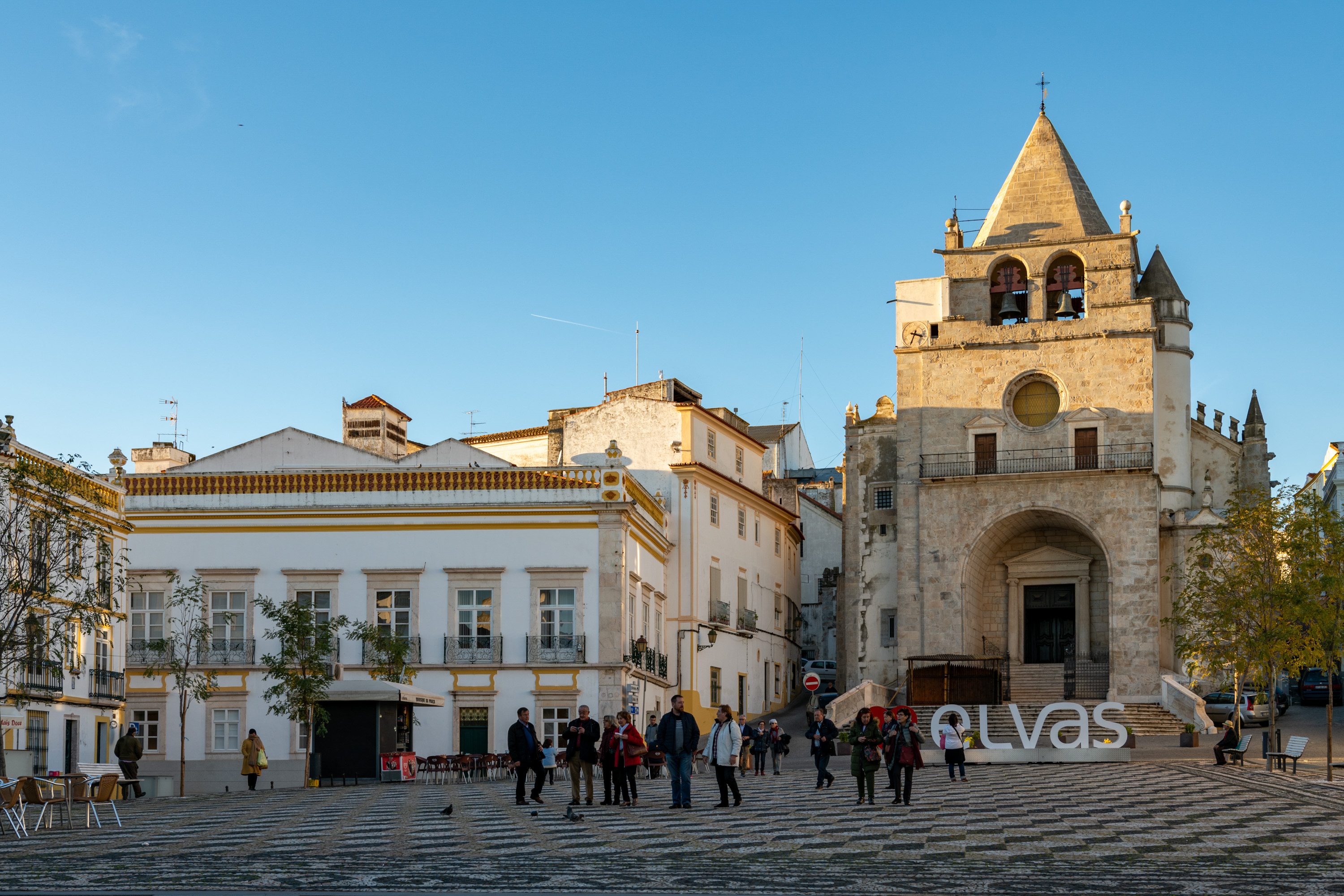
Elvas is a fortified frontier town in the Alentejo region of eastern Portugal, a few kilometres from the Spanish border at Badajoz. Its star-shaped walls, dry moat, and aqueduct form the largest set of bulwark fortifications in the world — the Garrison Border Town of Elvas and its Fortifications is a UNESCO World Heritage Site. The seventeenth-century Amoreira Aqueduct, which supplied the city during sieges, still stands intact. The medieval Castle of Elvas and the Our Lady of the Assumption Cathedral anchor the old town, and the outlying Forte da Graça and Fort Santa Luzia complete the defensive ring. Despite its historic importance, Elvas remains a quiet town with few tourists, making it an easy and rewarding day trip from Évora or Badajoz.
Elvas
Alentejo frontier town by Spain, enclosed by star-shaped fortifications, dry moats, and the Amoreira Aqueduct.
Eating Out
Elvas is Alentejo: heavy bread soups, slow-cooked black pork, lamb stews, and a strong tradition of conventual sweets. Adega Regional on Rua João Casqueiro is the long-running local choice for migas and carne de porco à alentejana. Coelho does an excellent grilled meats menu with a serious local wine list. For coffee and the city's famous sericaia with plums, try the cafés on Praça da República. The local speciality to look for in any shop window is ameixas de Elvas — sugared yellow plums, geographically protected and unique to the area.
Getting There
Elvas is on the A6 motorway, about 200 km east of Lisbon (a 2-hour drive) and 15 km from the Spanish border at Badajoz. The Badajoz airport is the closest, with limited connections; most visitors arrive by car from Lisbon or as a side trip from Évora.
There is a regional bus service to Lisbon and a connection to the railway at Elvas station, but timetables are sparse — a car is more or less essential if you want to see the satellite forts and combine Elvas with other Alentejo towns. Parking is straightforward inside and immediately outside the walls.
Things to Do
Elvas is a working frontier fortress town, and almost everything to see relates in some way to its military past. The UNESCO-listed bulwark fortifications can be walked end to end in a morning; the cathedral, the castle and the aqueduct round out a full day. The pace is slow and the town is barely touristed even in summer.
-
01
The FortificationsThe Garrison Border Town of Elvas and its Fortifications was inscribed on the UNESCO World Heritage list in 2012 as the largest bulwark fortification …Sight
-
02
Forte da GraçaThe Forte da Graça crowns a hill about a kilometre north of Elvas, designed in the 1760s as the outer keystone of the Elvas …Sight
-
03
Amoreira AqueductThe Amoreira Aqueduct is the most photographed structure in Elvas and probably the most extraordinary thing in the Alentejo. Nearly seven kilometres long, with …Sight
-
04
Fort Santa LuziaFort Santa Luzia is the southern counterpart to the Forte da Graça, built in the seventeenth century to cover the approaches from the Spanish …Sight
-
05
Our Lady of the Assumption CathedralThe cathedral dominates the Praça da República, the long sloping main square of the old town. It was begun in 1517 to a Manueline …Sight
-
06
Castle of ElvasThe castle is the oldest defensive structure in Elvas, built on Moorish foundations after the town was retaken in 1230 and substantially rebuilt by …Sight
-
07
British CemeteryTucked just outside the old town walls is one of the oldest British military cemeteries still in existence. It was established in 1811 during …Sight