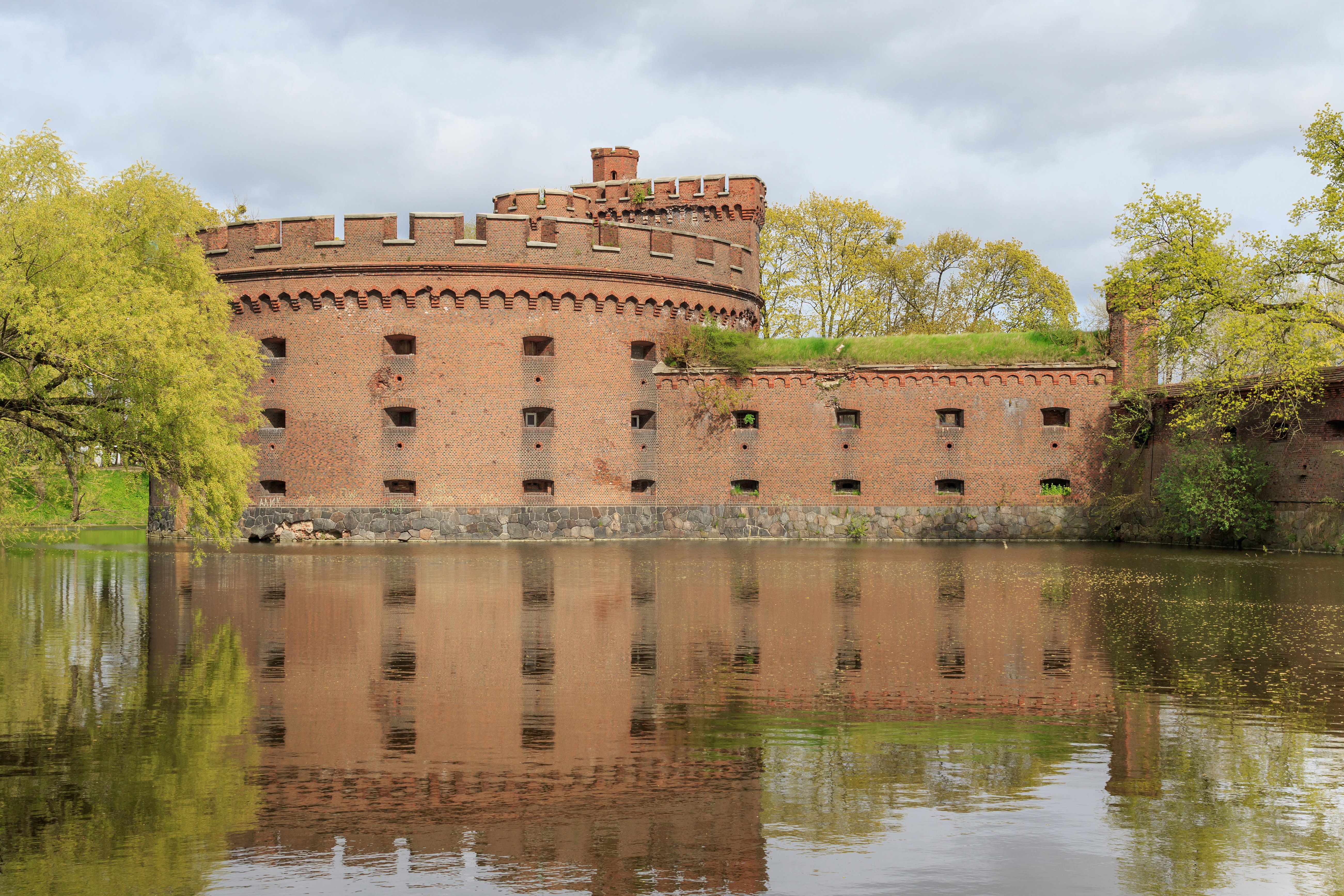
Kaliningrad is one of the most geographically peculiar cities in the world: a Russian city on the Baltic Sea with no land connection to Russia itself. It is an exclave, surrounded by Poland to the south and Lithuania to the north, and this strangeness is stamped on everything here — in the German brick Gothic architecture that survived the Second World War, in the street names that replaced Prussian originals, in the amber markets selling the fossilised resin that washes up on local beaches in quantities found nowhere else in Europe.
This was once Königsberg, capital of the Duchy of Prussia and later of East Prussia, a city of Hanseatic wealth and intellectual distinction. The philosopher Immanuel Kant spent his entire life here and is buried beside the Königsberg Cathedral, one of the great Gothic brick buildings of northern Europe. The city was largely destroyed in the Allied bombing campaign of 1944 and the subsequent Soviet assault of 1945, and the old German city centre was mostly erased. In its place rose Soviet housing, and at the centre of what was once the royal castle, an enormous unfinished concrete building known locally as the Monster (officially the House of Soviets) sat abandoned for decades before finally being demolished.
What remains is a genuinely interesting city — more German in its bones than almost anywhere else in Russia, livelier and more prosperous than comparable Russian cities, and with a tourist offer built around amber, Gothic fortifications, and the peculiarity of its own existence. The Amber Museum is one of the finest in the world. The ring of 19th-century forts that once protected the city is extraordinary: over a dozen heavy brick structures still stand in the surrounding forests, many open to visitors. The Museum of the World Ocean has a collection of historic vessels moored on the Pregel River.
Kaliningrad requires a Russian visa for most Western nationalities, and the enclave's access from the EU is subject to restrictions that change periodically. Check current requirements before planning a visit.