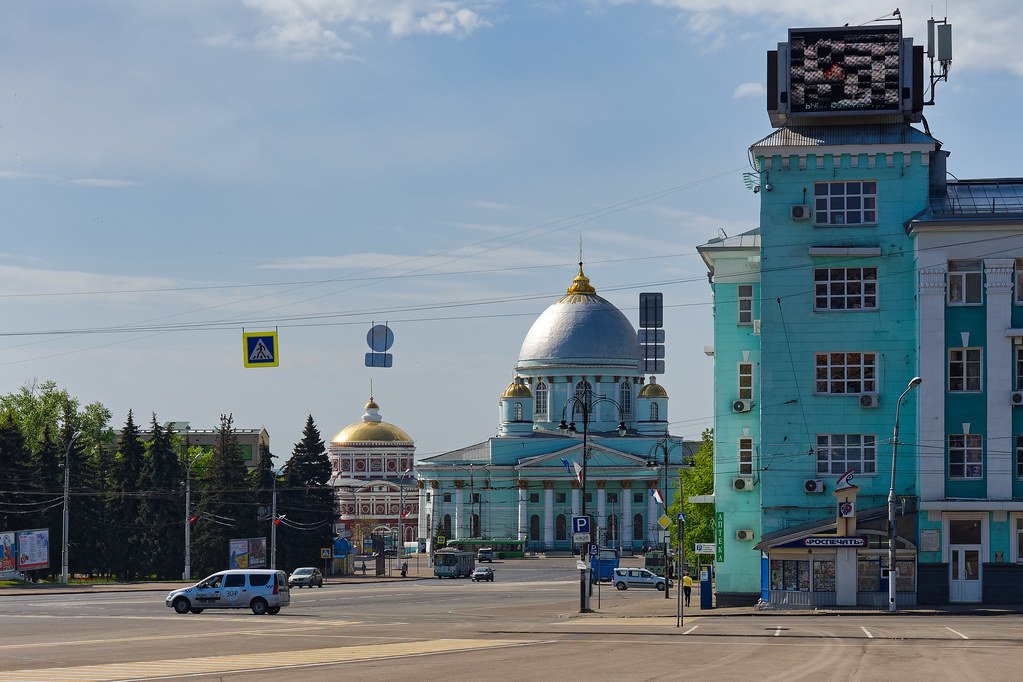
Western Russian city on the Seym River, associated with the huge 1943 tank battle nearby.
Kursk is a regional city in southwestern Russia, about 500 km south of Moscow, sitting on the Tuskar and Kur rivers. It's a mid-sized industrial and administrative centre, not much visited by foreign tourists, but historically significant as the site of one of World War II's decisive battles.
The Battle of Kursk in July–August 1943 was the largest tank battle in history, and the city takes this history seriously. The Kursk Military History Museum and a number of war memorials commemorate the campaign, and the Prokhorovka battlefield — about 80 km north near Belgorod — has a major memorial complex at the site of the armoured clash that turned the tide of the battle.
The city itself has a pleasant park along the river, the Znamensky Cathedral on the historic central square, and a surprising Roman Catholic church in the Gothic-revival style. It functions mainly as a gateway for those following the Eastern Front heritage trail through this part of Russia.
Guide
Day Trips
The main reason to travel beyond Kursk is Prokhorovka, the site of the decisive tank engagement of the 1943 battle. The Prokhorovka memorial complex — about 80 km north near Belgorod — is more evocative than anything in the city itself, set on the actual steppe where the battle was fought. Allow half a day and consider combining it with Belgorod, which has its own WWII museum and a city centre worth a short walk.
The Korennaya Pustin Monastery, about 30 km south of Kursk in the village of Svoboda, is the original home of the Kursk Root Icon. The pilgrimage site has been active since the fourteenth century and includes sacred springs; the setting in a ravine by the Tuskar River is genuinely peaceful.
Guide
Getting There
Kursk is well connected by rail. Express trains from Moscow's Kursky Station — the terminus named for this city — take around five hours; slower services run overnight. There are also rail connections south toward Kharkov (though as of 2024 this route is suspended due to the ongoing conflict in Ukraine) and west.
By road, Kursk sits on the M2 highway linking Moscow to the south, a drive of about six hours from the capital. The city has a small airport with domestic connections to Moscow; international access is effectively via Moscow.