Zufre
©
Zufre

Zufre

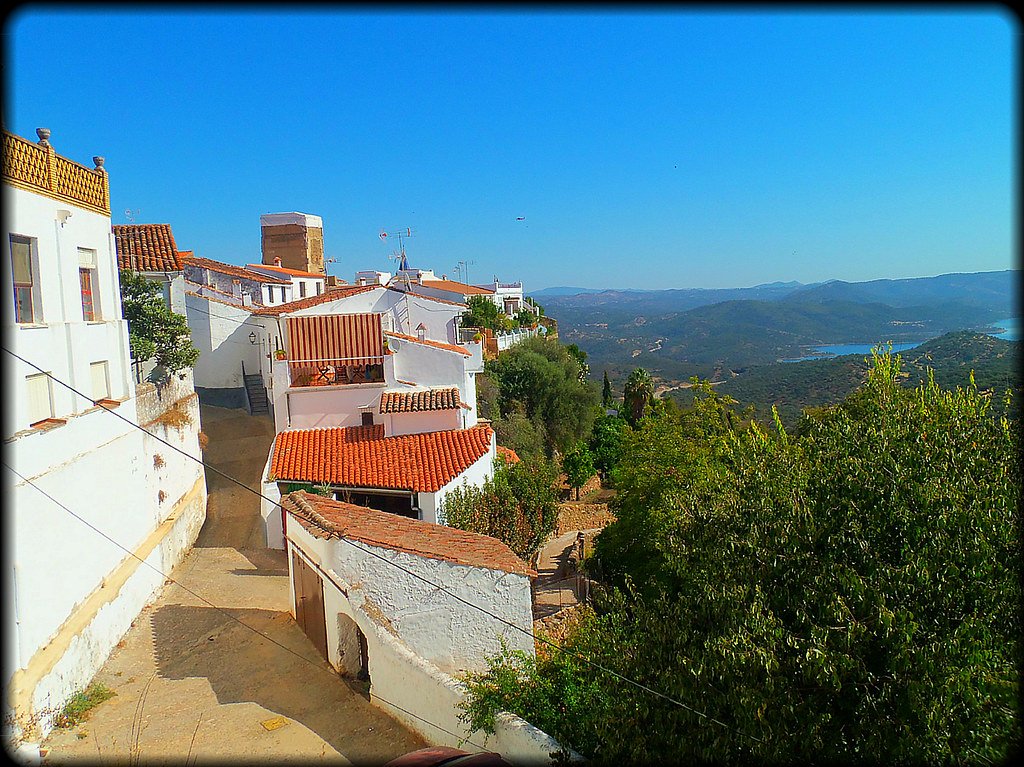
Whitewashed Sierra de Huelva village perched above a gorge, with cliff-edge views from El Paseo.

Zufre is a small white village in the Sierra de Huelva, clinging to the edge of a gorge above the Rivera de Huelva river. Unlike the famous white towns of Cadiz province, Zufre has not been polished for tourists — there are no souvenir shops, no tour buses, and the village feels genuinely lived-in rather than preserved. The streets are steep, narrow, and quiet, and the houses are whitewashed in the traditional Andalusian style.

The most striking feature is El Paseo, a walkway along the cliff edge with views down into the gorge and across the surrounding sierra. The parish church, dating from the 16th century, is worth a look for its Mudejar tower. Zufre also has a remarkably well-preserved Arab wall and gateway, a reminder of the town's Moorish past.

The Sierra de Huelva around Zufre is prime Iberian pig country — the dehesas of cork and holm oak that surround the village produce some of the best jamón ibérico in Spain. The area suffers from depopulation and unemployment, which keeps it authentic but also means facilities are limited. There is a bar or two on the main square, but do not come expecting much in the way of restaurants or services. Zufre is best visited as a day trip from Aracena or Seville.

Guide

Bars and Cafes

Zufre's bar life is simple and local. There is one main bar on the plaza and possibly a second smaller one depending on the season — both cater almost entirely to village residents rather than visitors. Sit outside in the morning with a coffee, or return in the early evening when the locals gather for a drink before dinner. Nobody will rush you and the atmosphere is entirely unpretentious.

Guide

Day Trips

Zufre is itself most naturally visited as a day trip from Aracena, but the surrounding Sierra de Huelva contains several other villages worth combining into a longer circuit.

Aracena (18 km north) is the capital of the sierra and the obvious base for the area. Its main attraction is the Gruta de las Maravillas, a large show cave system beneath the town's ruined Templar castle. The cave is genuinely impressive — one of the finest in Spain — and busy enough to require advance booking in summer. The town also has good restaurants where you can eat the jamón ibérico that this corner of Andalucía produces.

Cortegana (35 km west) has a well-preserved medieval castle visible from the road below the village. The castle is open to visitors and gives good views over the surrounding sierra. Cortegana is a slightly larger town than Zufre and has more facilities.

Almonaster la Real (40 km west) has an unusual Moorish mosque converted into a Christian hermitage on a hilltop above the village — the mosque is one of the best-preserved in rural Andalucía, with its original mihrab and minaret still standing. The village itself is picturesque and the surrounding countryside quiet.

The Embalse de Zufre is a large reservoir a few kilometres south of the village, formed by damming the Rivera de Huelva. The reservoir supplies water to Seville and the surrounding area. The road along the western shore gives good views and the area is popular with local fishermen.

Guide

Eating Out

Zufre has very limited eating options — this is a village of around 600 people with no tourist trade to sustain a restaurant scene. The one reliable option is the bar on the main square, which serves simple tapas and sometimes a menu del día at lunchtime. Come with low expectations and you will not be disappointed; the jamón ibérico you may encounter, sourced from the surrounding dehesas, is genuinely excellent.

If you want a proper meal, plan ahead and either bring food for a picnic by El Paseo or make the drive to Aracena, 18 kilometres away, which has several good restaurants.

Guide

Getting Around

Zufre is small enough to walk entirely in an hour. The main sights — El Paseo, the parish church, and the Arab walls — are all within a few minutes of each other. The streets are steep and cobbled in places; comfortable shoes are worth wearing.

To explore the surrounding dehesa and sierra on foot, you will need a map. The tracks are not signed and GPS coverage can be patchy. The 1:25,000 IGN topographic maps covering the area are the most reliable navigation aid. The descent path to the river gorge begins near the far end of El Paseo and is steep but clearly used.

There is no taxi service in Zufre. If you are staying in Aracena and visiting by car, park at the village entrance and walk — trying to navigate the village streets by car is more trouble than it is worth.

Guide

Getting There

Zufre is in the Sierra de Huelva, roughly 18 kilometres south of Aracena and about 90 kilometres northeast of Huelva city. There is no public transport to the village — a car is essential.

From Seville: Take the A-66 motorway north toward Mérida, then exit onto the A-470 toward Aracena. From Aracena, follow the A-479 south toward Zufre. The total drive is around 90 kilometres and takes about an hour and a half.

From Huelva: Take the N-435 north through the sierra, passing through Santa Olalla del Cala. Zufre is signposted off the main road. The drive is around 85 kilometres and takes about an hour and fifteen minutes.

From Aracena: Follow the A-479 south for about 18 kilometres. The road descends into the river valley and climbs back up to the village perched on its cliff — you will see Zufre above you before you reach it.

Parking in the village itself is limited and the streets are very narrow. There is a small parking area at the entrance to the village; it is easier to leave the car there and walk in.

Guide

Things to Do

Zufre is a small village that rewards slow exploration rather than a checklist of sights. Walk the steep streets, sit on the Paseo cliff walk with the gorge below, look at the Moorish walls, and step into the parish church. It takes a morning to see everything, and that is exactly the right pace.

Guide

When to Go

The Sierra de Huelva is most beautiful in spring (March to May) and autumn (October to November). Spring brings wildflowers to the dehesas and the weather is warm without being hot — ideal for walking in the surrounding countryside. Autumn is the season of the montanera, when Iberian pigs are released into the oak forests to eat acorns before slaughter; you may see black-footed pigs on the roads between villages, and the jamón at local bars will be particularly worth eating.

Summer in the sierra is hot — daytime temperatures regularly reach 35–38°C in July and August — but the altitude and the shade of the oak forests make it more bearable than the coast or the Guadalquivir plain. The village empties further in summer; some bars and businesses may be closed.

Winter is quiet and can be cold at night, but Zufre is a day trip rather than a stay, so a winter visit on a clear day works perfectly well. The low light and empty streets suit the village's melancholy character.