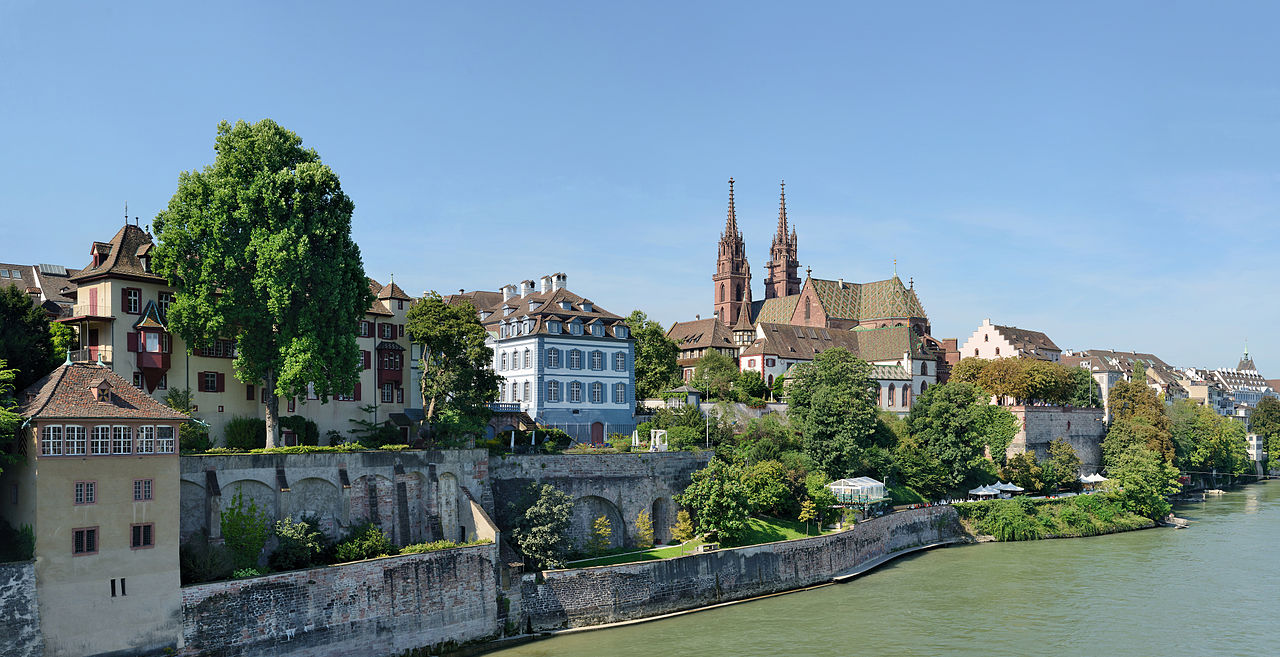
Basel, the second largest city of Switzerland, sits at the point where the Rhine bends north and three countries — Switzerland, France, and Germany — share a border. It is known as a pharmaceutical and financial centre, but that tells only part of the story. This is an intensely cultured city, and its long patronage of the arts has produced a remarkable concentration of museums and galleries for a place of under 200,000 people.
The old town divides along the Rhine. On the left bank, Grossbasel clusters around the Basler Münster — the red sandstone cathedral where Erasmus is buried — and the Rathaus, whose startlingly red facade dominates the Marktplatz. Cross to Kleinbasel via one of the current-powered Rhine ferries and the city feels more modern and less tourist-oriented.
The Kunstmuseum is Switzerland's most important public art collection, and a short walk brings you to the Museum der Kulturen, the Historical Museum, and the Natural History Museum. Out in Riehen, the Fondation Beyeler is one of Europe's best private collections. The Museum Tinguely on the Rhine bank showcases the kinetic sculptures of Jean Tinguely, whose playful fountain also enlivens the Theatre square in the old town.
Basel's most visited annual event is Art Basel in June, one of the world's most important contemporary art fairs. The Basler Fasnacht carnival — which begins precisely at 4 am on the Monday after Ash Wednesday — is wilder and more atmospheric. In summer, locals float down the Rhine in waterproof bags called Wickelfisch; watching this from the bank is free entertainment.
A good day trip is to walk or cycle north to the Dreiländereck, the point where Switzerland, France, and Germany meet in the Rhine.