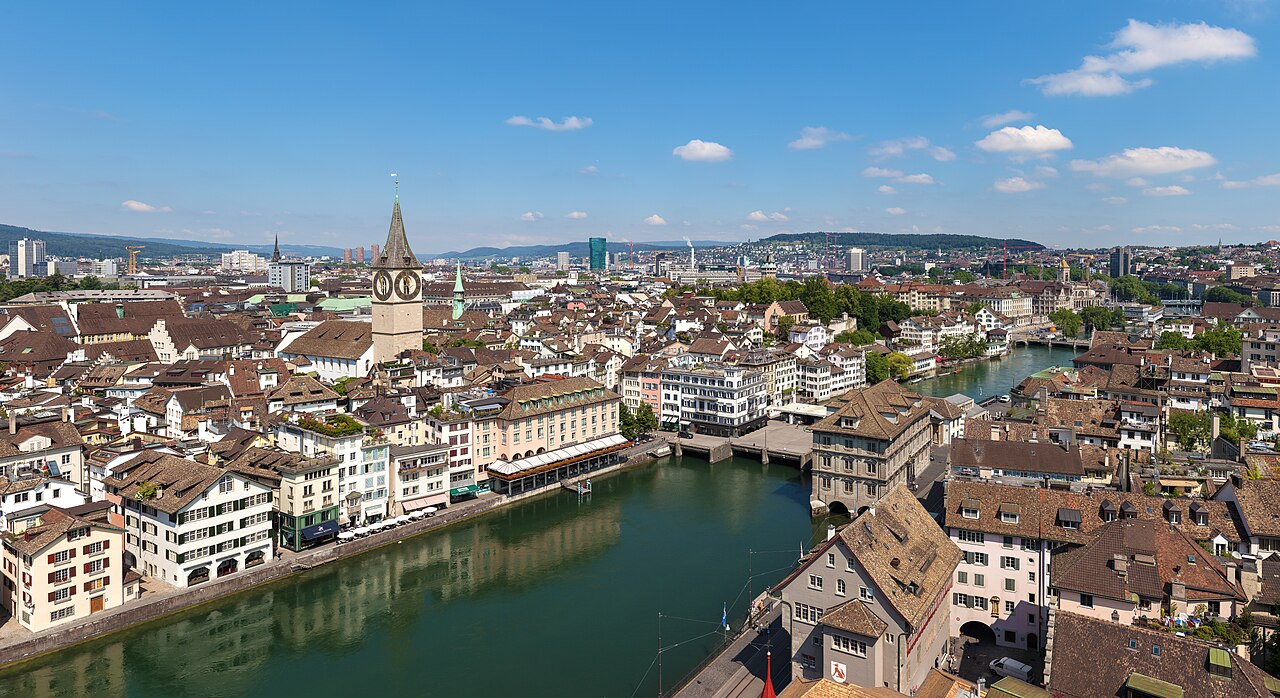
Zurich is Switzerland's largest city, wrapped around the northern tip of Lake Zürich and split by the River Limmat that drains it. Founded as a Roman customs post in 15 BC, the city still feels built around that job — a carefully run mercantile town that has been in the business of handling other people's money since Alfred Escher turned it into the country's financial engine in the 19th century. It is consistently rated one of the world's most livable cities, which is a polite way of saying very expensive, very clean, and very efficient.
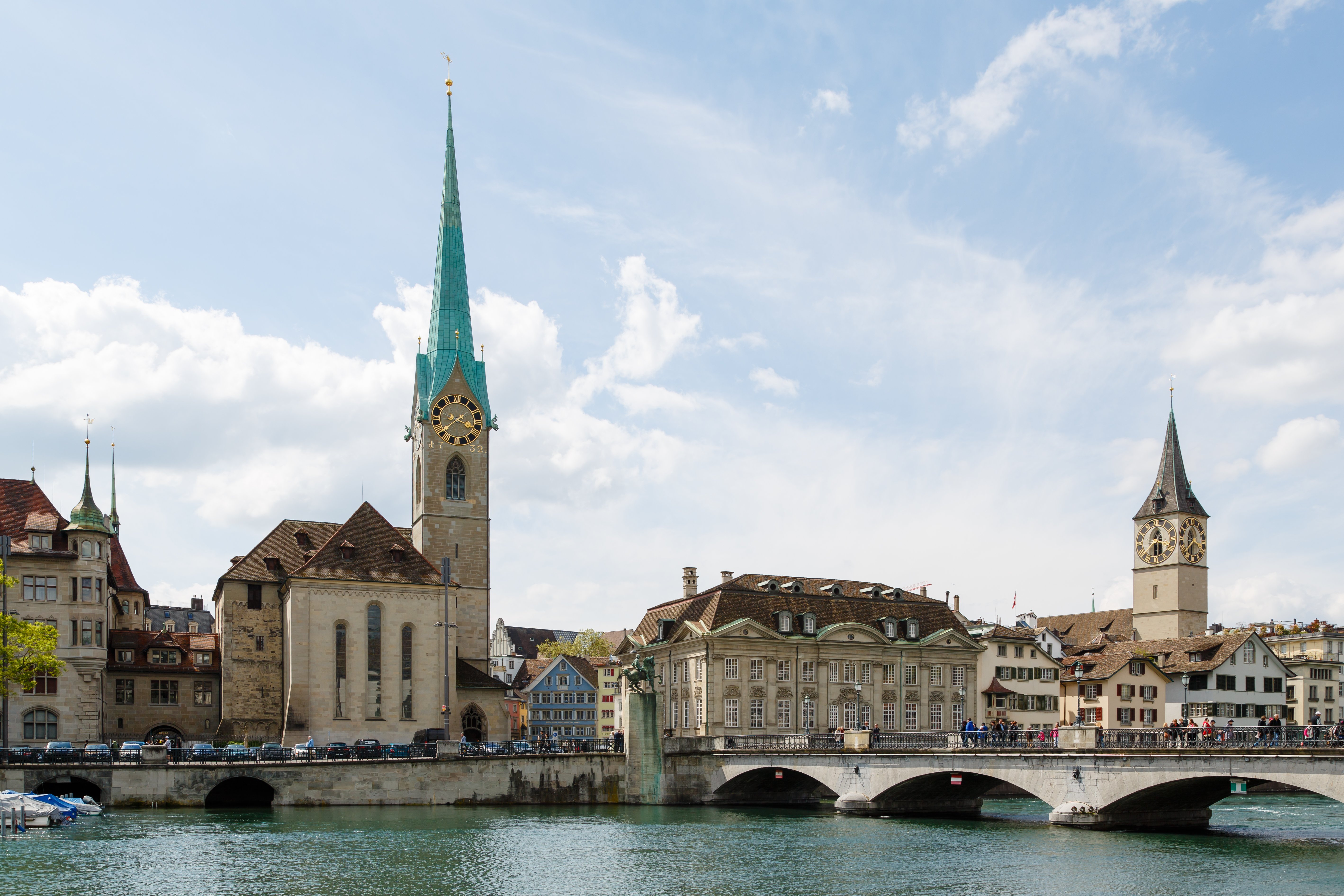
The old town sits on both banks of the Limmat. On the left bank, Bahnhofstrasse — the flagship shopping boulevard and one of the most expensive streets in Europe — runs from the main station to the lake, flanked by the chocolatiers, the watchmakers, and the banks that store a significant fraction of the world's gold. The twin-towered Grossmünster, where Ulrich Zwingli started the Swiss Reformation in 1519, rises on the right bank; the smaller Fraumünster opposite carries Marc Chagall's 1970 stained glass windows. A few minutes' walk north, the Kunsthaus holds one of the finest modern art collections in Europe. The Lindenhof hill above the river is the best free viewpoint over the rooftops.
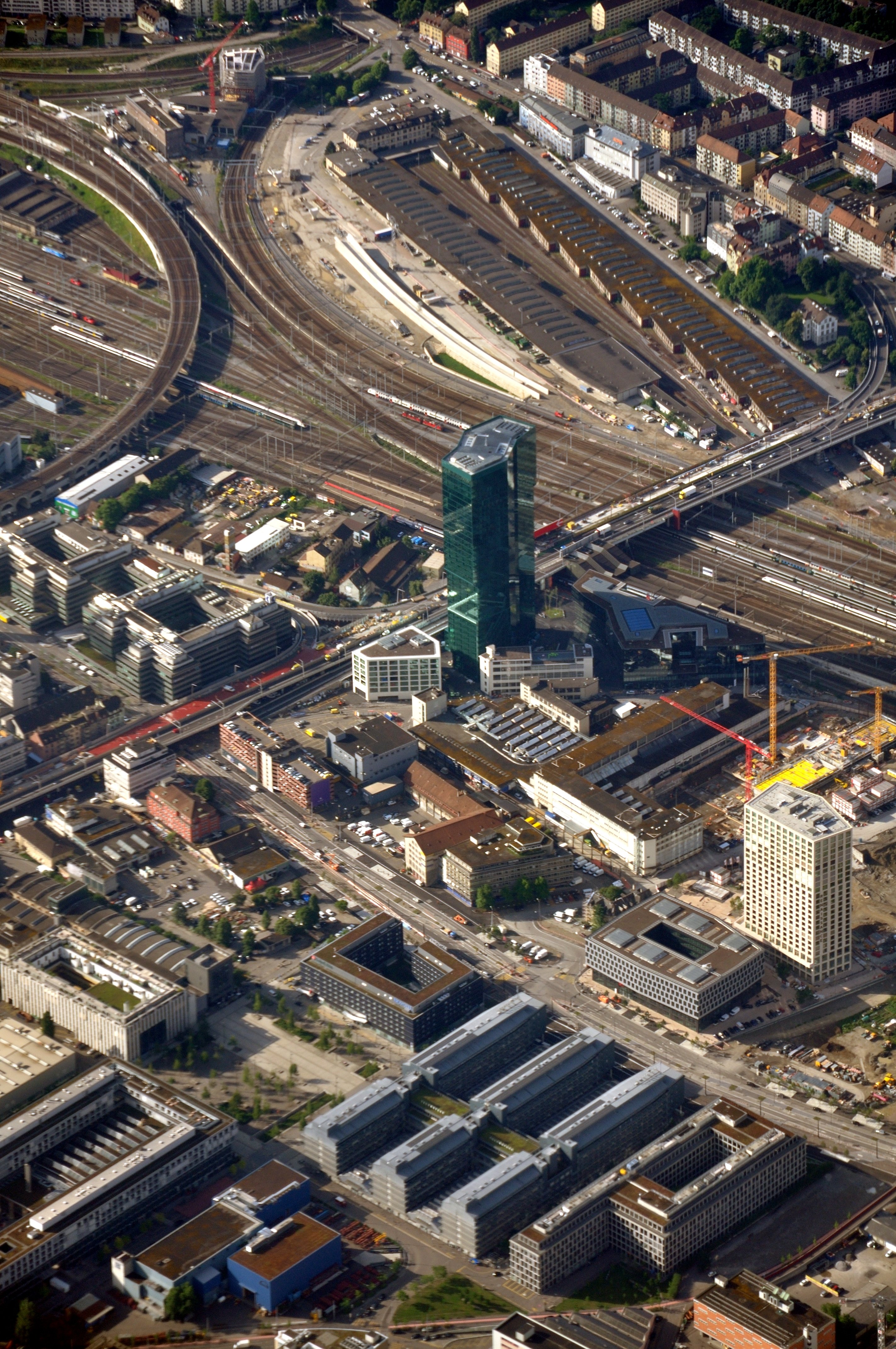
The old town alone fills a day, but Zurich rewards staying longer. The Rietberg Museum, Zurich-West's converted industrial district, the boats that run up the lake to Rapperswil, and the grave of James Joyce in Fluntern Cemetery are all worth making time for. The Niederdorf alleys carry most of the late-night life; the Swiss National Museum by the main station fills in the historical context; and the Uetliberg mountain gives the panoramic view of city, lake and Alps. Zurich is also one of the best launch pads in the country — almost anywhere in Switzerland is reachable in a day by the famously punctual railways.