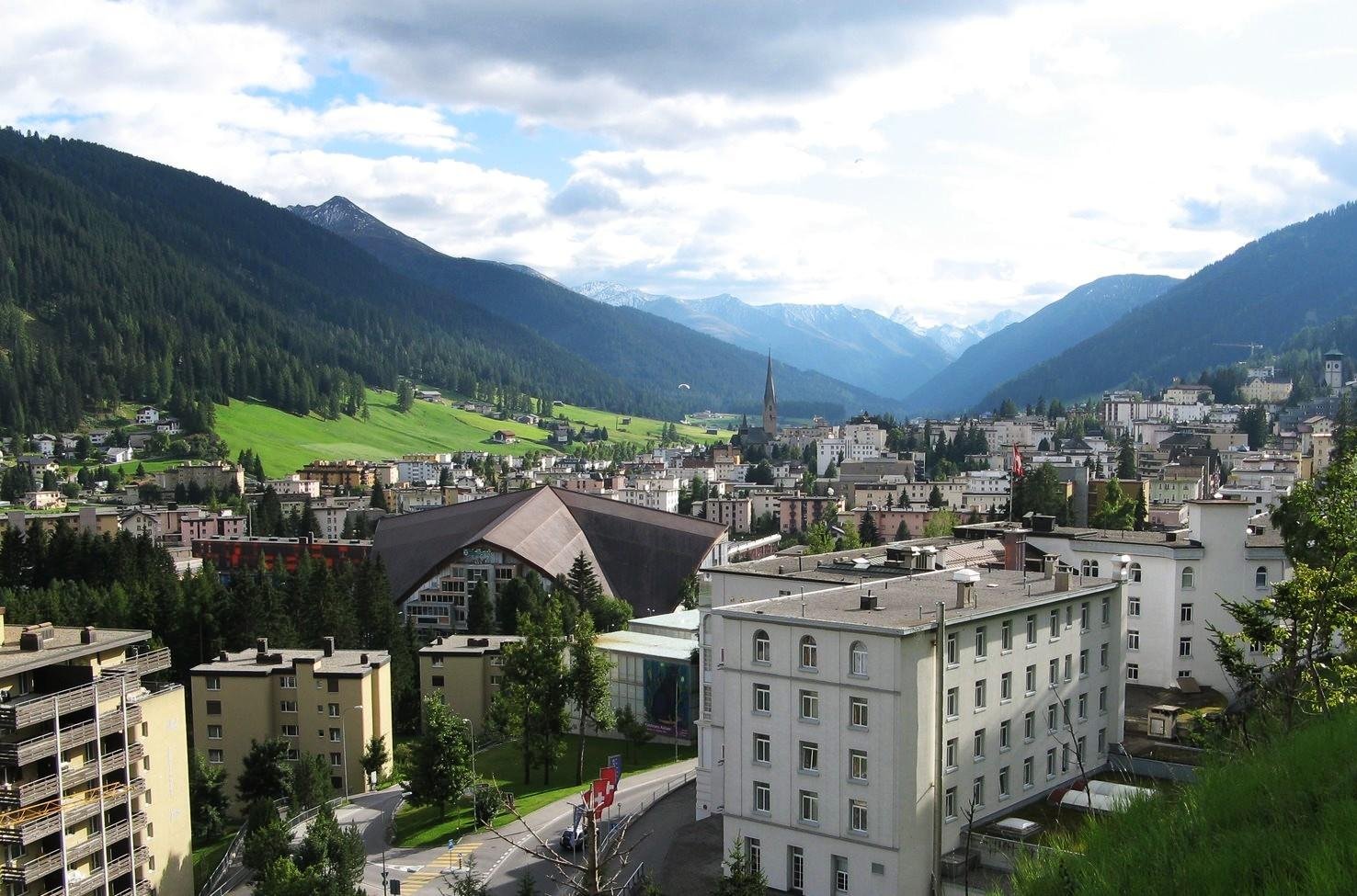
Davos sits at 1,560 metres in the broad Landwasser Valley, stretching for several kilometres between two towering mountain ranges in the canton of Graubünden. It is one of the highest towns in Europe, and one of Switzerland’s most famous ski resorts. But Davos is not just a winter destination. In summer the valley turns green and the hiking is superb.
The town has an unusual history. In the mid-19th century its clean, dry mountain air made it a centre for tuberculosis treatment, and sanitariums sprang up along the valley. Thomas Mann set The Magic Mountain here. Many of those old sanitariums are now hotels. Today, Davos is perhaps equally known as the home of the World Economic Forum, which fills the town with security cordons and black SUVs every January.
The skiing is extensive. Seven distinct areas spread along both sides of the valley: Parsenn, Jakobshorn, Pischa, Rinerhorn, Madrisa, Schatzalp/Strela, and Gotschna. You could ski a different area every day of the week. Parsenn is the largest and best-known, with long cruising runs and excellent off-piste terrain. Jakobshorn is the snowboarder’s mountain. The drawback is that not all areas are linked by lifts, so you rely on buses and trains to move between them.
The town itself is honest rather than charming. Davos is more small city than alpine village, with two main roads carrying steady traffic and architecture that is functional rather than picturesque. If you want a postcard Swiss village, neighbouring Klosters is the prettier option. But what Davos lacks in cosiness it makes up for in scale, facilities, and a lively apres-ski scene.
In summer, the same mountains offer hundreds of kilometres of hiking and mountain biking trails. The Davos Klosters region is one of the best areas in the Alps for cross-country running and trail running. The lake at Davosersee is popular for swimming, and the surrounding peaks are accessible by cable car for high-altitude walks.