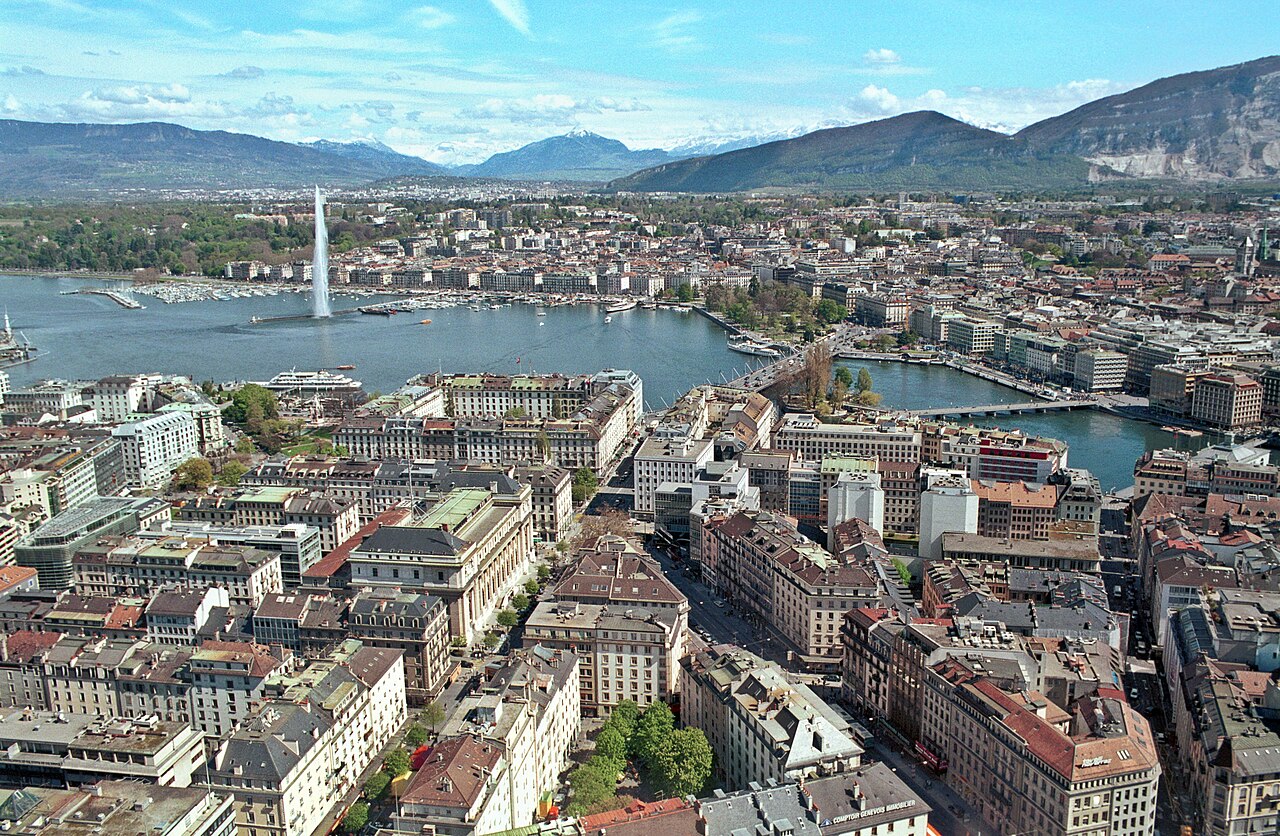
Geneva is a small city with a disproportionate presence in global affairs — home to the United Nations European headquarters, the Red Cross, WHO, CERN, and dozens of other international organisations. It sits at the western end of Lake Geneva (Lac Léman) where the Rhône flows out, with the Alps visible on clear days and the French border within walking distance of the centre.
The city is divided by the Rhône: the old city (Vieille Ville) rises steeply on the left bank above the lake, centred on the Cathédrale Saint-Pierre and the Maison Tavel — the oldest house in the city. The right bank has the main train station, the Palais des Nations, and the famous Jet d'Eau — a 140-metre water jet that has become Geneva's symbol. The Flower Clock and the Bains des Pâquis are along the right bank lakefront.
Geneva has an unusually high density of museums for its size. The Musée d'Art et d'Histoire is Switzerland's largest encyclopaedic museum. The International Red Cross and Red Crescent Museum is a powerful, well-designed experience. The MAMCO and Patek Philippe Museum fill in the contemporary and specialist ends. The Reformation Wall in the Parc des Bastions is the city's most distinctive monument.
Geneva is expensive — one of the most expensive cities in the world. Public transport is excellent and free for hotel guests (request a transport card at check-in). Most sights are within easy walking distance. The Pâquis neighbourhood has the most accessible eating and nightlife; Carouge across the Arve is the most characterful district for an evening out. The airport is 15 minutes from the centre by train.