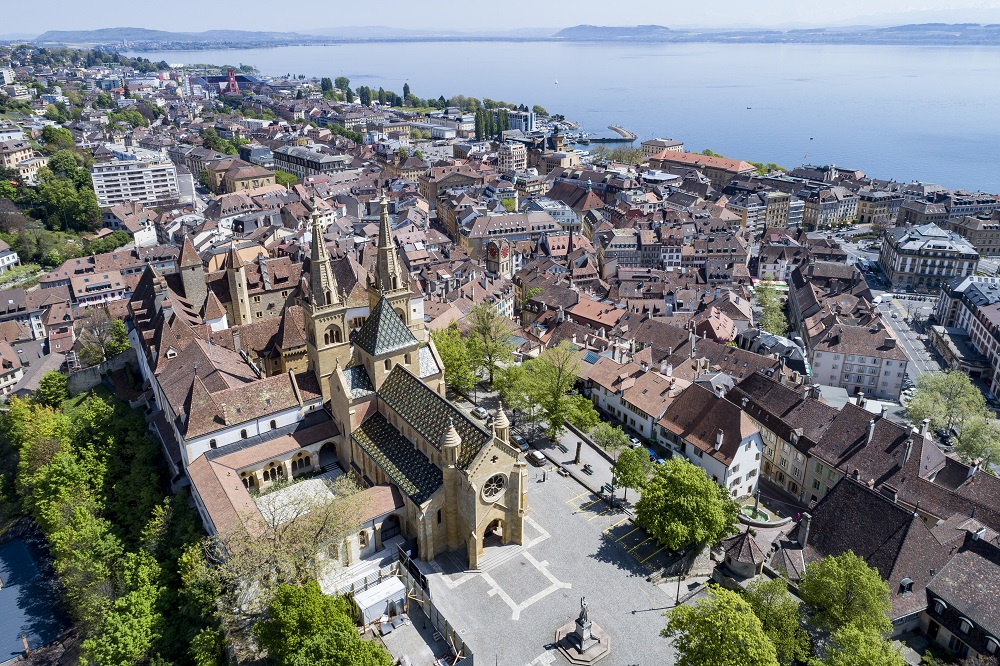
Neuchâtel sits on the northwest shore of Lake Neuchâtel, the largest lake lying entirely within Switzerland, with the Jura slopes rising behind the city and a wide view south toward the Alps on a clear day. It is compact, handsome, and largely overlooked by tourists — which makes it one of the more pleasant Swiss cities to spend time in. The old town climbs the hillside in layers of golden sandstone, topped by a twelfth-century château and collegiate church that together form one of the better-preserved medieval complexes in the country.
The city is the capital of the Jura Bernois wine region. The vineyards start at the edge of town and run north along the lake shore; Chasselas is the main white grape, local and light, best drunk young with the local perch fillets that appear on almost every restaurant menu. The Wednesday and Saturday markets on the Place des Halles are genuine working markets, not tourist affairs, selling cheese, vegetables, and the kind of local wine that doesn't make it into bottles with English-language labels.
Neuchâtel is also home to one of Switzerland's great watchmaking museums. The Musée d'Art et d'Histoire houses three of Pierre Jaquet-Droz's eighteenth-century automata — mechanical figures so precisely engineered that they were once suspected of being driven by the devil. The Draughtsman draws, the Musician plays the organ, and the Writer dips a quill and produces actual sentences. They still run, and watching them is genuinely startling. The Musée d'Ethnographie is one of the most conceptually adventurous ethnographic museums in Europe. The university town atmosphere keeps the city from feeling stuffy, and the lakefront promenade is ideal for an evening walk when the Alps catch the last light. A half-day trip to Valangin Castle — a genuine medieval fortress 7 km north — is well worth the detour.