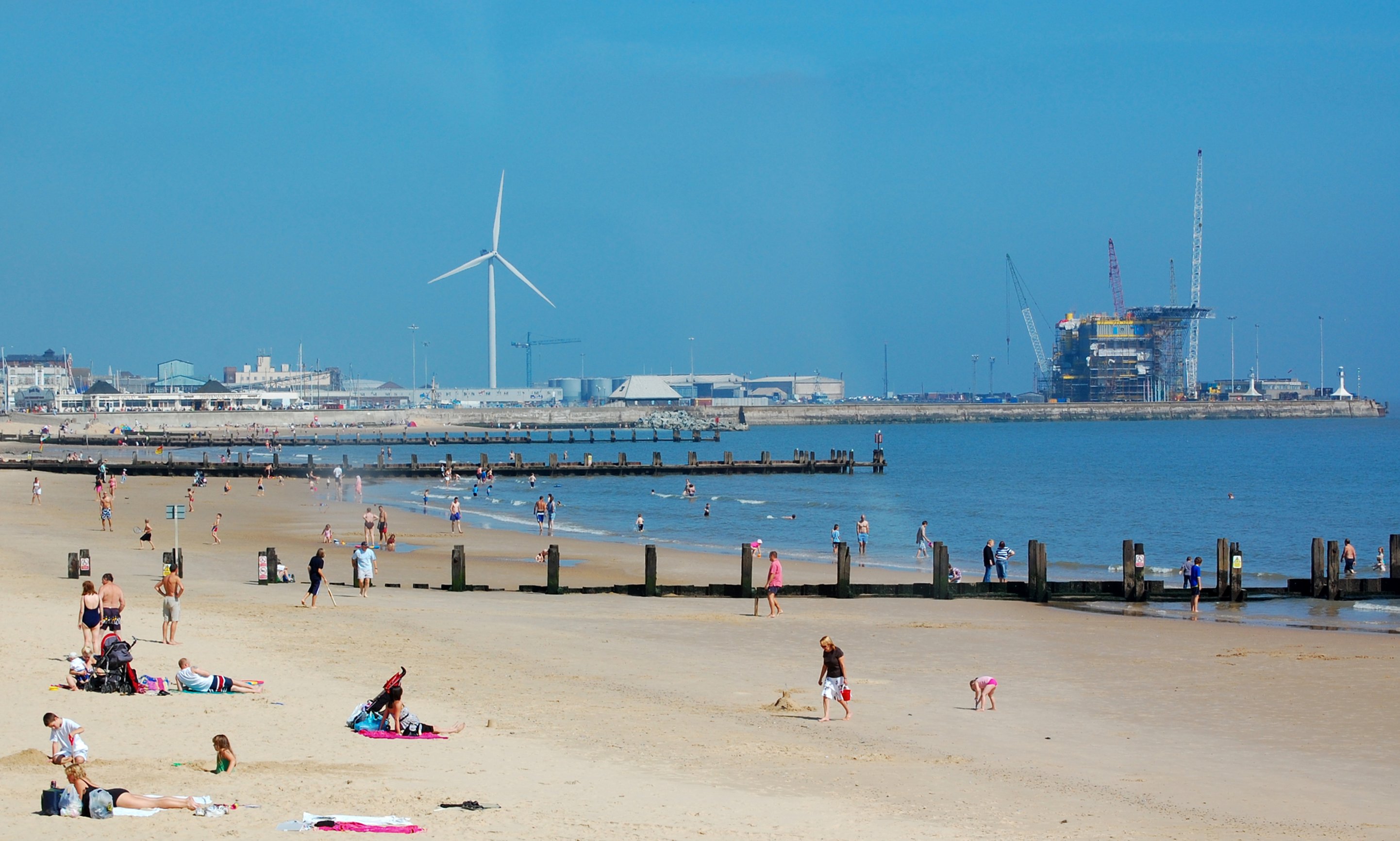
Lowestoft is a coastal town in northeast Suffolk and the most easterly point in the United Kingdom. It sits at the very tip of East Anglia, where the North Sea meets the flatlands of the Broads — a position that has shaped its history as a fishing port, a naval base, and now a quiet seaside town.
The symbolic heart of the town's eastern claim is Ness Point, where a compass rose and marker post commemorate the fact that you cannot go further east in Britain. From there, the harbour stretches south toward South Pier and South Beach, one of the better stretches of coast in Suffolk — broad, sandy, and backed by cheerful beach huts.
Lowestoft's fishing history is told at the Lowestoft Maritime Museum and through Mincarlo, the last surviving sidewinder trawler of the old fleet. The town was a major herring port from the 19th century through the 1970s, when the industry collapsed, and the harbour still has the feel of a working port rather than a tourist marina.
The town is made up of several distinct areas, including Kirkley and Pakefield to the south and Carlton Colville to the west. For families, Pleasurewood Hills is a long-established theme park on the southern edge of town, and Oulton Broad — a tidal broad connected to the River Waveney — is right on the western edge of the town.
Lowestoft was the birthplace of Benjamin Britten, the composer, in 1913. A small plaque marks his birthplace on Kirkley Cliff Road, and the area's landscape of sea marshes, coast, and wide skies is unmistakable in his music.