Aberdeen
©
Aberdeen

Aberdeen

Granite Scottish port city with compact museums, floral parks, and a long North Sea maritime life.

With a proud and fascinating history, the City of Aberdeen presents a modern cosmopolitan image to visitors who are often surprised by the many diverse attractions which the regional capital of Grampian Highlands offers.

The city has long been famous for its outstanding parks, gardens and floral displays which greet the visitor - with around 2 million roses, 11 million daffodils and 3 million crocuses, it is not difficult to see why Aberdeen is known as the "Flower of Scotland". Indeed, the city's top attraction is the Winter Gardens at Duthie Park, which is also home to the stunning rose collection. One can sense that there is a true feeling of civic pride here and in order to discover more about the city and its people it is worth visiting some of the city museums and galleries.

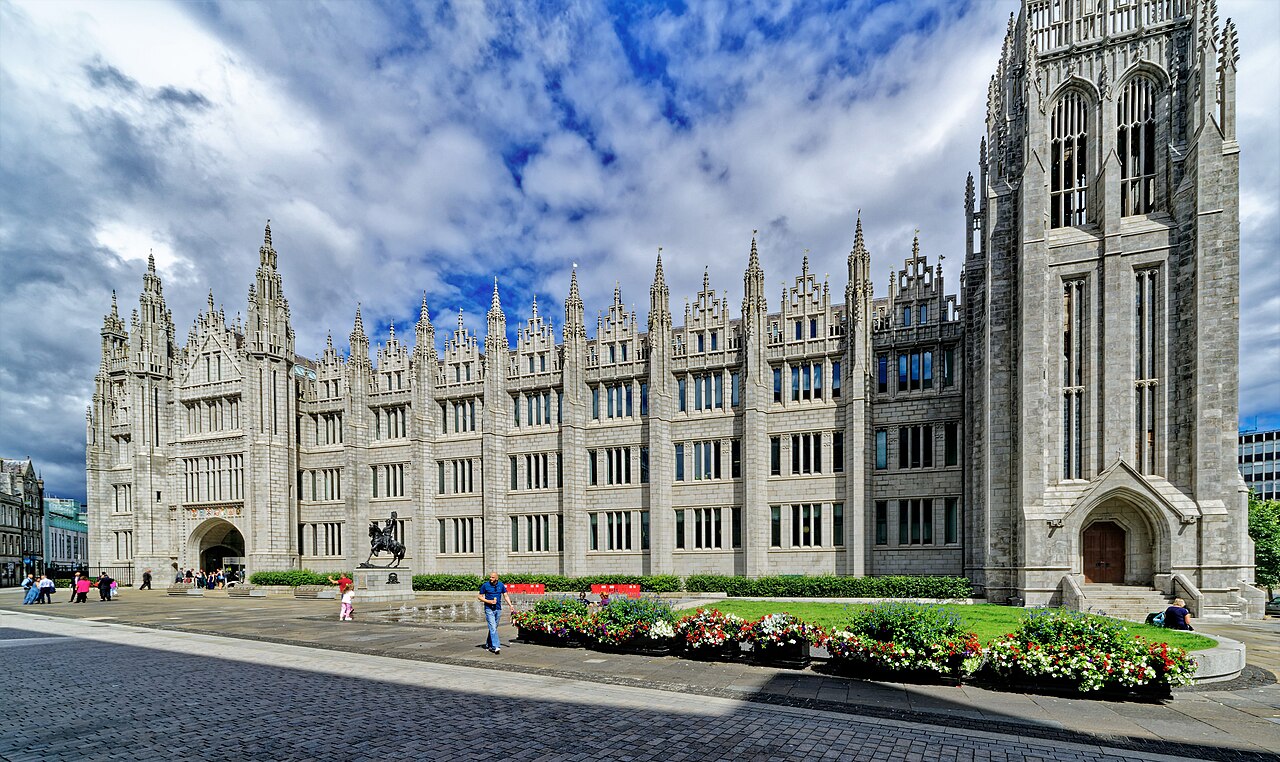
Aberdeen is fortunate in having excellent museums and galleries in its compact city centre which are all within easy walking distance of each other: Provost Skene's House is the oldest surviving "town house" and can be considered an architectural gem in the heart of the city while close by, the Marischal Museum located in the magnificent granite edifice of Marischal College paints a picture of North East life. Aberdeen's fortunes have long been associated with the sea and a visit to the Aberdeen Maritime Museum is a must — it focuses on fishing, shipbuilding and the oil industry and is an ideal point to view the activities of one of Britain's busiest harbours.

Aberdeen has a flourishing cultural scene with excellent collections of Scottish and Impressionist works and contemporary exhibitions at the Art Gallery on Schoolhill, and there are smaller galleries worth seeking out.

As befits a cosmopolitan centre such as Aberdeen there is a packed programme of arts performances and entertainments throughout the year. Pick up a copy of "What's On" to find out who is appearing at His Majesty's Theatre, which concert is on at the Music Hall or which acts are at the Lemon Tree. To the north, at Bridge of Don, the Aberdeen Exhibition & Conference Centre is the venue for major events and top name concerts.

This is very much a "festival" city with events throughout the calendar ensuring a real buzz of activity. "Rootin' Aboot" is the spring celebration of roots and folk music, the International Youth Festival brings young performers from all over the world while the Alternative Festival in October is an eclectic mix of music, comedy and artistic performances. The Winter Festival is growing in stature and encompasses seasonal events and activities, bringing light and laughter to the darker months.

North of the city centre, Old Aberdeen provides an oasis of tranquillity in contrast to the bustle of city life. Once quite a separate entity from the city that grew up close to the River Dee, Old Aberdeen is chiefly associated with the University of Aberdeen whose King's College Chapel, with its distinctive crown tower, is a central feature. The quarter is an outstanding conservation area and other attractions in this area include the University's Cruickshank Botanic Garden, St Machar's Cathedral (one of Aberdeen's three cathedrals) and Seaton Park with its walks which lead to the Brig O'Balgownie across the River Don.

It is difficult to imagine a similar sized city which caters so well for all the family. Satrosphere is a science and technology discovery centre where the emphasis is very much hands-on, and then there are the attractions of Aberdeen Beach.

The city's two miles of sands ensured status as a coastal resort. There are bars, cafes, restaurants, a golf complex on the King's Links, and Pittodrie Stadium — the home of Aberdeen Football Club. At the end of the Esplanade and at the entrance to the harbour is the community of Footdee, known locally as "Fittie" — a planned fishing village that provides a vantage point for harbour activity and a fascinating glimpse of what life was like before oil changed the face of Aberdeen immeasurably.

There are of course many interesting places to visit on the outskirts of the city. Doonies Farm at Nigg is a working farm where every animal is a rare breed. Hazelhead Park is a popular family location with its aviary, pets corner, maze, riding centre and gardens. The Gordon Highlanders Museum has recently been refurbished and extended and highlights the proud heritage of Grampian's famous regiment and nearby Johnston Gardens is an exquisite little park.

Just outside the city, Storybook Glen's fairytale figures will enchant smaller children and there are many walks and trails on the city's western side including the Old Deeside Line and the trails in Countesswells and Tyrebagger Forests, the latter with its unique sculpture trail.

With its host of big name stores, speciality shops, indoor shopping centres and markets, Aberdeen is a Mecca for "shopaholics" and with Thursday late opening and Sunday shopping too, the visitor is spoiled for choice.

This elegant granite city welcomes visitors whatever the time of year and the warmth of this welcome is reflected in the toast associated with the words "Bon Accord" on the city Coat of Arms - "Happy to meet, sorry to part, happy to meet again"...

Guide

Day Trips

Aberdeen sits at the edge of a rich stretch of Aberdeenshire coast and farmland, and a half-day or full day out of the city can take you to nature reserves, ruined castles, and oddities of local history.

The Forvie Nature Reserve lies about 15 miles north of the city, where the River Ythan meets the sea and vast sand dunes spread north along the coast. The reserve holds one of Britain's largest eider duck colonies and a ruined medieval chapel half-buried in the dunes — a quiet, striking place well off the tourist trail.

A smaller but genuinely unusual detour is Pitfour Observatory, about 40 miles north on the A952. The octagonal tower was built in 1845 so the Laird of Pitfour could watch horse racing on his private four-and-a-half-mile course — nicknamed the "Ascot of the North." The course is long gone, but the tower survives and opens free of charge in summer. The surrounding woods contain a stone circle and a chambered cairn, making a worthwhile half-day combination.

Guide

Eating Out

With a long, sandy coast, glittering deposits of mica, and the third largest population in Scotland, Aberdeen is more than just a beautiful city. It is a city that mixes local, Scottish tradition with modern globalization in architecture, attitude, and,especially, in food. From Chinese restaurants, to Indian restaurants you'll find them all in Aberdeen as exotic complements to the hearty, traditional food of Scotland.

Scottish Specialties

The Scottish have very distinctive dishes well known in the culinary world for being rich and filling. The Aberdeen Angus breed of cattle for beef is famous and provides amazing,juicy steaks worldwide. In Aberdeen and other Scottish cities it is still prepared in the traditional way and used in a variety of dishes. Hotch Potch, a common dish, is made by boiling beef, bone marrow, or chicken, along with a mix of vegetables. The Arbroath Smokie, another popular meal, is haddock smoked to perfection in local family smokehouses. Black Bun, a heavy fruit cake with currants, raisins,brown sugar, almonds, cinnamon, and ginger, and Colcannon, boiled cabbage cooked with carrots, turnips, and potatoes, are also Scottish specialties.

As Aberdeen is located on the coast, smoked salmon, lobster, mussels, scallops, crab, and shrimp are often used in its local cuisine. Cheeses made in the area, venison, porridge, and haggis.

Aberdeen Restaurants

For strictly Scottish food The Albyn and the Fennel Restaurant are excellent choices. Most ingredients are locally produced and very fresh. Prices vary, both restaurants can be expensive, but if you choose a less extravagant meal, the prices are more reasonable, and you'll still get an authentic taste of Scotland. Bakery items are cheap and tasty, check out Baker's Oven or Pat's Pantry. Being in Scotland, you obviously have to try the whiskey. You can have a drink of local whiskeys at basically any bar in town. Haddews and the Dutch Mill have both your choice of drinks and cheap, tasty pub grub.

Foreign food is abundant as well; Indian and Chinese restaurants are especially popular with the locals, as are restaurants featuring food from Italy, Spain, France, and Japan. Worldwide fast food chains such as McDonald's and Pizza Hut have filtered into Aberdeen as well due to the globalization, while other sit down restaurant chains such as TGI Friday's from the United States have also made their way into Aberdeen. Some recommended foreign restaurants include Blue Moon, featuring spicy Indian food, Curry Tonight, La Tasca, boasting excellent spanish cuisine and tapas, and Yatai.

Guide

Getting Around in Aberdeen

If you´re arrived in Aberdeen via the airport, there´s a variety of transport options available to you here for your onward journey.

A lively and intricate city, it´s full of interesting little nooks and crannies to delve into and the easiest way to do this is by hiring a car from the airport. There are 4 rental companies located within the terminal itself, all of which offer reasonable deals which can include fully comprehensive car insurance or/and roadside assistance into the bargain. Getting to the city centre is approximately a short 7 mile journey along the A96 Aberdeen to Inverness Road which is well signposted.

There is no train station or link to the rail network at the airport. The nearest railway station is at Dyce, which is a couple of miles away but from here you can link to Inverness and Aberdeen itself which provides further links to the rest of the country. Regular bus services are provided by Stagecoach and First both to the city centre and within it.

Rainbow taxis are availabe from outside the airport terminal or you could book an airport transfer in advance if you want to save money and ensure there´s a car waiting for you on arrival.

For more information on everything from bus and train timetables, flight times, car hire, airport transfers, taxis and parking visit the at

Guide

Getting There

Aberdeen Airport (ABZ) is 7 miles northwest of the city centre in Dyce, served by flights from London (Heathrow, Gatwick, and Stansted), Edinburgh, Amsterdam, and a handful of other European destinations. The airport primarily serves the oil industry, so flights tend to be frequent and well-connected. The 727 bus runs from the airport to the city centre in about 40 minutes; a taxi takes 20 minutes and costs around £20–25.

Aberdeen railway station is on Guild Street in the city centre, with direct trains from Edinburgh (around 2.5 hours on the faster services) and Glasgow (around 2.5 hours via Edinburgh). ScotRail operates the main Scottish services; LNER runs the East Coast route from London King's Cross, which takes roughly 7 hours. Coaches from Edinburgh and Glasgow are slower but considerably cheaper — Megabus and National Express both serve the route.

By car, Aberdeen is on the A90 trunk road from Dundee and Edinburgh — a dual carriageway for most of the way south that makes the journey to Edinburgh around 2.5 hours. The city can also be reached from Inverness via the A96 in about 2 hours.

Guide

Shopping

Union Street is Aberdeen's main shopping thoroughfare, running east to west through the granite city centre, and contains the full range of British high street chains. The Bon Accord and St Nicholas shopping centres are indoors and connected, covering most of the north side of Union Street.

For more interesting shopping, the area around Belmont Street and Little Belmont Street has independent shops and cafes. Macbean's on Little Belmont Street is an independent coffee roaster and tea specialist that has been operating for decades — worth a visit if you are serious about either. The Belmont Filmhouse area nearby has the feel of Aberdeen's small creative quarter.

The Victorian Market on Correction Wynd, a covered market off Union Street dating from 1842, has a mix of independent traders selling antiques, clothing, and food. It is genuinely one of the better Victorian market halls surviving in Scotland.

Guide

When to Go

Aberdeen has a cool maritime climate — wet and grey for much of the year, with cold winters and cool summers. The city averages around 50cm of rain annually, spread fairly evenly across the year. Summer (June to August) is the most reliable time for mild temperatures (typically 14–18°C) and longer daylight hours; mid-June has nearly 18 hours of daylight. The city's parks and gardens are at their best in June and July, and the festival programme is most active.

Spring (April to May) can be spectacular when the daffodils are out in Seaton Park and the cherry trees along the main streets are in bloom. Autumn is mild and often sunny. Winter is cold, dark, and wet — temperatures rarely drop below freezing in the city itself, but the grey is persistent. The winter festival (late November to January) brings light installations and events to the city centre.

The Granite City's indoor attractions — the Art Gallery, Maritime Museum, Marischal Museum, and the Winter Gardens at Duthie Park — make Aberdeen a reasonable all-weather city-break destination year-round.