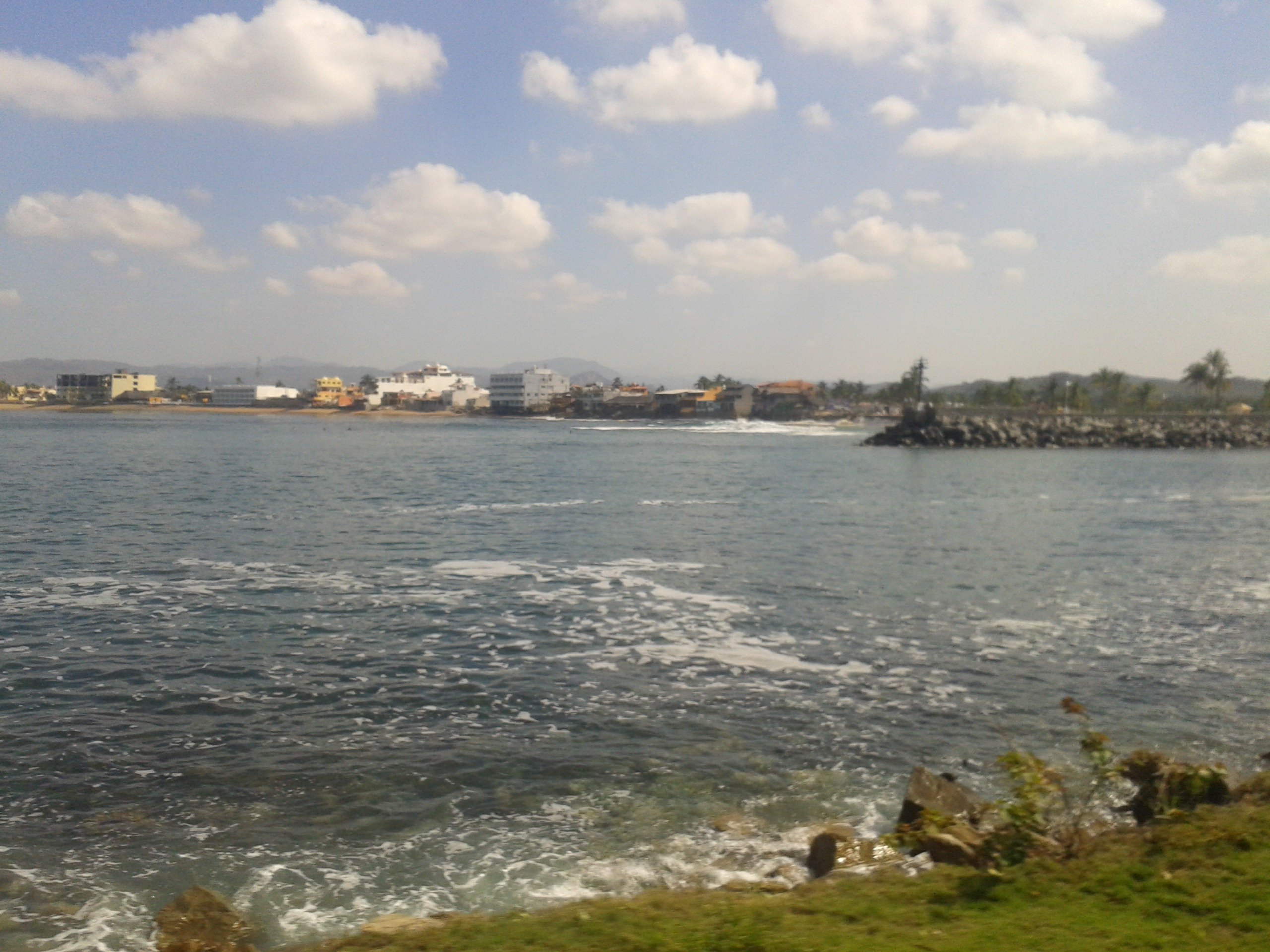
Barra de Navidad is a small fishing town on Mexico's Pacific coast, sitting on a narrow sandbar between the open ocean and a mangrove-fringed lagoon. It is about an hour north of Manzanillo and four hours south of Puerto Vallarta, on a stretch of coast — the Costalegre, or "Coast of Joy" — that has never been developed into the resort strip that characterises the towns on either side of it.
The beach is long, the surf is real, and the pace is genuinely slow. There are no all-inclusive hotels here, no beach clubs renting out lounge chairs, no wristbands. What there is instead is fresh seafood, cold beer, a malecón built for watching pelicans, and a quiet bar — Piper Lovers — that plays decent blues on most evenings.
What many visitors do not realise is that Barra de Navidad played an outsized role in the Spanish colonisation of the Pacific. In 1542, Ruy López de Villalobos sailed from this beach with six galleons to the Philippines, giving the islands their name. In 1564, the same beach launched Miguel López de Legazpi and the navigator Andrés de Urdaneta on the voyage that would establish permanent Spanish control of the Philippines and open the Manila Galleon trade route — the commercial artery linking Asia and the Americas for 250 years. A modest monument near the southern end of the beach marks the departure point. It is easy to miss, which is exactly the kind of detail that makes Barra interesting.
The lagoon deserves as much time as the beach. Pangas cross from the malecón to Isla Navidad and to Colimilla, a tiny village on the far shore where stilted restaurants serve fish caught the same morning. The lagoon is also home to herons, egrets, and frigatebirds, and the mangrove channels are worth exploring by kayak. Sport fishing for marlin and sailfish runs from the anchorage, operated by local families who have fished these waters for generations.
San Patricio, also called Melaque, is the larger town 4 km west along the same bay. It has more services — a wider selection of shops, banks, a market — but less character. Most people who arrive in the area find their way to Barra and stay there.