Guadalajara is Mexico's second city and the capital of Jalisco -- the birthplace of mariachi music, tequila, and the wide-brimmed charro hat. It wears its cultural identity proudly, and visitors notice right away: this is a city that feels deeply, unapologetically Mexican.
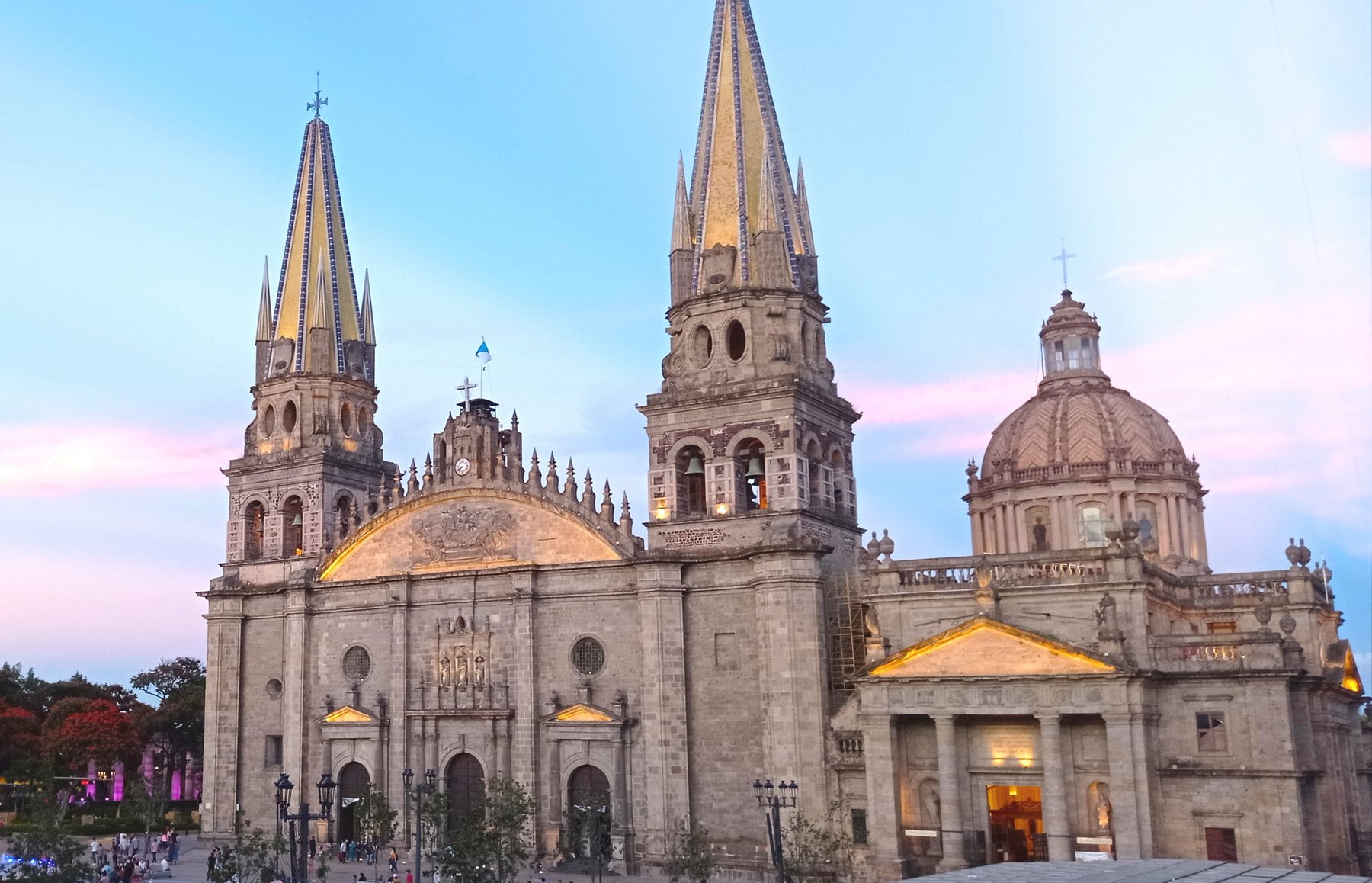
The historic centre is built around a cross of four plazas radiating from the twin-spired Cathedral, a structure started in 1561 and rebuilt so many times it mixes Gothic, Baroque, Moorish, and Neoclassical styles. Stop at the Palacio de Gobierno for the Orozco staircase mural, then walk east along the Plaza Tapatía esplanade to the Hospicio Cabañas, a former orphanage turned cultural centre where Orozco's murals -- especially the fiery "Man of Fire" on the chapel dome -- are worth the trip alone. The building is a UNESCO World Heritage Site. The Orozco murals at the University and the Museo José Clemente Orozco complete the picture for anyone serious about his work.
Beyond the centre, Guadalajara sprawls. Tlaquepaque keeps its cobblestoned streets and artisan workshops; end a visit there at El Parián with tequila and competing mariachi bands. Tonalá, further east, is where the craftspeople actually make the things — better prices, more visible production. The Zapopan Basilica has its own shrine and one of the great annual processions in Mexico. The Colonia Americana neighbourhood, centred on Avenida Chapultepec, is where you will find the best independent cafes and street life, and the neo-Gothic Templo Expiatorio with its extraordinary mechanical clock parade.
The climate is near-perfect: warm days, cool nights, and a rainy season from June to October that greens everything up without washing out your plans. Come in October for the Fiestas de Octubre or late August for the International Mariachi Festival, when the plazas fill with competing troupes and the whole city seems to be singing.