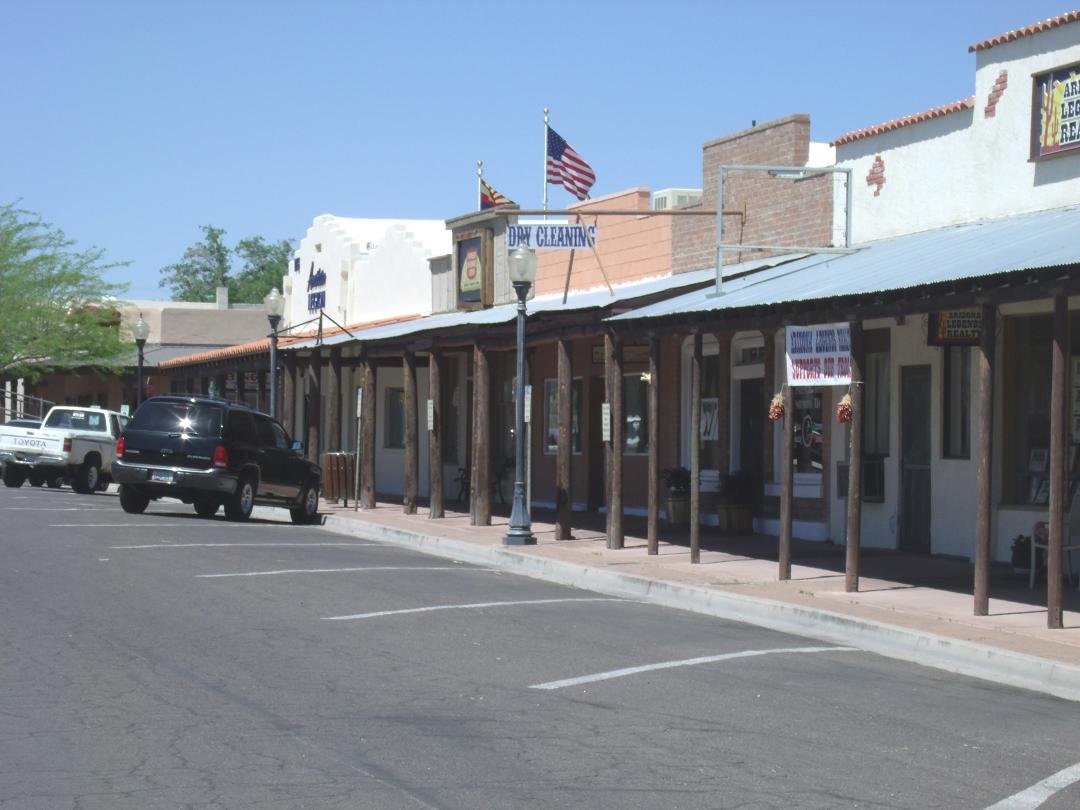
Wickenburg was founded in 1863 when Henry Wickenburg discovered gold and named his mine the Vulture, which eventually became one of the richest gold-producing mines in Arizona. Henry sold 80% of his mine early on because he was afraid it would play out soon. For his 80% interest, Henry received $20,000 in cash and a note for $65,000. The new owners soon claimed that Wickenburg did not have a clear title to the property and refused to pay the remainder. Wickenburg spent most of his $20,000 trying to collect on his note, but never succeeded.
Despite being denied payment for his mine, Henry Wickenburg was not destitute. His farm prospered and his remaining 20% of the mining venture brought in some money. Unfortunately, he had sold the Vulture Mine before anyone determined its true wealth — at the time, most gold strikes played out within a few weeks, and it had probably seemed prudent to sell before the Vulture did the same. Wickenburg continued to prospect, but he was never again as lucky. He regretted selling the Vulture Mine for the rest of his life.
Wickenburg made many friends throughout the years. When he was seventy, in 1890, the Walnut Grove Dam on the Hassayampa burst and destroyed most of his ranch. Too old to start over, he told friends he was old and tired of living. Little by little, he donated most of his land to the town of Wickenburg. In 1905 he was eighty-five and no longer able to live on his own. He walked into a grove of trees behind his house and turned his old Colt revolver on himself. The town of Wickenburg now surrounds his grave.
In the early 1900s, as the mine played out, ranching and tourism took over as economic mainstays of the area. Wickenburg was incorporated in 1909. The town now has a population of around 5,000 people and sits about an hour northwest of Phoenix along the Hassayampa River.