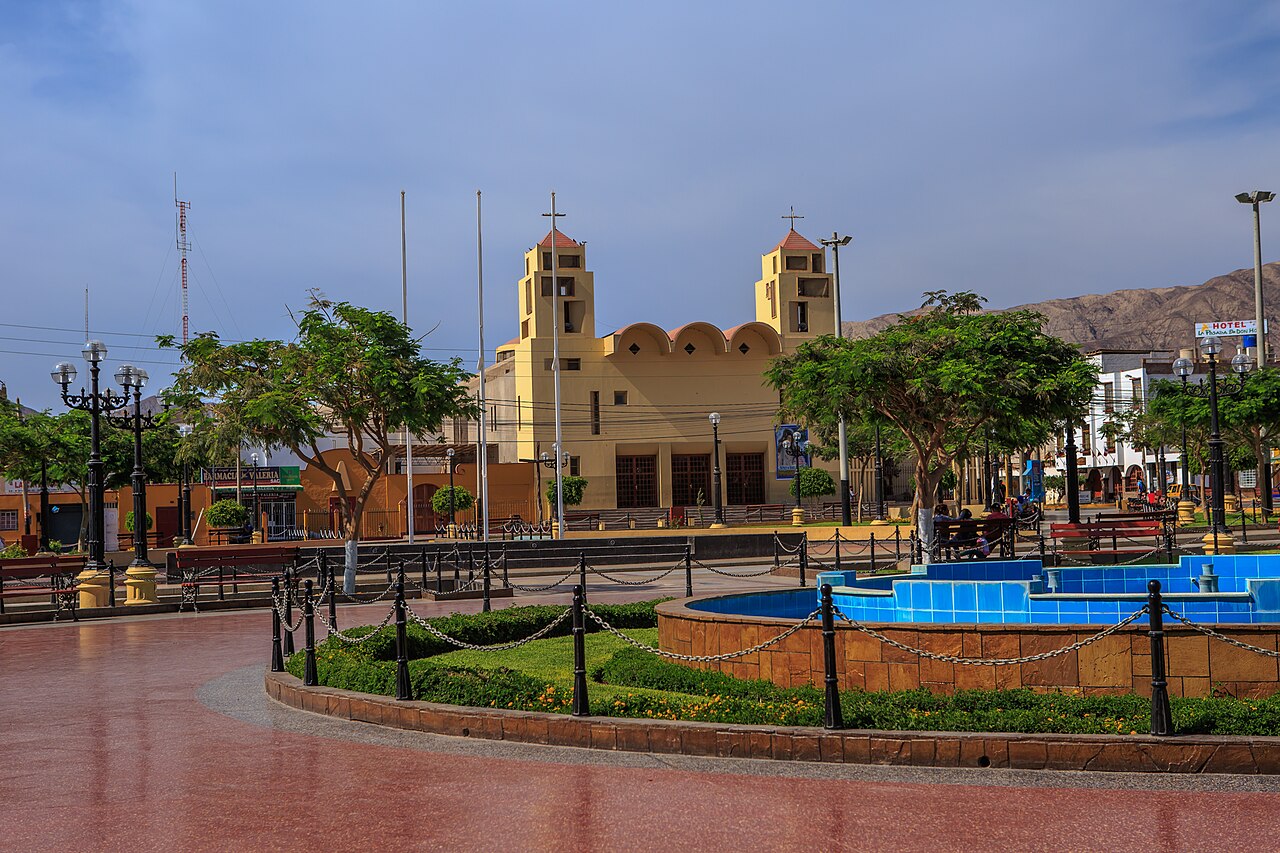
Nazca lies 450 km south of Lima in one of the driest places on earth, on the edge of the Atacama Desert where the Andes meet the Pacific coastal plain. The town itself is unremarkable, but the surrounding desert holds one of the world's most puzzling archaeological wonders: the Nazca Lines, a vast network of geoglyphs etched into the desert floor by the Nazca culture between roughly 500 BC and 500 AD.
The lines — geometric shapes, animals, plants, and humanoid figures, some several kilometres long — can only be fully perceived from the air. Small planes taking off from the Maria Reiche Neuman Airport have been carrying tourists over the plain since the 1960s. The Antonini Museum in town and the Maria Reiche Museum out on the pampa give context to the culture that made them. The Cantalloc Aqueducts east of town demonstrate the sophisticated hydraulic engineering that made survival in this desert possible. The Chauchilla Cemetery to the south is one of the most evocative burial sites in the Americas, with mummies still in situ after a thousand years. The Cahuachi ceremonial centre to the west covers 24 square kilometres of unexcavated mounds. The Pampas Galeras reserve in the Andes above the town offers a very different landscape and one of the best places in South America to see wild vicuñas.