San Ignacio
©
San Ignacio

San Ignacio

Northern Peruvian foothill town near the Ecuador road and Tabaconas Namballe's cloud-forest sanctuary.

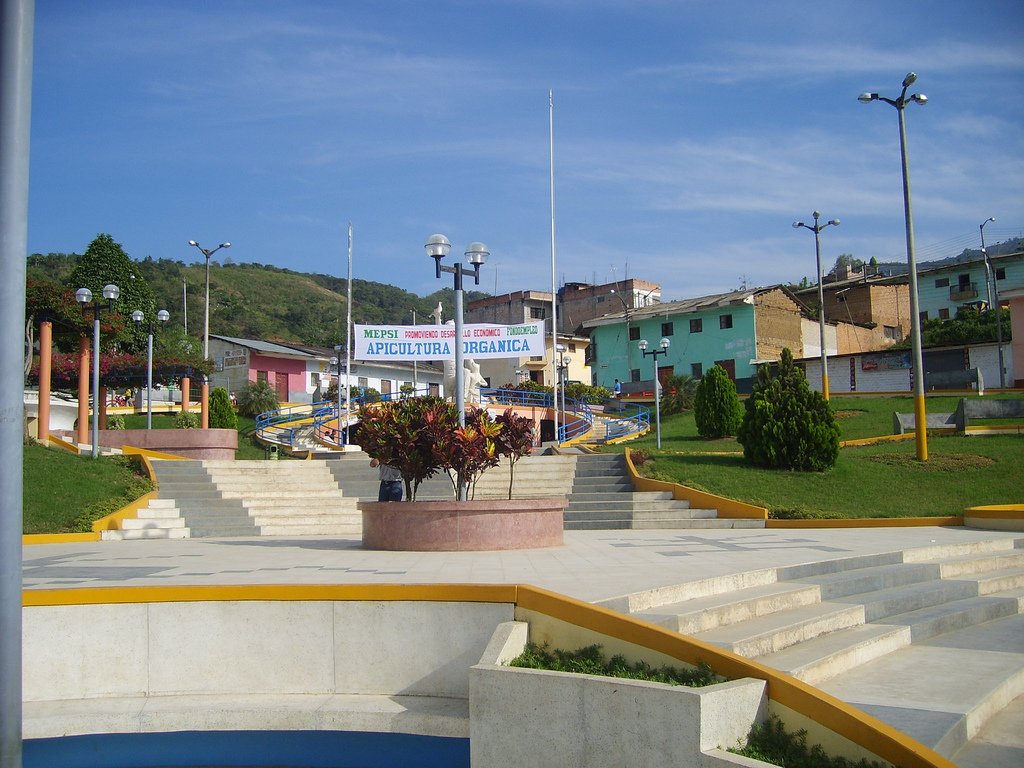
San Ignacio is a small but attractive town in the northernmost province of Cajamarca, at 1,200 metres in the foothills where the Andes break into the Amazon. For many travellers it is a stopover on the road to or from Ecuador via Zumba and Vilcabamba; for others it is the entry point to one of Peru's least-visited national protected areas, the Santuario Nacional Tabaconas Namballe. A lot of people just pass by, but it is a good place to spend a day or even two.

The town itself is pretty, not just for its spectacular setting on a tilted hillside but for the details that show the energy of the population — streets with little painted benches on both sides, steep alleys with mature trees and central stone stairs, and a well-kept Plaza de Armas where the evening social rhythm of the town settles.

The province depends for a huge share of its income on coffee, grown locally and roasted in small factories scattered through the town. Industrias Cafenor is a good example — not only producing a good coffee, but a range of coffee-based liquors as well. Talking to the local people you will quickly meet a few small producers eager to show you their farms.

Combining the best of both worlds, there is a relatively lively nightlife and no crime to speak of. Hotels are a bit pricy at around 35 soles for a basic two-person room. If you have a tent you can camp for free on Cerro Campano, the peak overlooking the town — a small restaurant and shop are at the top, with the best wide view in the province.

Guide

Eating Out

San Ignacio is small enough that you will eat in the same handful of places. The food is broad-Peruvian — arroz con pollo, lomo saltado, soups, plenty of yucca and plantain alongside the rice. The local distinction is the coffee: locally grown arabica is sold by weight in several roasters, and the small cafés around the Plaza de Armas serve it properly.

Restaurante Yuradi does a reliable menú del día — three courses for around 10 soles. La Casona is a step up in price and quality, with a longer carta of grilled meats and fish. For breakfast, the small cafés around the plaza serve huevos con jamón alongside fresh juice (pineapple, papaya, maracuyá) and good coffee from Industrias Cafenor.

Local sweets are worth trying: chancaca (raw cane sugar fudge) and bocadillos (peanut bars) are the regional snacks, sold by weight from small shops on the main streets.

Guide

Getting Around

San Ignacio's centre is small enough to walk in fifteen minutes end to end. The Plaza de Armas, the market, and most of the small hotels and restaurants are within this circle.

For Cerro Campano and the Pinturas Rupestres de Faical, mototaxis (three-wheeled tuk-tuks) are the standard local transport. Negotiate the fare before starting. A mototaxi up to Cerro Campano costs around 10 soles each way; the road to the Pinturas is rougher and needs a small car (50 soles round trip is typical).

For the Santuario Nacional Tabaconas Namballe, hire a 4x4 with driver from one of the small agencies on the plaza. The road is rough and a regular car will not make it. Plan a full day, or better an overnight, for the trip.

The bus station for onward travel is at the south edge of town. Collectivos (shared cars) to Jaén and Namballe leave throughout the day from a small terminal near the market.

Guide

Getting There

Coming from Ecuador, from Loja or Vilcabamba there is currently no bus connection. However there is a bus company working on that, and during the year 2006 it should be in place. You can cross the recently opened La Balsa international bridge without a problem though.

For the time being, you have to take a bus from Loja or Vilcabamba to Zumba or La Balsa. From La Balsa you can take a colectivo (a shared car) to get to Namballe or San Ignacio.

Cariamanga travels from Loja to Zumba at 5.30 am, 9 am, 12am, 4pm and 11h30 pm. You can get on the bus in Vilcabamba, but it doesn´t stop at the busstation. The bus has no fixed scedule, so you´ll have to wait on the main road, about 1h30m after the mentioned timing. They charge $7,5 from Loja and $6,5 from Vilcabamba. From Vilcabamba to Zumba takes about 5h30m.

If you travel to Zumba, you can take a chiva (a truck rebuilt to serve as a bus) to La Balsa. They take about 1h30m and charge $1,75. From Monday to Friday they leave at 7.30am, 1.30pm and 2.30pm. In the weekend at 8am, 10am and 2pm.

Once in La Balsa you´ll have to change some dollars to soles. The first ATM is in Jaén (and only accepts Visa), so make sure you´ve got some spare cash. There is no ATM in Vilcabamba neither. You can get good exchange rates in San Ignacio. From La Balsa to San Ignacio shouldn´t cost much more than 12 soles (on a 4 passenger per car basis, 3 hours drive). If you feel like they are trying to overcharge you, an option is just going to Namballe, and find another car there (4 soles, 45 minutes).

It sounds like a complicated trip, but it´s actually quite relaxed. If you leave in the morning (say, between 8 and 9), you can easily make it to San Ignacio, taking about 12 hours including waits.

From Chiclayo you can take a direct bus to San Ignacio with Turismo Adrianzen. Their office is at Balta and Parque San Carlos. They charge 25 soles. It's a night bus, leaving at 8 pm and arriving at 6 am in San Ignacio. However, these buses are of very low comfort (they don't even have TV).

From Jaén you can take a collectivo to San Ignacio for 12 soles. Coming from Chiclayo, it might be a better idea to take a bus to Jaén with Civa or Lineas, then take this colectivo.

Contributors May 09, 2006

Guide

Things to Do

San Ignacio rewards a day or two of slow exploration. The town itself is pretty and worth walking. A mototaxi ride to the Cerro Campano viewpoint takes about 20 minutes and gives sweeping views over the whole province. The Pinturas Rupestres de Faical — pre-Columbian rock art — are 20 minutes by road and are worth seeing while they last. As a coffee capital, stop at Industrias Cafenor to taste locally roasted coffee and coffee liquors. The Plaza de Armas is the gentle social heart of the town. For a longer trip out, the Santuario Nacional Tabaconas Namballe protected area is a few hours west.

Guide

When to Go

San Ignacio sits at 1,200 metres on the edge of the high jungle, and the climate is mild year-round — daytime temperatures in the low 20s°C, cooler at night.

The dry season, May through October, is the best time to visit. Roads are reliable, the views from Cerro Campano are clearer, and excursions to the Santuario Nacional Tabaconas Namballe are feasible. June and July are the coolest months.

The wet season, November through April, brings afternoon and evening downpours. The Pinturas Rupestres trail becomes muddy and the unpaved road to Faical can be impassable after heavy rain. Coffee harvest runs from May through August — visiting roasteries is most interesting then, when fresh beans are in.

For onward travel into Ecuador via La Balsa, the dry season is strongly preferable; the road through Zumba can wash out in heavy rain.