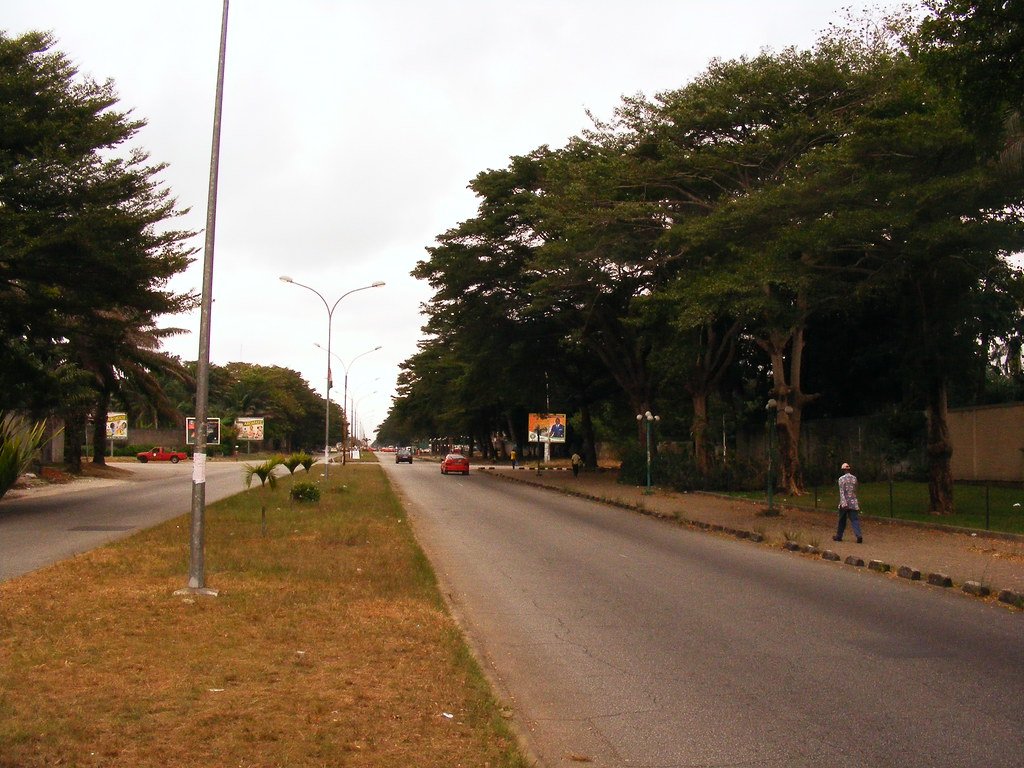
Abidjan is the economic capital of Côte d'Ivoire, a city of contrasts with a population of around 4 million. Le Plateau, the central business district on a peninsula in the Ébrié Lagoon, has one of the most striking skylines in West Africa — glass towers, wide boulevards, and modernist landmarks like La Pyramide and St Paul's Cathedral that reflect the ambitions of post-independence Ivory Coast. Cocody and Les Deux Plateaux, to the north, are where the wealthy Ivorian middle class and expatriate community live, in guarded compounds with well-tended gardens.
The other face of Abidjan is in Treichville, Marcory, and Adjamé — dense, animated, market-driven neighbourhoods with a very different energy. The Treichville fish market is one of the largest in the region, and the Adjamé market is one of West Africa's most overwhelming trading grounds. The city has the most active nightlife on the continent, concentrated in Zone 4 and around the Hotel Ivoire in Cocody.
The National Museum in Le Plateau holds fine collections of Ivorian masks and sculpture. On the city's outskirts, Banco National Park preserves 3,000 hectares of tropical rainforest within the urban sprawl. Abidjan is not the official capital (that is Yamoussoukro, about 240 km north) but it remains the country's commercial heart and the most important French-speaking city in West Africa.