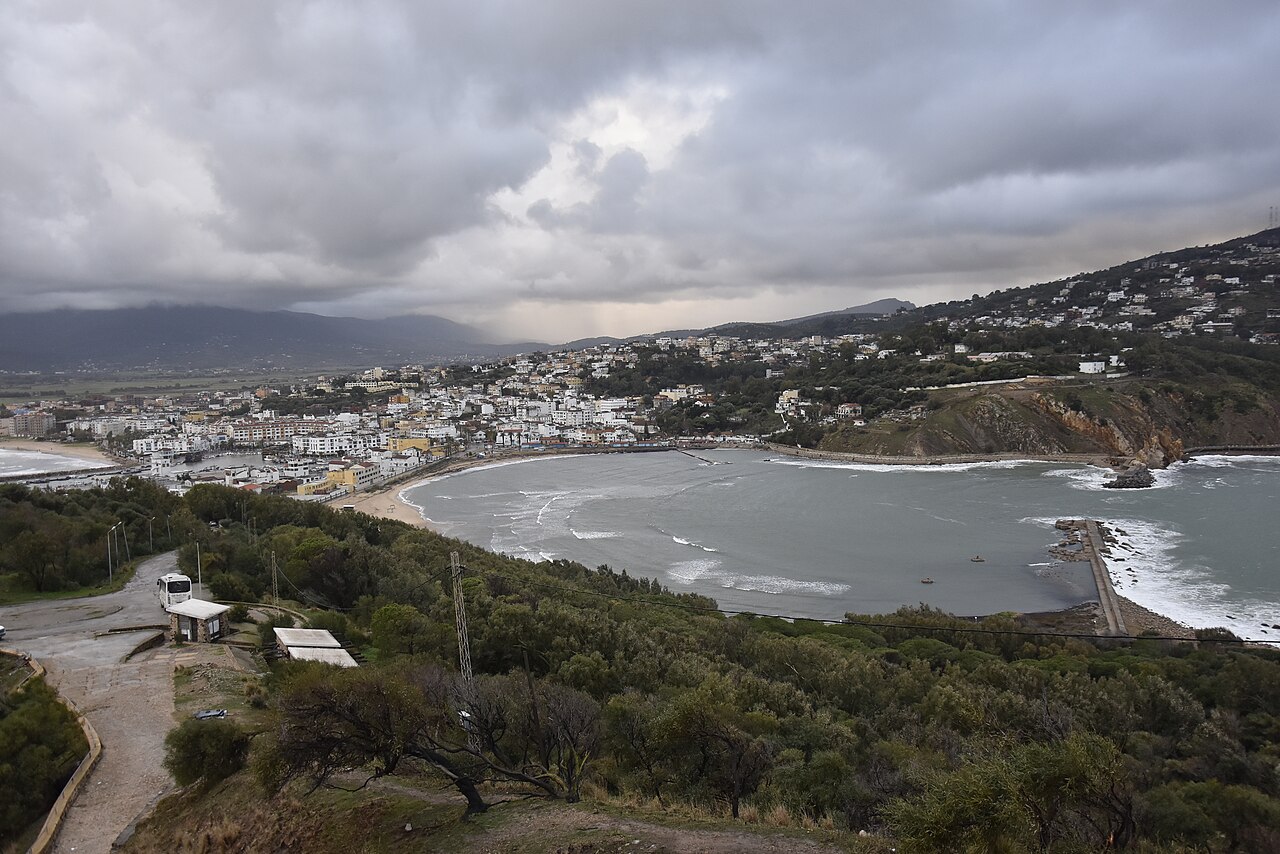
Northwestern Tunisian coastal town between the Kroumirie Hills and Mediterranean coral waters.
Tabarka sits in the far northwest of Tunisia, squeezed between the Kroumirie Hills and the Mediterranean. The setting is genuinely pretty, and the town has grown into a low-key resort without losing too much of its character.
The waters offshore are rich in fish and coral — Tabarka has a reputation as one of Tunisia's better spots for scuba diving and underwater photography. The Tabarka Rocks — a cluster of dramatic limestone stacks rising from the sea just west of town — create an underwater reef that divers explore on calm days. Above the waterline, the Fort de Gênes, built by Genoese coral merchants in 1542, commands the rocky promontory above the harbour and is worth the short climb for the views alone.
There's good hiking in the hills behind town, and the Romans were clearly fond of the area too: the underground villas of Bulla Regia, with their mosaic floors and cool subterranean rooms, lie about 70 kilometres south and are among the most unusual Roman ruins in North Africa.
Guide
Getting There
Tabarka has a small international airport (TBJ) with seasonal charter flights from France, Italy and Germany. Outside the summer season these are minimal and flying to Tunis-Carthage (about 170km east) and taking a bus or rental car is more practical.
Buses run from Tunis to Tabarka but the journey takes around four hours. From Bizerte the connection is quicker. If you're coming from Algeria, the Ain Draham crossing is nearby, though border formalities can take time. Driving your own car gives the most flexibility — the road through the Kroumirie mountains is scenic and the drive from Tunis takes around three hours.
Guide
When to Go
The best months for a visit are May to June and September to October. The sea is warm enough for swimming and diving, the crowds are absent, and the Kroumirie hills are green. July and August are hot and busy — the beach fills with Tunisian families and European package tourists, and accommodation prices rise sharply.
Winter is quiet and mild by northern European standards, but some beach facilities close. The hills are occasionally dramatic in winter light. The Jazz Festival, held each July, draws performers from across North Africa and Europe and is worth planning around if you enjoy that scene.