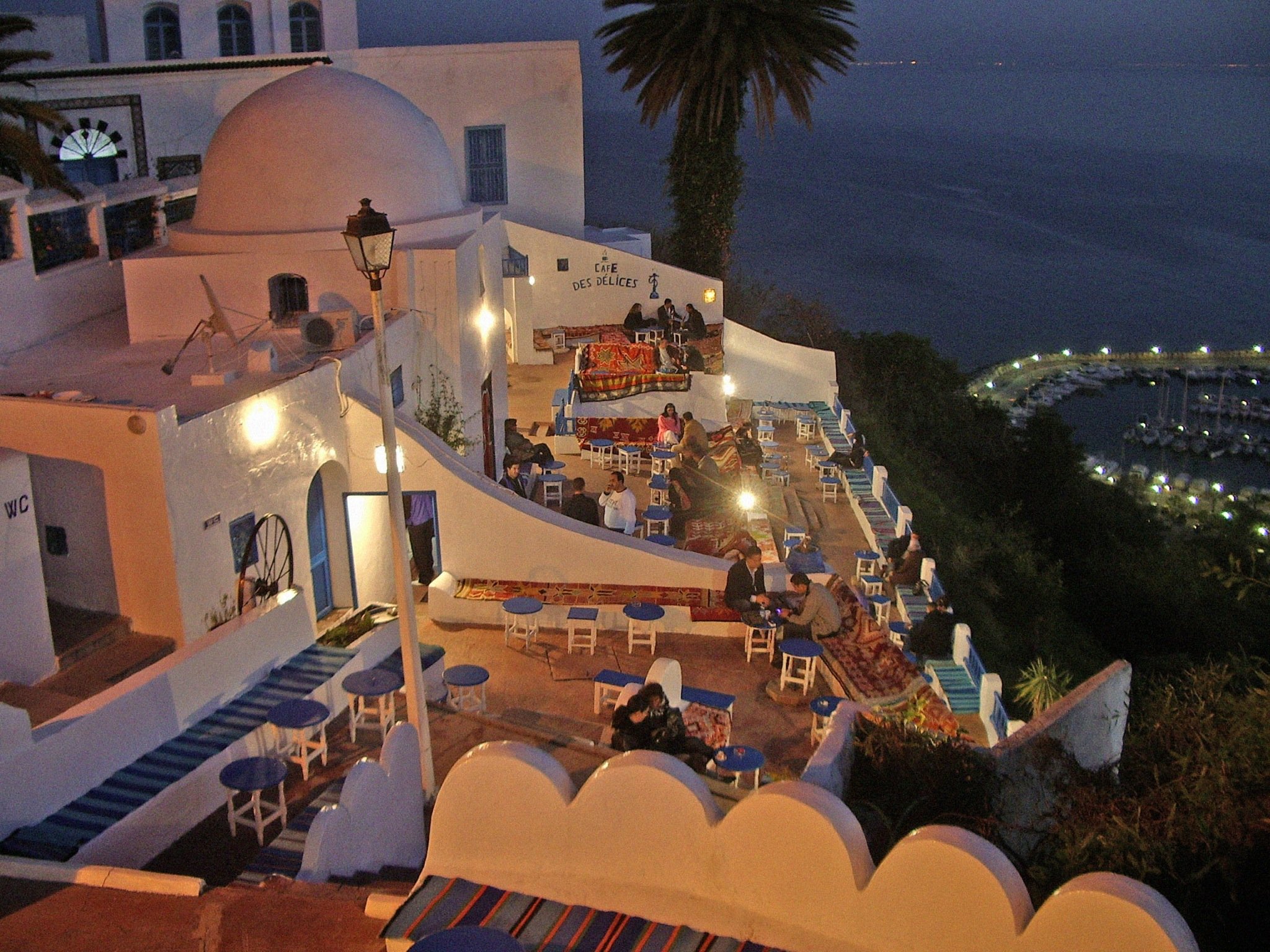
Sidi Bou Said is a clifftop village overlooking the Gulf of Tunis, famous for its blue-and-white colour scheme that has been protected by law since 1915. Every building is whitewashed, every door and window shutter painted in a distinctive cobalt blue, and the effect against the Mediterranean sky is genuinely striking. It is one of the most photographed places in Tunisia and draws visitors from across the country and beyond.
The village is small enough to walk in an hour, but the pleasure is in lingering. The cobbled streets are steep and winding, lined with bougainvillea and jasmine, and open onto sudden views of the sea far below. The Cafe des Nattes, a traditional tea house near the top of the village, has been serving mint tea and pine-nut pastries since the early 20th century and was a favourite of writers and artists including Paul Klee and Simone de Beauvoir. The Dar El Annabi museum, set in a traditional wealthy Tunisian home, gives a sense of how the local aristocracy lived. The Ennejma Ezzahra Palace, built by the Franco-British orientalist Baron d'Erlanger and now a music museum, is the architectural highlight.
Sidi Bou Said is just 20 km northeast of central Tunis and easily reached by the TGM commuter train, which runs frequently and takes about 30 minutes. The village gets crowded on weekends and in summer, so early mornings on weekdays are the best time to visit. The nearby ruins of Carthage are only one stop away on the same train line, making it easy to combine both in a single day trip from Tunis.