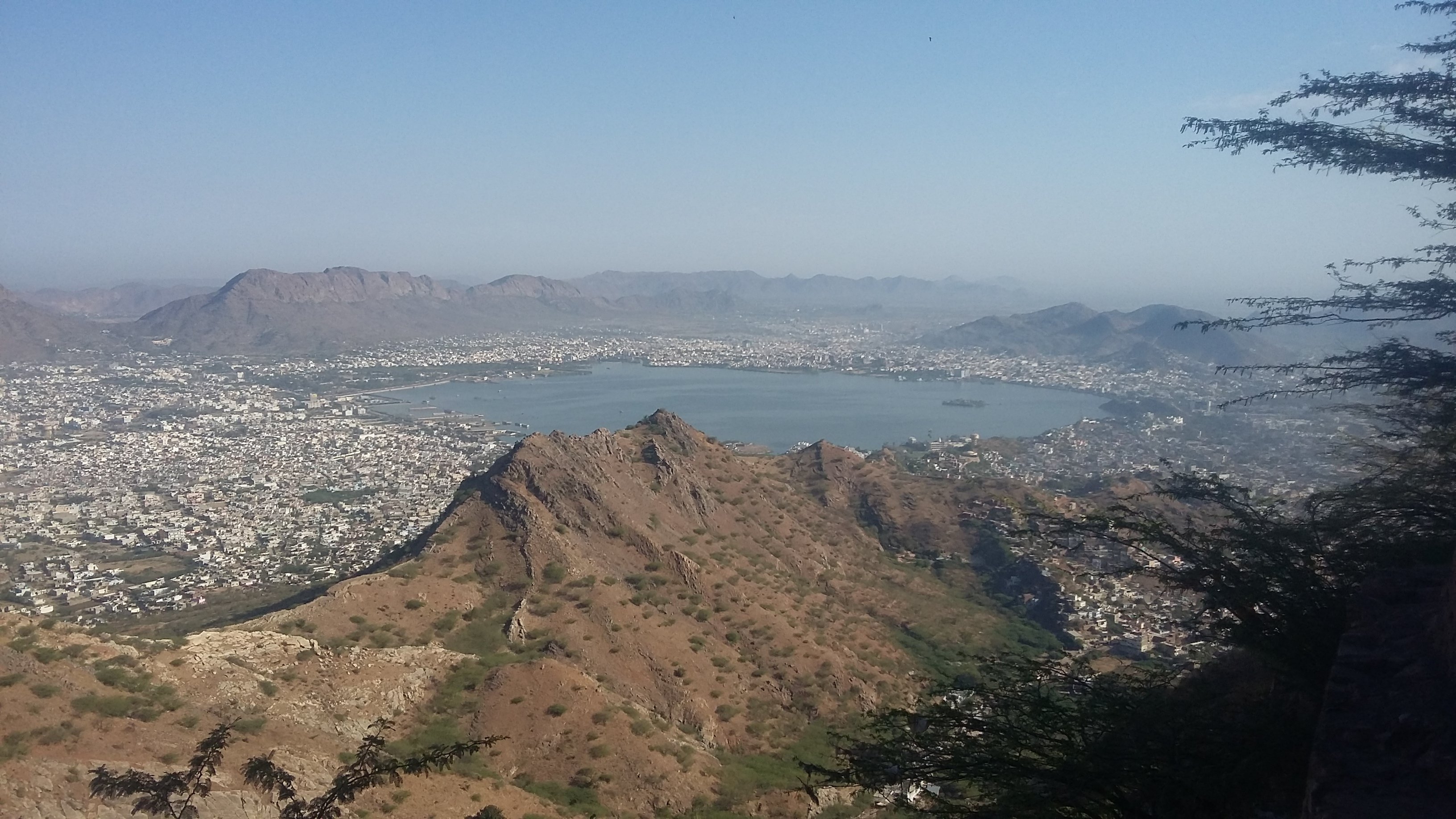
Ajmer is one of India's most important Muslim pilgrimage cities, home to the Dargah Sharif of the Sufi saint Khwaja Moinuddin Chishti. The saint arrived here in the 12th century, and his tomb has drawn devotees ever since — millions of them each year, from across South Asia and beyond. Walking the lane to the Dargah, past vendors selling rose petals and qawwali music rising from the courtyards, you feel a long way from the palace-and-fort circuit that defines most of Rajasthan.
The city sits in a bowl of low hills, a compact, busy place with a working-town feel. It has never leaned hard into tourism, which is part of its appeal. The bazaars around the Dargah are full of pilgrims, not package tourists.
Beyond the shrine, there are a handful of things worth your time. Ana Sagar Lake, built in the 12th century by a local ruler, makes for a pleasant evening stroll along its marble pavilions. The Nasiyan Jain Temple — known as the Red Temple — hides an extraordinary gilded diorama inside its hall, depicting the Jain cosmos in elaborate miniature. The Adhai Din Ka Jhonpra, a ruined mosque built from parts of a demolished Sanskrit college, is architecturally striking and usually quiet.
Most visitors use Ajmer as the jumping-off point for Pushkar, just 15 km over the Nag Pahar hills. That's fair — Pushkar is remarkable — but Ajmer rewards a few extra hours on its own terms.