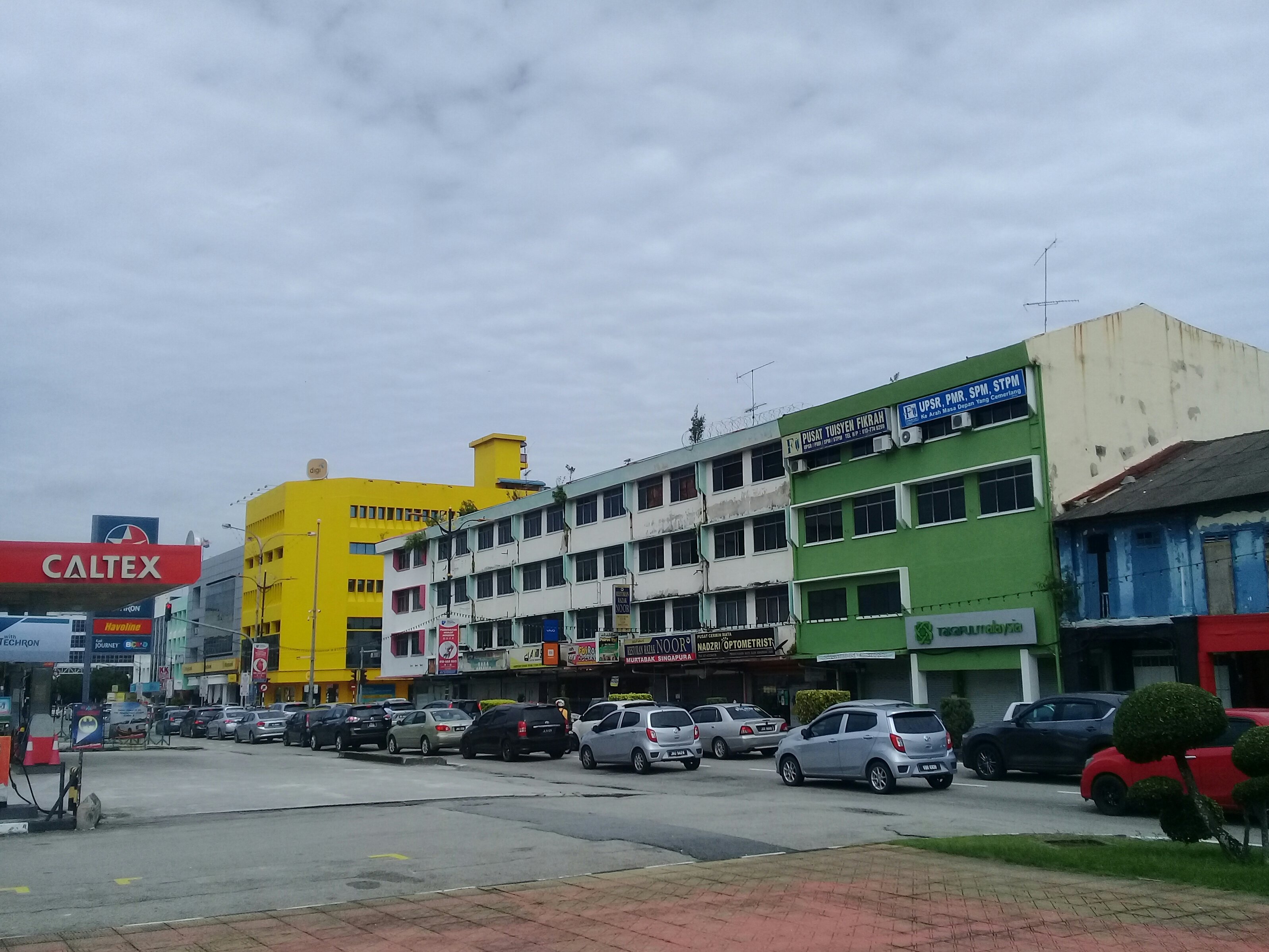
Batu Pahat
©
Batu Pahat

Batu Pahat

Batu Pahat is a Johor market town whose Malay name means “chiselled stone.”

Batu Pahat is the second-largest town in Johor State, a regional commercial centre on the west coast of the Malaysian peninsula about 110 km northwest of Johor Bahru. The name means "chiselled stone" in Malay — a reference to an ancient well in the coastal village of Kampung Minyak Beku, said to have been cut by Siamese craftsmen and associated in legend with the warrior Hang Tuah. The town is not a major tourist destination but functions as the market and service hub for a wide agricultural and industrial hinterland.

The town's economy has long been based on rubber, palm oil, and textiles. Batu Pahat has developed a reputation across Malaysia as a textile centre, with fabric and garments available at lower prices than in the big cities — Jalan Penggaram's row of pre-war shophouses is the place to look. The large Chinese community has deep roots and maintains a strong kopitiam (coffee shop) culture; the pasar malam (night markets) that rotate through different streets each evening are among the best in southern Johor for hawker food.

One genuinely unusual draw is the population of Lesser Adjutant storks (burung botak) that roost and feed in the wetlands around Taman Parit Labis on the town's edge. These large endangered wading birds — nearly as tall as an adult human — are rarely seen in Malaysia, and Batu Pahat is one of the best places in the country to observe them. Bird watchers make specific trips here for this reason. The forested Mount Banang south of town offers a popular half-day climb.

Guide

Bars and Cafes

The kopitiam (traditional Chinese coffee shop) is the social centre of Batu Pahat's daily life. These open-fronted cafés serve strong local coffee with condensed milk, toast with kaya (coconut jam), half-boiled eggs, and simple noodle dishes from early morning. Alcohol is limited in this predominantly Muslim town; the Chinese coffeeshops are the main social spaces for a casual drink. Large hotel bars exist but lack character.

Guide

Beaches

Batu Pahat faces the Strait of Malacca on the west coast of Johor, but the coast here is not sandy beach — it is muddy estuary and mangrove. The Minyak Beku coastal area has a seafront promenade and a lighthouse but is more of a viewing point than a swimming beach. Tasik Y is a man-made recreational lake in town with a park and playground, popular with local families in the evenings.

Guide

Day Trips

Johor Bahru is 110 km southeast, connected by a good highway, and makes an easy day excursion — it has the Sultan Abu Bakar Royal Palace museum, major shopping malls, and road access to Singapore just across the Causeway. Muar, 60 km north, is a more charming option: a well-preserved riverside town with colonial architecture, famous across Malaysia for its mee bandung and other local dishes. Pontian on the southwest coast has seafood restaurants on the waterfront.

Guide

Eating Out

Batu Pahat has a good Chinese coffee shop (kopitiam) culture alongside Malay and Indian restaurants. The town's Chinese community has deep roots and some of the kopitiams have been operating for generations — Hainanese chicken rice, char kway teow, and local versions of Johor laksa are staples. The pasar malam (night markets) that rotate through different streets each evening are an excellent source of hawker food at low prices.

Guide

Getting Around

Batu Pahat town is compact enough to walk for central areas. Taxis are available throughout town — meters are fitted but drivers sometimes prefer to negotiate a fare, particularly with foreign visitors; agree on the price before getting in. Buses connect Batu Pahat to Johor Bahru, Muar, Kluang, and other Johor towns. The bus terminal is centrally located. Trishaws (cycle rickshaws) are a traditional local transport option that has largely given way to motorcycles and taxis.

Guide

Getting There

Batu Pahat is on the PLUS Expressway (E2) between Kuala Lumpur and Johor Bahru — exit 235 or 236 — making the drive from JB around 90 minutes and from KL three and a half to four hours. There is no train station: the ETS main line runs well inland through Kluang, around an hour away by taxi.

Long-distance buses are the standard option for those without a car. Express coaches run hourly to Johor Bahru, Singapore (Larkin Terminal), Kuala Lumpur (TBS), and Melaka from the Terminal Bas Batu Pahat in town. The nearest major airport is Senai International in JB (90 minutes south).

Guide

Shopping

Batu Pahat is known across Johor as a textile town — fabric and garments are available at significantly lower prices than in Johor Bahru or Kuala Lumpur. Jalan Penggaram, lined with colonial shophouses, is the most atmospheric shopping street, with textile merchants and clothing shops. The pasar malam (night markets) rotate through different streets each evening and sell everything from fresh produce to cheap clothing and household goods. Several large modern malls — The Summit, Batu Pahat Mall — cater to mainstream shopping needs.

Guide

Things to Do

Batu Pahat is a working market town rather than a sightseeing destination, and the pleasure of a visit is in the day-to-day texture: kopitiams, shophouse rows, night markets. Two specific reasons to come are the Lesser Adjutant storks at Taman Parit Labis — one of the few reliable places in Malaysia to see these endangered birds — and the Telaga Batu Pahat, the ancient well that gave the town its name. Add a half-day climb up Mount Banang for the view, and a wander down Jalan Penggaram for the pre-war shophouses.

Guide

When to Go

Batu Pahat has a tropical climate with no real dry season. Daytime temperatures sit at 28–33°C year-round; nights are mild. The southwest monsoon (May–September) brings shorter, heavier afternoon thunderstorms; the northeast monsoon (November–January) is the wetter stretch overall, with occasional flooding in low-lying parts of town.

The single event worth timing a visit around is the Harum Manis Mango Festival in May, when the regional Harum Manis cultivar — a small, intensely sweet mango grown only in this corner of Johor — comes into season. Stalls in Bukit Harumanis on the town's outskirts sell the fruit at peak ripeness, alongside cultural performances and a small agricultural exhibit.

The full Malaysian holiday calendar — Hari Raya Aidilfitri (end of Ramadan), Chinese New Year, Deepavali — is celebrated visibly here, and walks through the multi-ethnic shophouse districts are particularly atmospheric in the run-up to each. Avoid the Chinese New Year week itself unless you have a particular reason: shops shut, traffic snarls, and accommodation tightens.