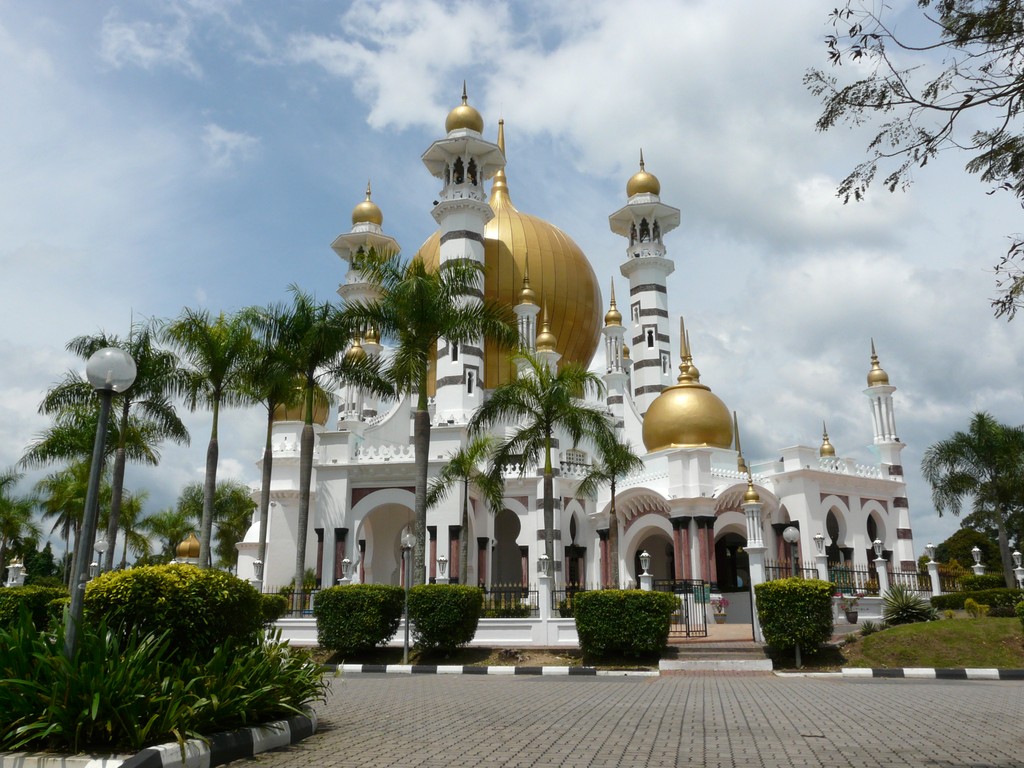
Perak is Malaysia's third-largest state, stretching from the jungle-covered mountains of the Main Range down to the mangrove coast of the Strait of Malacca. The name means "silver" in Malay — a reference to the tin that once made this one of the wealthiest states in Southeast Asia. The tin boom built the capital Ipoh into a grand colonial city with ornate shophouses, cave temples, and some of the best street food in Malaysia. The state's royal town, Kuala Kangsar, sits 50 km north on the Perak River — a quieter, greener place with the golden-domed Ubudiah Mosque, the Sultan's palace and the old "Eton of the East", Malay College.
The Cameron Highlands, in the eastern part of the state, offer cool mountain air, tea plantations, and jungle walks — a welcome escape from the lowland heat. The Royal Belum State Park in the north is one of the oldest rainforests in the world, older than the Amazon, and home to tigers, elephants, and the enormous Rafflesia flower. Pangkor Island off the west coast has quiet beaches and fishing villages. The town of Taiping, north-west of Ipoh, hides Malaysia's oldest public gardens and oldest museum, as well as the dripping wet hill station of Bukit Larut. For deeper history, the Lenggong Valley — a UNESCO World Heritage Site — has produced stone tools 1.83 million years old, the oldest evidence of human technology outside Africa.
Perak is less visited than Penang or the east coast, but it rewards the detour. Ipoh alone — with its white coffee, its bean sprout chicken, and its limestone cave temples — is worth a stop on any trip through peninsular Malaysia.