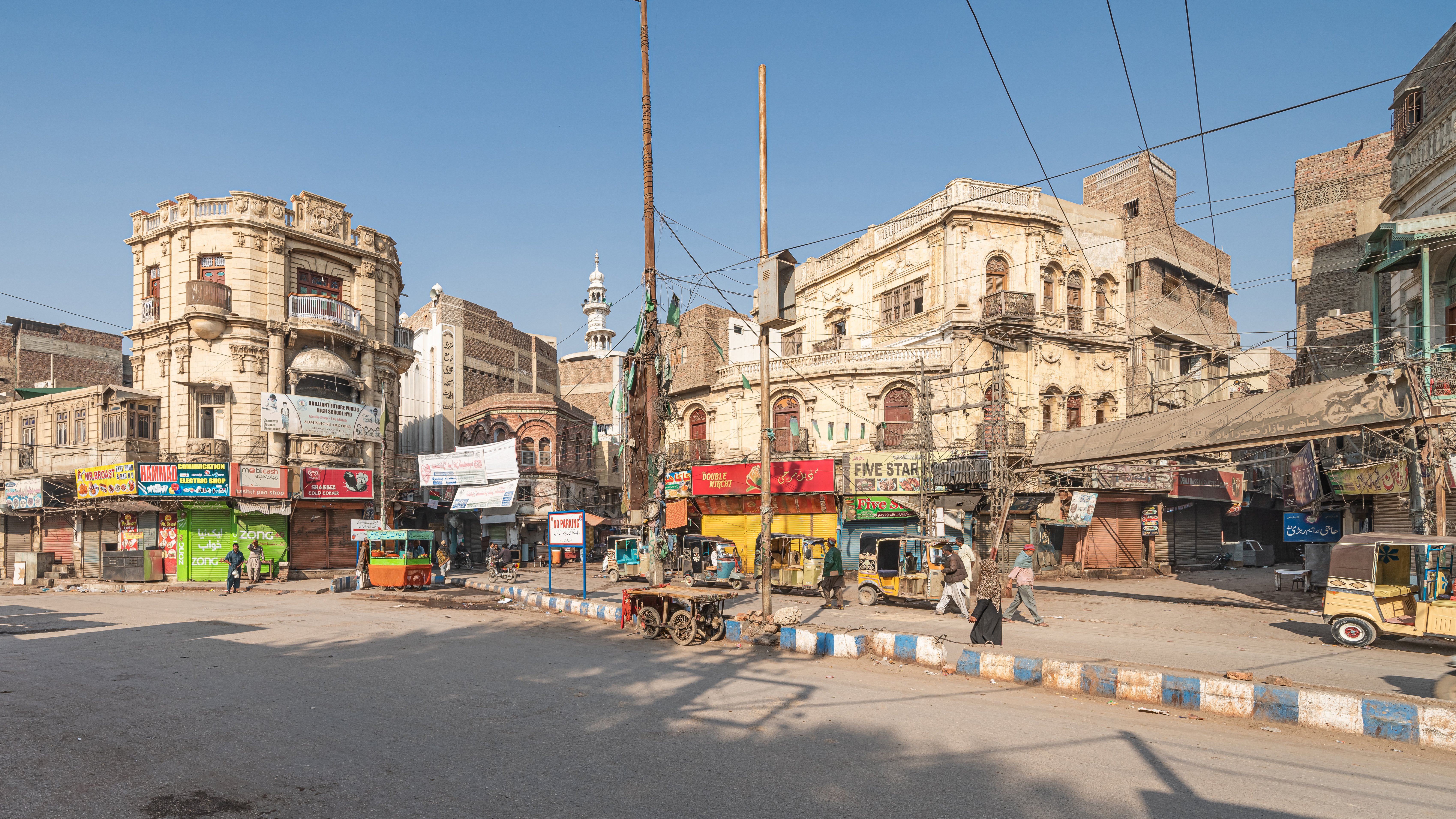
Not to be confused with Hyderabad in India, this Hyderabad is the second largest city in Sindh and one of the largest in Pakistan. It lies 164 km north of Karachi, on the eastern bank of the Indus. When the river shifted its course away from Khudabad, the old regional capital, Hyderabad took over the role — and it has been the cultural heart of Sindh ever since.
The Fort, built in 1768, presides over the old city, where narrow streets are topped by badgirs — distinctive wind-catching towers that look like chimneys on the rooftops. They catch the cool southwest breezes that blow steadily for about 40 days from late April each year, a natural air-conditioning system that has worked for centuries. In the old sections of town, cows still roam the streets, giving the place a distinctly medieval atmosphere.
North of the city stand the Tombs of the Talpur Mirs, decorated with vivid kashi tilework, and the Tomb of Ghulam Shah Kalhora. The Shahi Bazaar is the best place in Sindh to buy ajrak cloth, embroidered textiles, and lacquerwork. The Mukhi House in the old city preserves the architecture of a wealthy pre-Partition merchant family. Also worth a visit is the Institute of Sindhology museum at the University of Sindh, with displays on all aspects of Sindhi history, music, and culture. Getting there is easiest by miniwagon to Jamshoro, across the river, and then a 1.5 km walk to the campus.