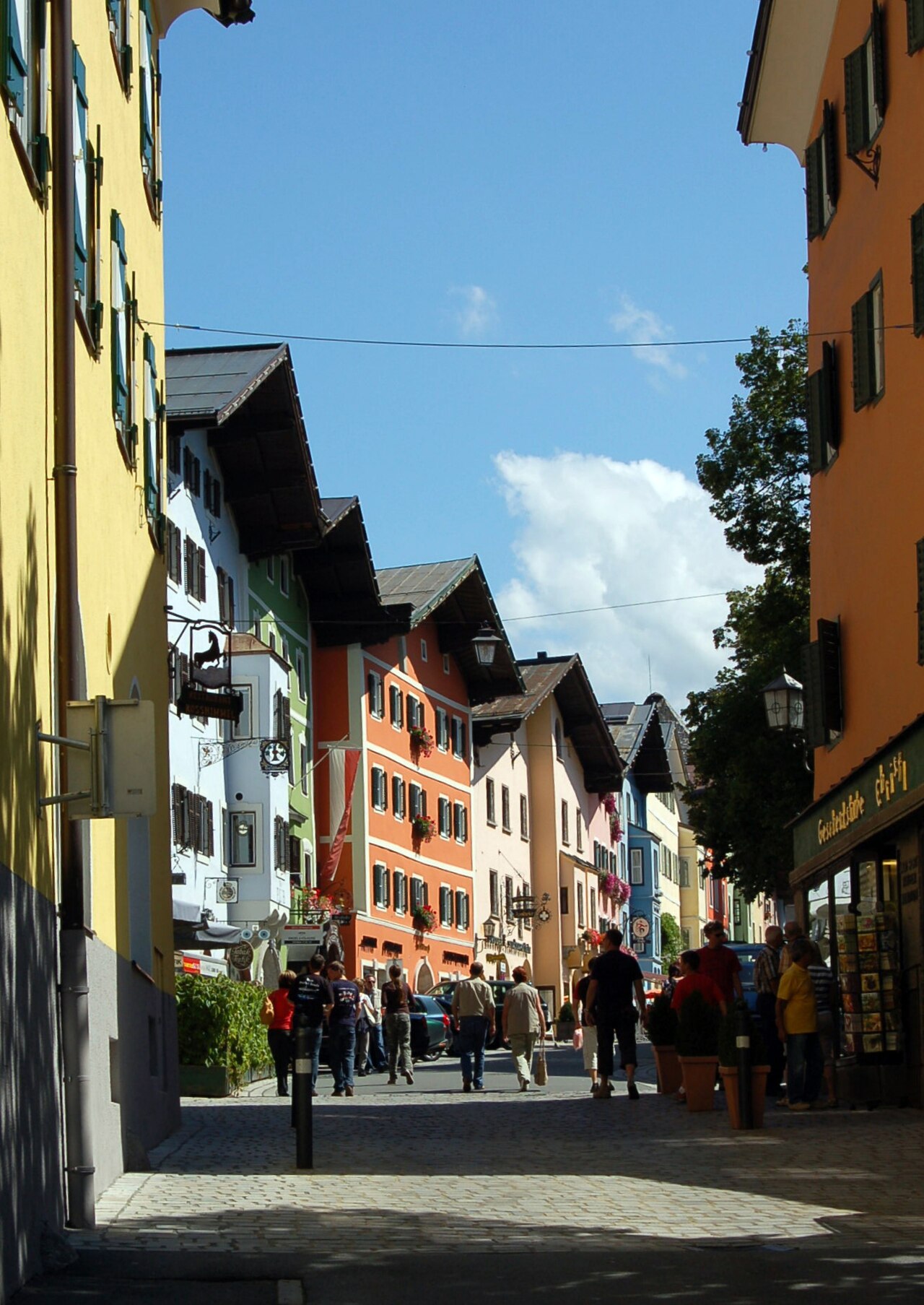
Tyrolean ski town with a medieval centre and the fearsome Hahnenkamm downhill course.
Kitzbühel is one of the most famous names in skiing, thanks to the Hahnenkamm downhill — the most feared race on the World Cup circuit, held every January on the Streif course so steep and icy that it has no real equivalent anywhere. During race week the medieval town fills with athletes, celebrities, and fans, and the atmosphere is electric.
The rest of the season, Kitzbühel is a pleasant if not spectacular ski resort. The town is charming — a compact medieval centre with painted facades, church towers, and a pedestrianised main street. The Kitzbüheler Horn on the northeast side of the valley offers alpine flowers and quieter skiing. St Catherine's Church in the old town dates from 1360 and has the oldest frescoes in Tyrol. The Museum Kitzbühel is worth visiting for its large collection of works by Tyrolean painter Alfons Walde, who defined the visual identity of the Austrian ski resort between the wars.
Kitzbühel is not the exclusive resort its reputation suggests. Alongside the four-star hotels are plenty of affordable pensions and guesthouses, and the town attracts a mix of budgets. It is 80 kilometres from Innsbruck and 120 from Munich, well connected by train, and you do not need a car — free ski buses serve the resort. In summer, the Schwarzsee lake two kilometres west of town warms up for swimming, and the mountains are excellent for hiking and mountain biking.
Guide
Eating Out
Kitzbühel's restaurant scene skews expensive, especially in high season. The pedestrianised Vorderstadt and Hinterstadt — the two main old-town streets — are lined with cafés, restaurants, and wine bars. The Tyrolese cuisine is solid: Wiener Schnitzel, Tiroler Gröstl (a hash of potatoes and leftover meat), and Kaiserschmarrn for dessert appear on almost every menu.
For a traditional lunch on the mountain, the Hahnenkamm restaurant at the top of the cable car does the standard Tyrolean fare with panoramic views. In town, the Café Praxmair on Vorderstadt is the historic coffee house — it has been serving coffee and cake since 1910. For something lighter, the Brauhaus at the edge of the old town is good for a beer and a warm plate after skiing. The Tennerhof, about a kilometre from the centre, has one of the better hotel restaurants in the valley.
Guide
Getting There
Kitzbühel is on the Salzburg–Tyrol railway line (the Giselabahn), with direct trains from Salzburg (roughly 1.5 hours) and connections from Innsbruck via Wörgl. From Munich, the journey by train is about 2.5 hours via Salzburg or Kufstein. By car, the town is about 80 km from Innsbruck and 120 km from Munich, with motorway connections to within 20 km before the valley road takes over.
The nearest major airport is Innsbruck (INN), about 90 minutes away. Salzburg Airport (SZG) is a similar distance and handles more international traffic, particularly charter flights during the ski season. There is no airport in Kitzbühel itself. The town is car-free in the historic centre; there are parking facilities on the perimeter, and the ski buses are free for guests staying in accommodation within the resort area.
Guide
When to Go
Kitzbühel has two high seasons: mid-January during the Hahnenkamm race week, when the town fills completely and hotels charge peak rates, and the general ski season from mid-December to late March. The race week in January is worth experiencing once — the atmosphere is electric — but book months ahead and expect to pay accordingly.
The shoulder ski months of early December and late March are cheaper and quieter, with usually adequate snow on the higher runs. Snow reliability on the lower slopes is a perennial problem: the town sits at only 762 metres, and warm winters can make conditions difficult below the mid-mountain.
Summer (June to September) is pleasant but very different in character: the crowds thin dramatically, the cable cars run for hikers and mountain bikers, and the Schwarzsee lake warms up for swimming. Summer rates are considerably lower than in winter.