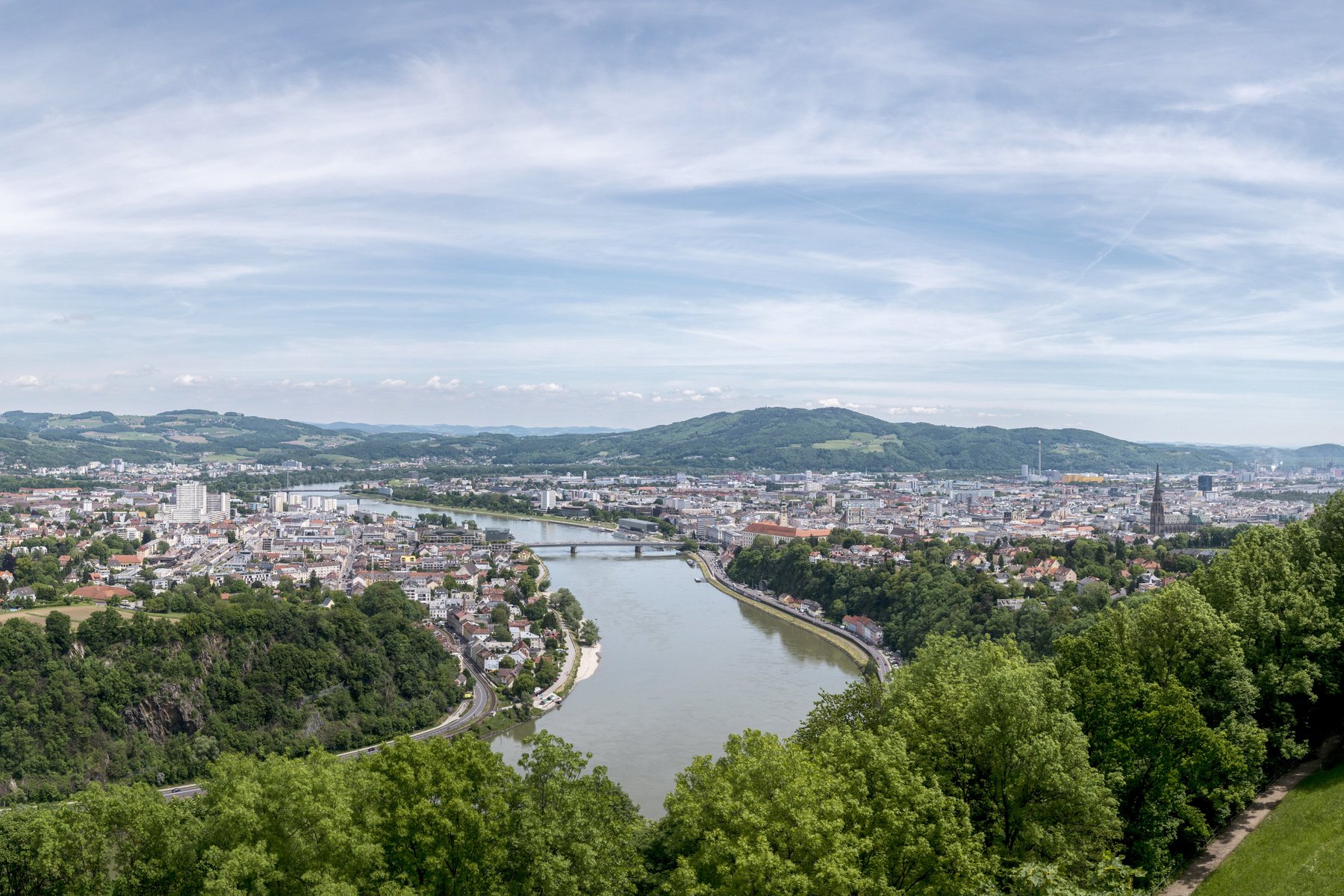
Linz is Austria's third-largest city, sitting on the Danube about halfway between Vienna and Salzburg. For a long time it carried an industrial reputation — steel mills on the southern edge, a name most outsiders associated with Hitler's childhood home. That reputation has largely given way to something more interesting: Linz has quietly become one of Austria's best cities for contemporary art and design.
The Hauptplatz is one of the largest medieval squares in Austria, ringed by Baroque townhouses and anchored by the Trinity Column. The Old Town quarter stretches back from here through narrow streets lined with patrician houses, some sitting on Roman foundations — the town was a Roman garrison called Lentia. The Linz Castle on the hill above has sweeping views and a good state museum. The Old Cathedral, where Anton Bruckner served as organist for twelve years, is a few minutes' walk away.
The Pöstlingberg hill rises sharply northwest of the centre, and the tram that climbs it is one of the steepest adhesion railways in the world. The views across the Danube valley from the top are good, especially in clear weather. A pilgrimage church sits at the summit, along with the Grottenbahn, a fairy-tale cave railway that has been delighting children since 1906.
Linz was European Capital of Culture in 2009, and the infrastructure built for that year — particularly the Ars Electronica Center on the north bank — has stuck around. Beside it, the Lentos Kunstmuseum glows at night from the Danube promenade. The Brucknerhaus hosts the annual Klangwolke festival in September, one of the more spectacular outdoor musical events in Central Europe.