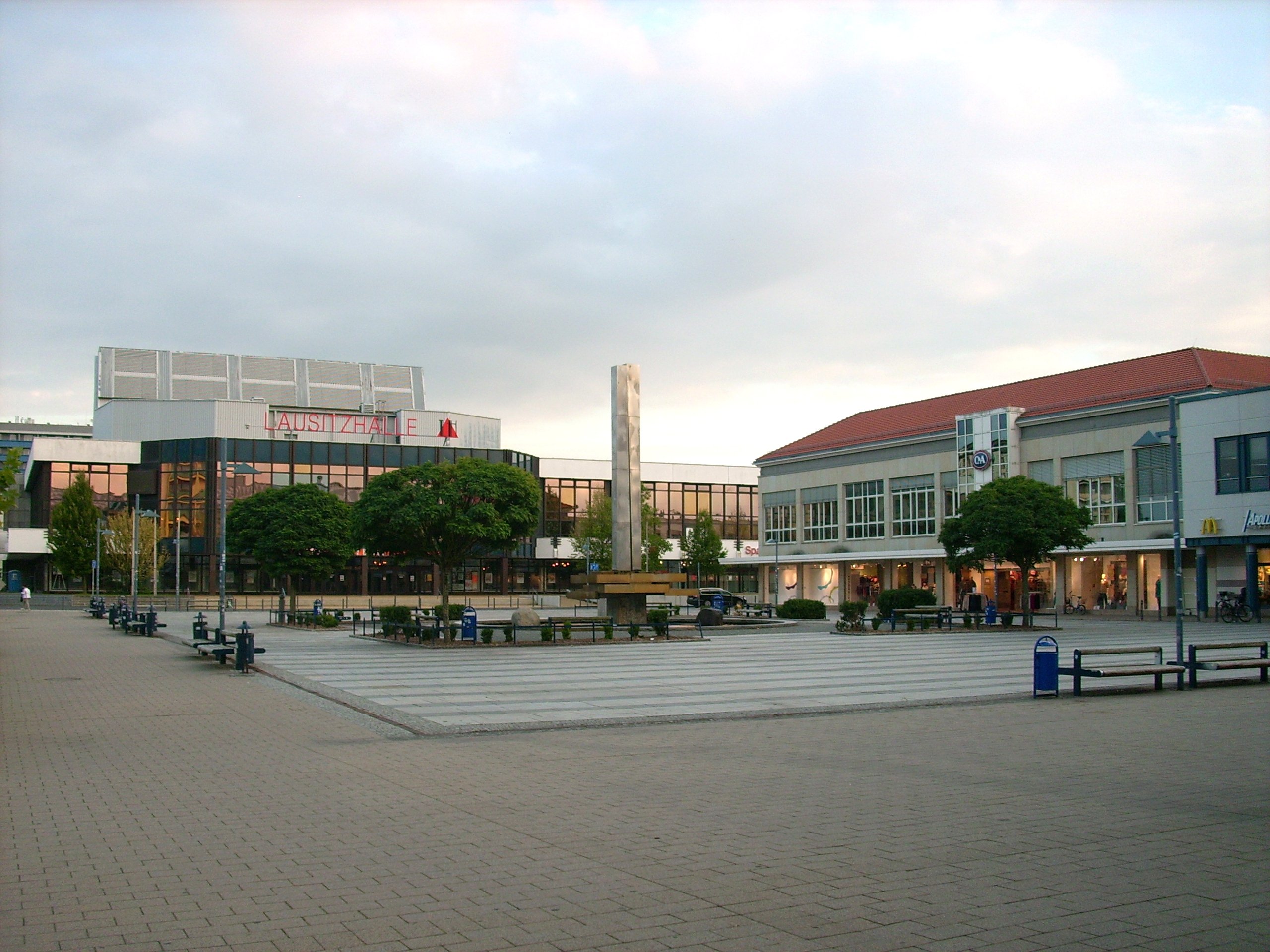
Hoyerswerda is a small city in Upper Lusatia, the Sorbian-speaking region of eastern Saxony. It has two distinct halves: the Altstadt, a quiet centre with a fourteenth-century castle and half-timbered houses, and the Neustadt, a vast Communist-era housing development built in the 1950s to house workers for the nearby lignite mines.
The city's population has more than halved since reunification as the mines closed and young people left, and the Neustadt is gradually being demolished block by block. It is a stark example of the demographic challenges facing eastern Germany. For visitors, the interest lies in the Sorbian cultural heritage — the Sorbs are a Slavic minority with their own language, traditions, and elaborately decorated Easter eggs — and in the nearby Lausitzer Seenland, a chain of lakes created from former open-pit mines that is becoming a significant recreational area. The nearby village of Schwarzkollm is home to the KRABAT mill, connected to the most famous legend in Sorbian folklore.