Chios is a Greek island in the eastern Aegean, sitting just a few kilometres off the Turkish coast. It is best known for mastic — the crystallised resin tapped from Pistacia lentiscus trees that grow only in the southern villages of the island, known collectively as the Mastichochoria. For centuries this sticky, aromatic substance was so prized that the Ottoman sultans treated Chios with special care; today it flavours everything from chewing gum to liqueur to cosmetics.
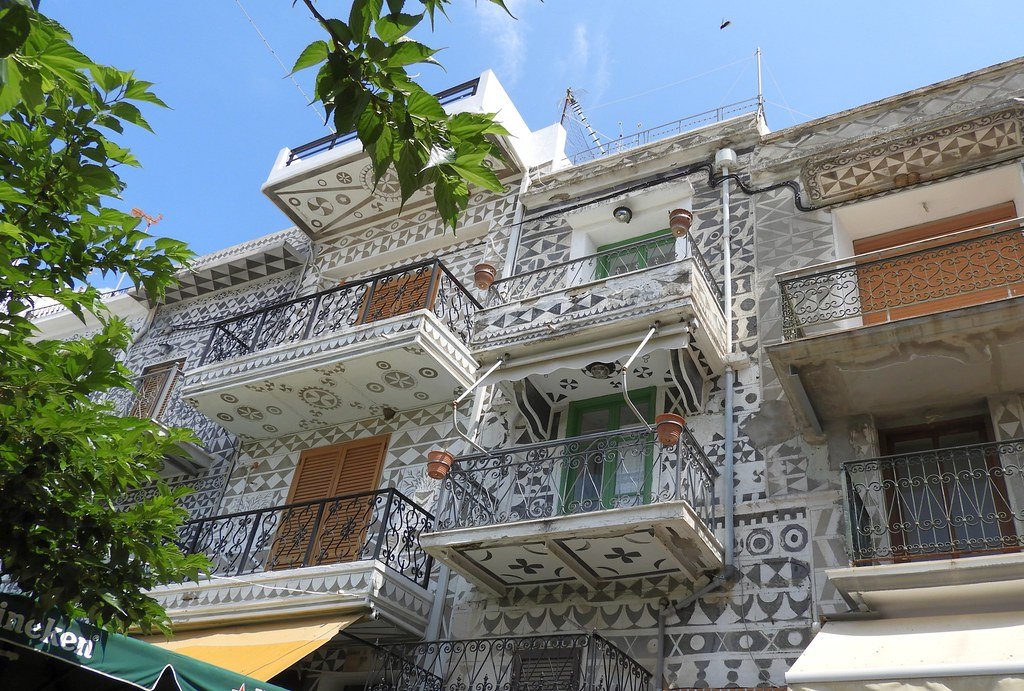
The island splits naturally into two worlds. The north is mountainous and wooded, with the medieval village of Volissos and dramatic clifftop views. The south belongs to the mastic villages: Pyrgi, with its extraordinary geometric graffito decoration covering entire house facades, and Mesta, a labyrinthine walled village whose alleys were deliberately designed to confuse pirates. Both are among the most architecturally distinctive villages in all of Greece.
Chios also has a difficult history: the 1822 massacre, in which Ottoman forces killed tens of thousands of inhabitants during the Greek War of Independence, cast a long shadow that Delacroix immortalised in paint. The Nea Moni monastery, a UNESCO World Heritage site, preserves some of the finest Byzantine mosaics in the world — and bears the scars of that same massacre in its ossuary. The ghost village of Anavatos, where inhabitants threw themselves from the cliff rather than surrender, is among the most haunting sites in Greece.
Every Easter Saturday, the village of Vrontados stages the Rouketopolemos — two churches firing tens of thousands of rockets at each other's bell towers, a tradition unlike anything else in the Orthodox calendar.
Ferries connect Chios to Piraeus and to nearby Lesbos, and there are flights from Athens. The island remains quieter than many Aegean destinations, which is precisely its appeal.