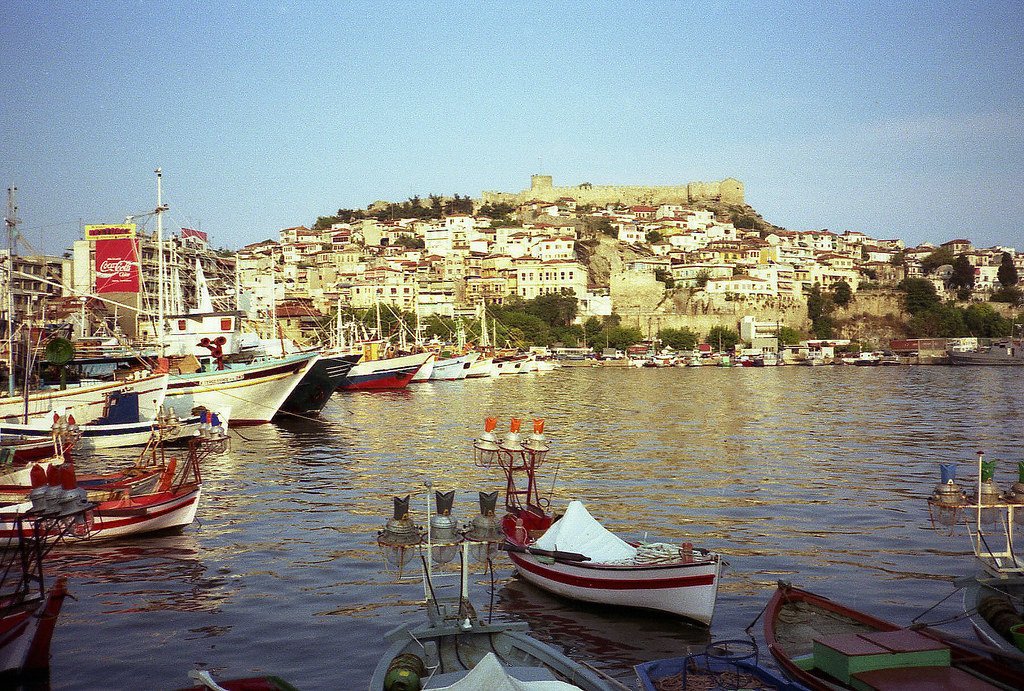
Kavala is the main port city of eastern Macedonia, built in tiers on a hillside above a deep natural bay on the northern Aegean coast. It is a city of layered histories — Greek, Roman, Byzantine, Ottoman — and the evidence of all of them is visible in the streets. The old city, called Panagia, occupies a rocky promontory below a Byzantine castle, and its lanes of Ottoman-era houses, domed buildings, and sea views are the best reason to be here.
The most striking Ottoman monument is the Imaret, a large complex of domes and arcaded courtyards built in 1817 by Mehmet Ali Pasha — the founder of modern Egypt's ruling dynasty, who was born in Kavala. The Kamares aqueduct, with its tall stone arches spanning the road into the old city, is one of the best-preserved Ottoman aqueducts in Greece. The House of Mehmet Ali is open to visitors nearby. The Archaeological Museum holds finds from the city's long history, with particularly strong material from nearby Philippi and from ancient Neapolis, the Greek city that preceded Kavala on the same site.
Kavala is also a working port and a fishing city. The fish market and harbour front, the waterfront tavernas, and the smell of the sea give the city a quality that purely touristic places lack. The beaches west along the coast towards Nea Peramos — particularly Ammolofoi — fill in summer but are accessible from the city without much effort.
The best reason to use Kavala as a base is the proximity of ancient Philippi, 15 km to the west. Founded by Philip II of Macedon in 356 BC, it was the site of the Roman civil war's decisive battle in 42 BC and, a century later, the place where the Apostle Paul established the first Christian community in Europe. Thassos island, an hour by ferry, offers good beaches and its own ancient remains.