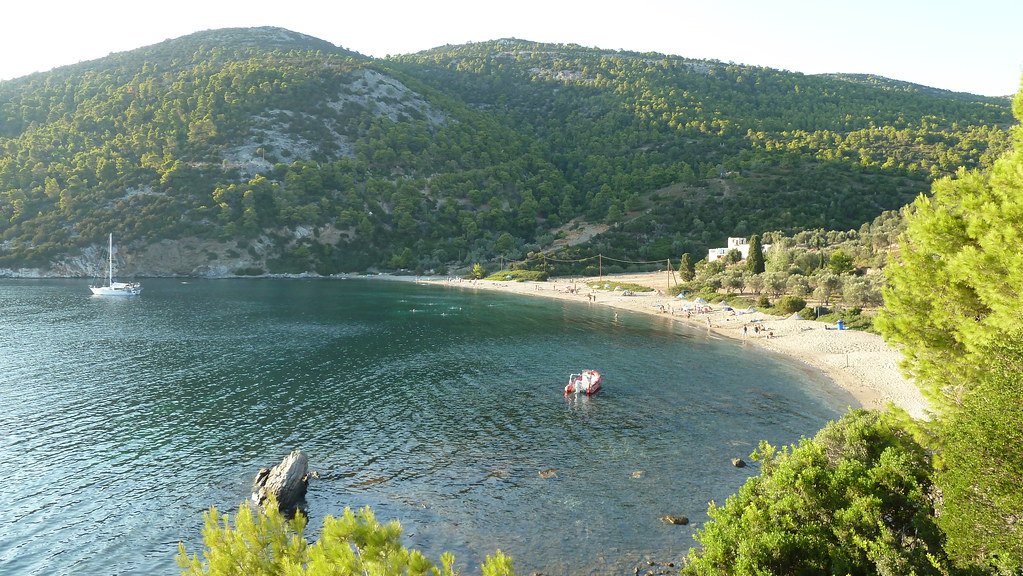
Skyros is the largest and most remote of the Sporades islands, and it feels like two different places joined at the waist. The northern half is green and forested, with pine-covered hills and sheltered beaches. The southern half is rocky, barren, and wind-swept, home to the endangered Skyrian horse, a small breed that has lived semi-wild on the island for centuries. The contrast is dramatic and gives the island a character quite unlike any of its neighbors.
Skyros Town, the only real settlement, is built on a steep hillside beneath a Byzantine-Venetian castle. The cube-shaped white houses have a distinctive style, and the interiors are famous for their folk art: carved wooden furniture, painted plates, and embroidered textiles that families have collected and displayed for generations. The Faltaits Folklore Museum in town has a fine collection. Below the town, Magazia beach stretches along the coast, walkable from the center.
The island has a strong carnival tradition. The Skyrian Goat Dance, performed during pre-Lenten festivities, features men dressed in goatskins and hung with heavy goat bells, performing a stomping ritual dance that predates Christianity. It is one of the most striking folk traditions surviving anywhere in Greece. Getting to Skyros requires either a ferry from Kymi on Evia or a flight from Athens to the island's small airport. The relative difficulty of reaching it is part of why Skyros has stayed authentic.