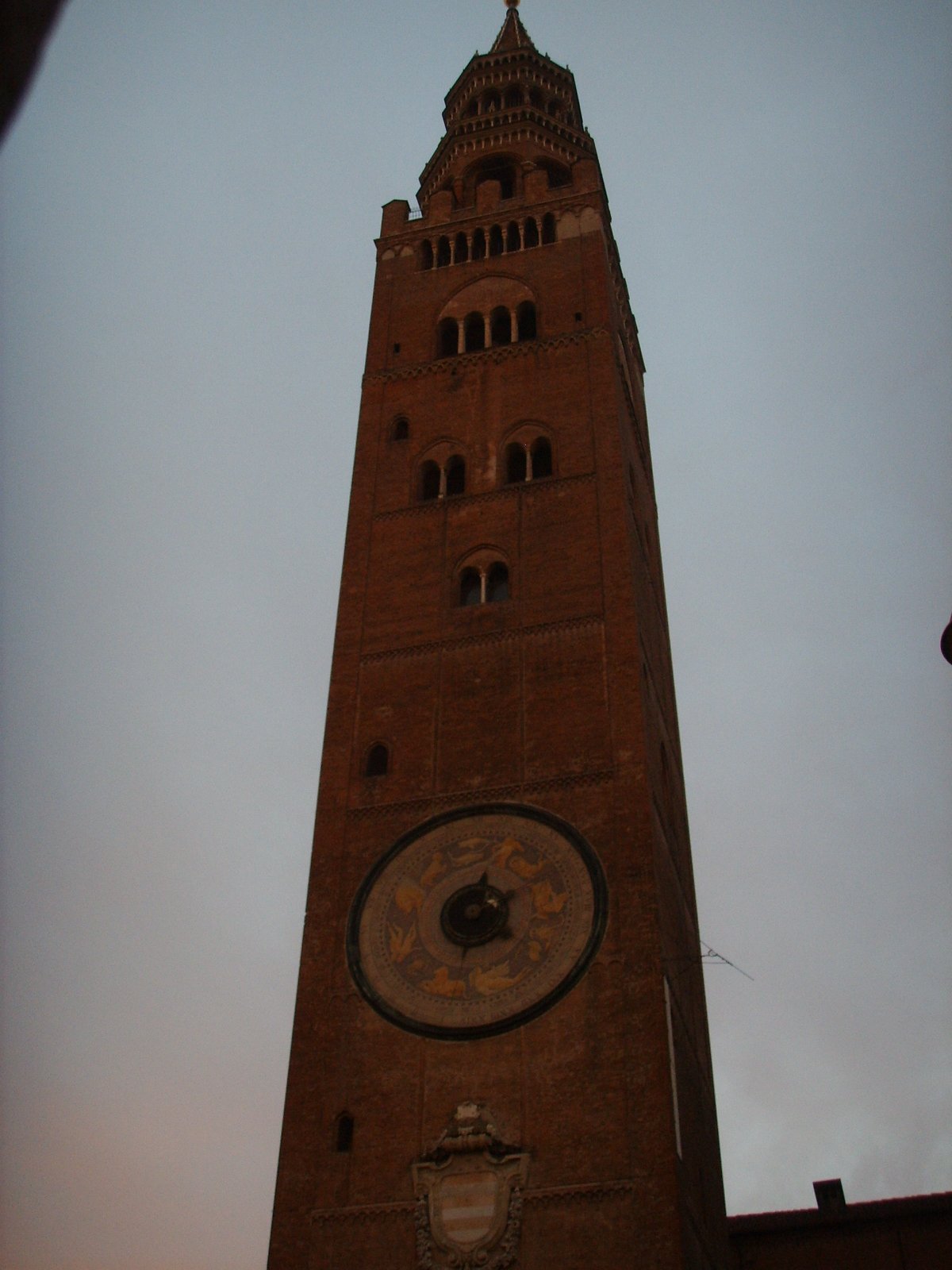
Cremona is a city on the south bank of the Po in Lombardy, and it has one of the most remarkable concentrations of medieval architecture in northern Italy — the main piazza alone contains a cathedral, a baptistery, the tallest bell tower in Italy, and a series of civic loggie that together constitute a visual feast largely free of the tourist crowds that overwhelm Verona or Siena. But the city is most famous for something more intimate: violins. Cremona was the city of Stradivari, Guarneri, and Amati, and it remains the world capital of violin-making to this day.
The Piazza del Comune is the starting point for any visit — a medieval civic composition anchored by the Cathedral (Duomo) and its adjacent Torrazzo, which at 112 metres is the tallest medieval tower in Italy. The Baptistery and Loggia dei Militi complete the ensemble. A few minutes' walk away, the Museo del Violino in the renovated Palazzo dell'Arte is an extraordinarily well-conceived museum of luthiery, with actual Stradivari instruments you can hear in concert.
The city's connection to music runs deeper than tourism. The violin-making workshops (liuterie) are still active — several hundred craftsmen work in Cremona today, continuing a tradition of approximately 500 years. You can visit some workshops by appointment and watch the process of shaping and finishing a violin using tools and techniques Stradivari would have recognized. There are few other places in the world where a medieval craft tradition continues at this level.
Cremona is also known for its food: mostarda di Cremona (fruit preserve in a spiced mustard syrup, used as an accompaniment to meats and cheese), salame cremonese, and tortelli cremaschi (a sweet filled pasta that dates from the Renaissance). The city has a solid restaurant scene and makes a worthwhile overnight stop on a journey between Milan and Venice.