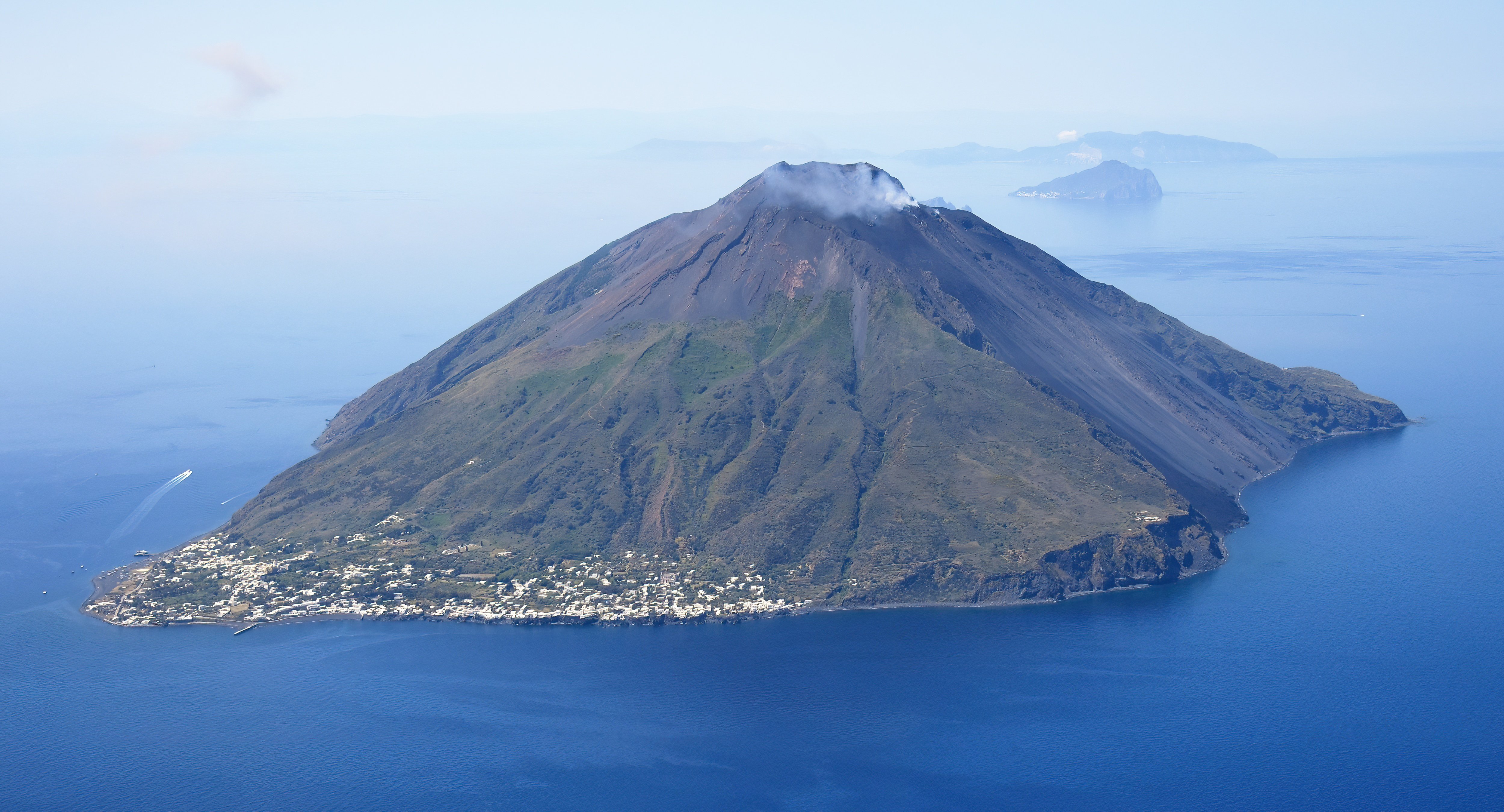
Stromboli is one of the most reliably active volcanoes on earth — it has been erupting more or less continuously for at least 2,000 years. The island is essentially nothing but volcano: a near-perfect cone rising from the Tyrrhenian Sea to 924 metres, with a small village at its foot and almost nothing else. It is extraordinary.
The hike to the summit takes about three hours each way on steep volcanic scree. Official guided ascents depart in the late afternoon so that hikers reach the crater rim at dusk, when the lava throws proper light. You watch rocks and glowing bombs arc out of the crater at intervals of ten to thirty minutes — sometimes more dramatic, sometimes less, but always worth the climb. Take warm layers even in summer: the summit is cold and exposed, and the wind can be fierce. Guides are mandatory above 400 metres.
From the sea, the Sciara del Fuoco — the "Stream of Fire" — is a barren lava channel running from the active crater straight into the water on the northwest face of the island. Night boat trips offer a different perspective: you float offshore while the volcano lights the dark above you.
The village of Stromboli, on the northeastern shore, is small and whitewashed, with narrow lanes, bougainvillea, and a handful of restaurants and bars. There are no cars. The pace is extremely slow and that is part of the appeal — people come here to hike, swim from black sand beaches, and watch the eruptions from the low ridge called the Pizzo Sopra la Fossa on evenings when the summit is cloud-covered. On the opposite side of the island, Ginostra is even smaller and reached only by sea.
Ferries and hydrofoils run to Lipari and Naples. The journey to Naples takes about six hours by ferry.