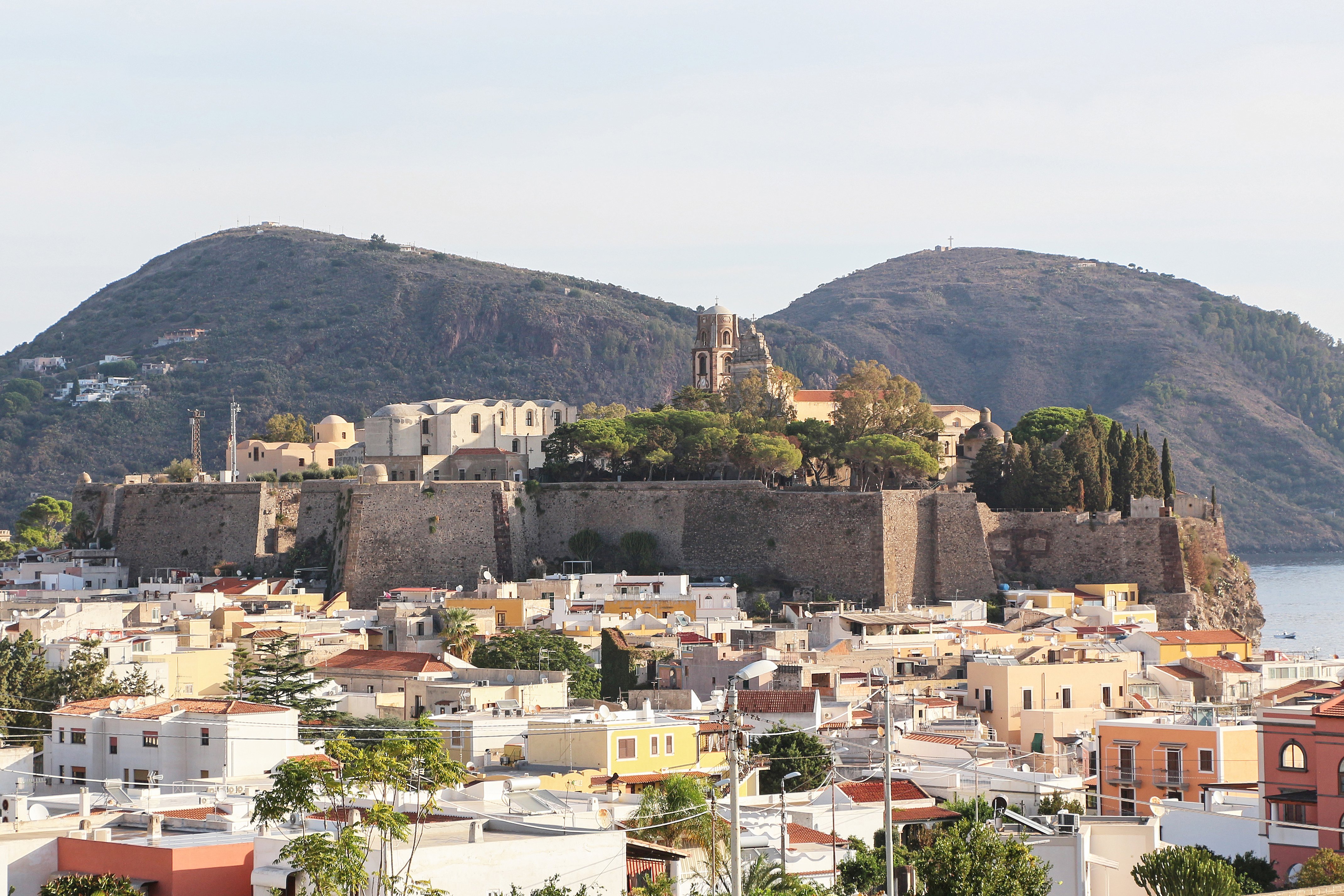
Lipari is the largest and most developed of the Aeolian Islands, and for most visitors the first port of call. The main town, also called Lipari, climbs from a harbour up to an imposing castle-fortress on a rocky promontory between two bays. The archaeological museum inside the castle is one of the best in southern Italy, with a superb collection of Greek theatrical masks and prehistoric obsidian tools. The 17th-century cathedral sits on the same rock.
The island has several beaches — mostly black volcanic sand or pebble — and good swimming off the rocks. The best is Spiaggia Bianca (White Beach) near Canneto, where pumice deposits have bleached the sand a striking pale colour. A hike to the top of Monte Sant'Angelo gives views across the whole archipelago, and a boat tour of the coast takes in the kaolin cliffs at Quattropani.
Lipari is the transport hub of the Aeolians. Ferries and hydrofoils connect it to all the other inhabited islands and to Milazzo and Messina on the Sicilian coast. It has the widest range of accommodation and restaurants in the archipelago, from simple rooms to comfortable small hotels. The pace is relaxed, the food is excellent — capers, fresh fish, and Malvasia wine are the local specialities. Wander up the Corso Vittorio Emanuele at sunset and finish with a drink on Marina Corta.