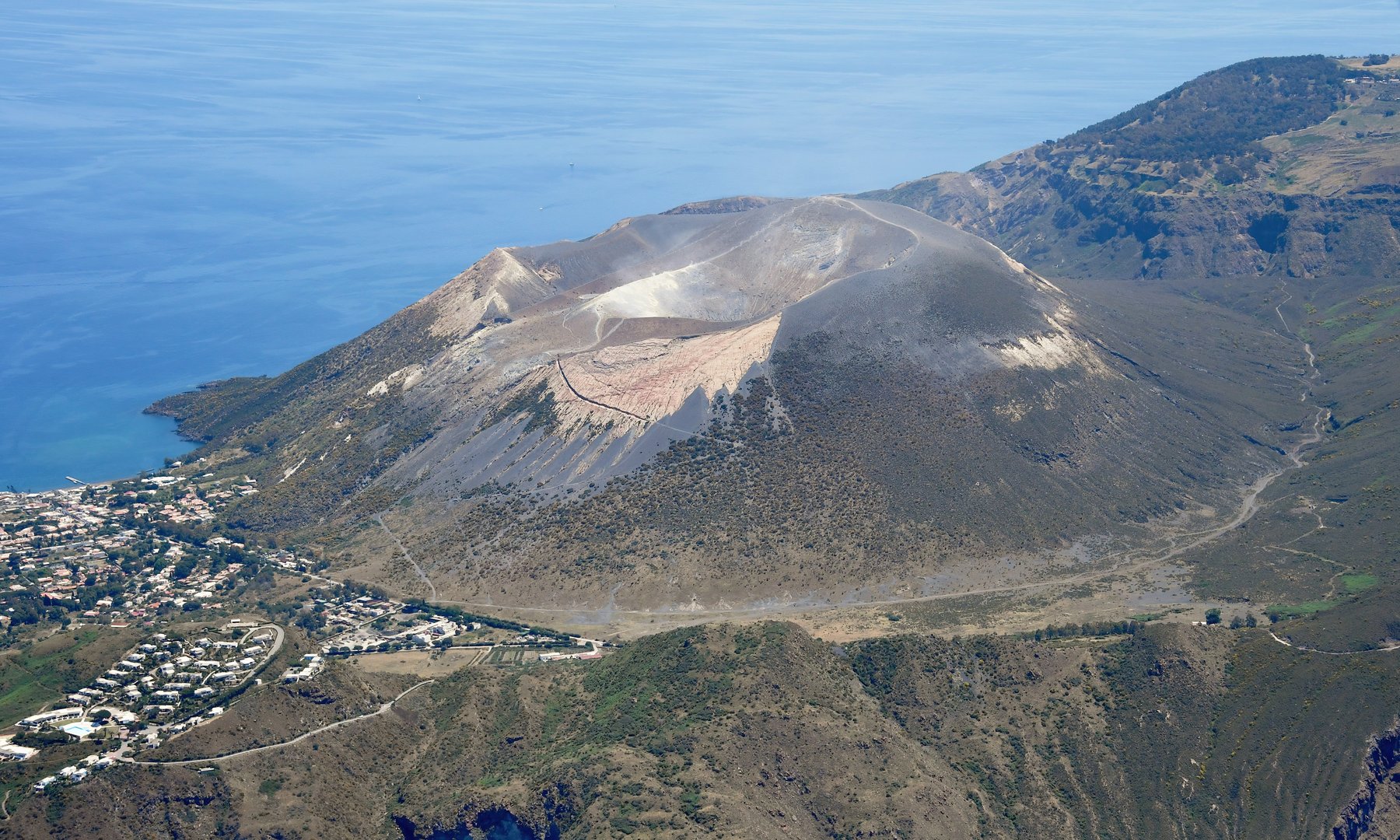
Vulcano is the southernmost of the Aeolian Islands and the one that hits you hardest on arrival: the smell of sulphur drifts across the harbour before you've even stepped off the hydrofoil. The island is technically still active — not in a Stromboli-throwing-lava way, but in a steady, geological grumble of fumaroles, bubbling mud, and geothermally heated sea.
The two things that draw people here are obvious from the moment you land. First: the hot springs at the northern tip of the island, a short walk from the port. You wade into a shallows that is genuinely warm, surrounded by clouds of sulphurous steam, with other visitors sitting like eggs being slowly poached in yellow-tinged water. It sounds absurd and it is, but it's also oddly wonderful. Go early in the morning before the day-trip boats from Lipari arrive. Bring a swimsuit you don't mind staining yellow.
Second: the crater. The hike up to Gran Cratere takes about 45 minutes from the port along a well-worn path, and the top delivers views across the whole archipelago — Lipari, Stromboli, even the Sicilian coast on a clear day. The crater itself is enormous, its rim studded with yellow sulphur crystals and streaked with vivid ochres and reds. Smoking vents hiss at your feet. It is, without question, the most dramatic landscape in the Aeolians.
Most visitors come as a day trip from Lipari, which is the sensible approach — Vulcano has almost no tourism infrastructure and the guesthouse situation is basic at best. The island rewards a full half-day: do the hot springs first, walk up to the crater before lunch, then catch the hydrofoil back. Bring water and sunscreen; the crater path is exposed.