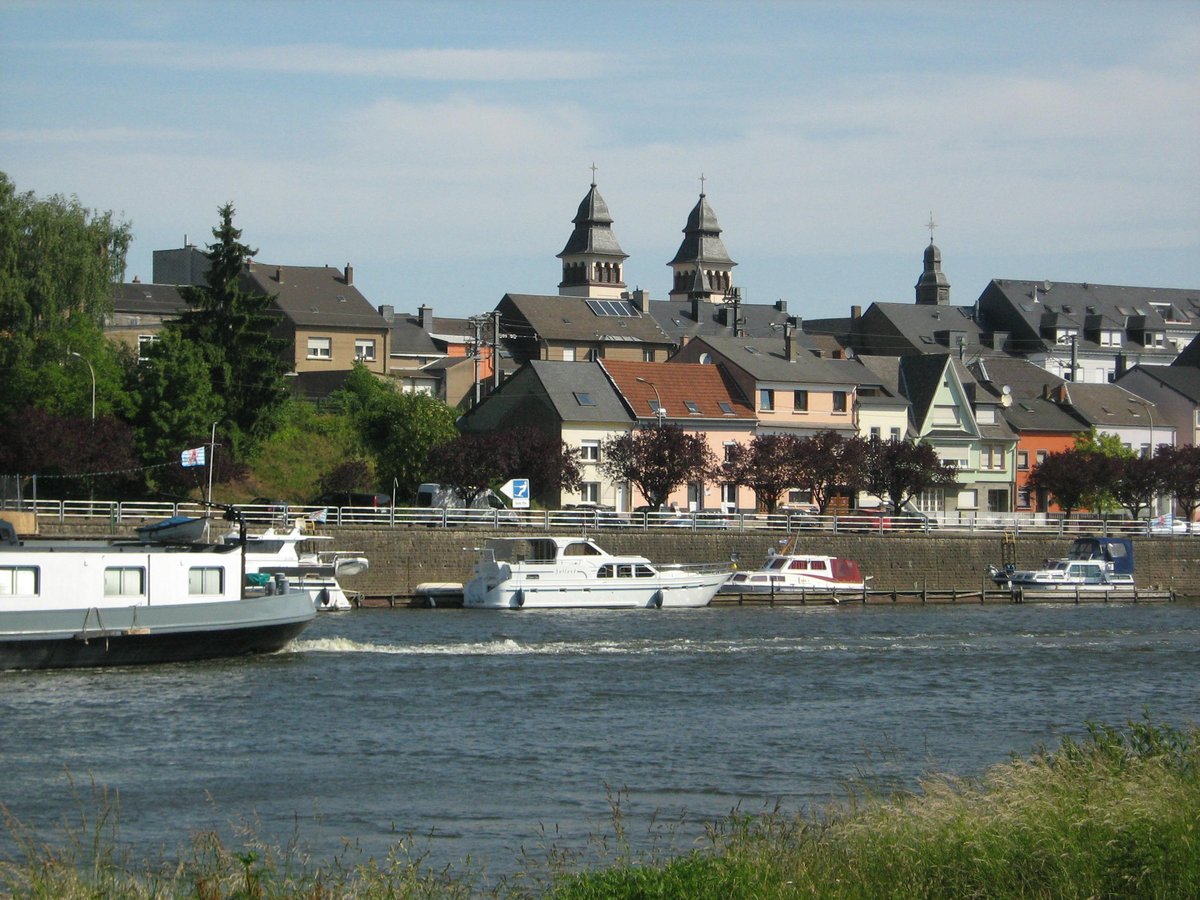
Wasserbillig sits at the confluence of the Sûre and Moselle rivers, right on the German border in eastern Luxembourg. It is a transit town at heart -- many Germans cross the bridge to fill up on cheaper fuel, and most travellers pass through on their way somewhere else. But the setting in the Moselle valley, with vineyard-covered slopes rising on both sides of the river, gives it more charm than its reputation suggests.
The town is a convenient stop on the Moselle cycling route, which follows the river between Luxembourg City and Trier in Germany. The riding is flat and easy, the path is well maintained, and there are regular spots to stop for a glass of the local Riesling or Elbling wine. The Aquatower, a distinctive modern water tower with a viewing platform, offers panoramic views over the confluence and the surrounding valley.
Wasserbillig itself has a couple of restaurants and cafes near the river. The Wasserbillig Aquarium on the riverbank is worth a stop, particularly for families — it focuses on native Moselle and Sûre species rather than tropical fish. The Butterfly Garden (Jardin des Papillons) in nearby Grevenmacher, about five kilometres south along the Moselle, makes for a pleasant short trip. The town is well connected by rail, sitting on the Luxembourg City to Trier line, which makes it easy to reach without a car.