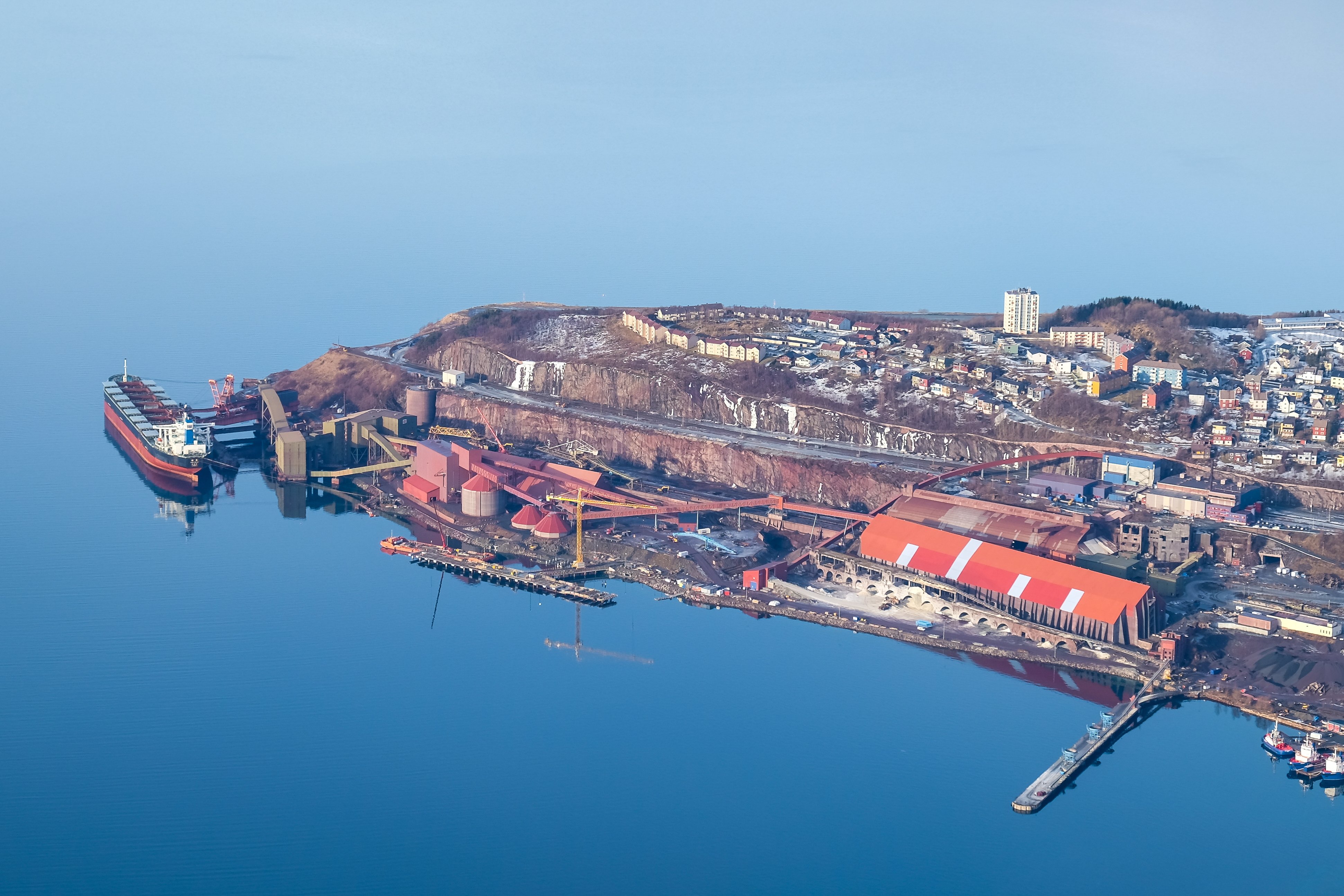
Narvik is a port city on the Ofotfjord in northern Nordland county, opposite the Lofoten Islands. The city of around 18,000 people owes its existence to the iron ore mines of northern Sweden — it was founded in 1887 as the Atlantic shipping port for the Kiruna and Gällivare mines and is still one of the world's northernmost ice-free ports. Narvik sits at one of Norway's narrowest points, just a few kilometres between the ocean and the Swedish border.
The dramatic terrain — mountains dropping steeply into deep fjord valleys — makes Narvik excellent for outdoor pursuits. Alpine skiing at Narvikfjellet is superb, with runs that descend almost to sea level, and the same cable car carries summer visitors up for a midnight-sun view across the Ofotfjord. The Ofotbanen railway to Sweden is one of the great rail journeys of Europe; the Ofotbanen line winds spectacularly through tunnels and bridges up to the border. In summer, the midnight sun lights up hiking, fishing, and mountaineering. From late autumn to winter, killer whale safaris follow the herring into the fjords.
Narvik's World War II history is remarkable. The city fell to the Germans on April 9, 1940, and the subsequent Battles of Narvik — fought to deny Germany access to Swedish iron ore — were among the fiercest of the Norwegian campaign. A British expeditionary force briefly retook the port in May–June 1940 before being evacuated. The Narvik War Museum tells the story well, and for scuba-certified divers, several sunken German warships, including the Z2 Georg Thiele, lie within reach in the surrounding waters.