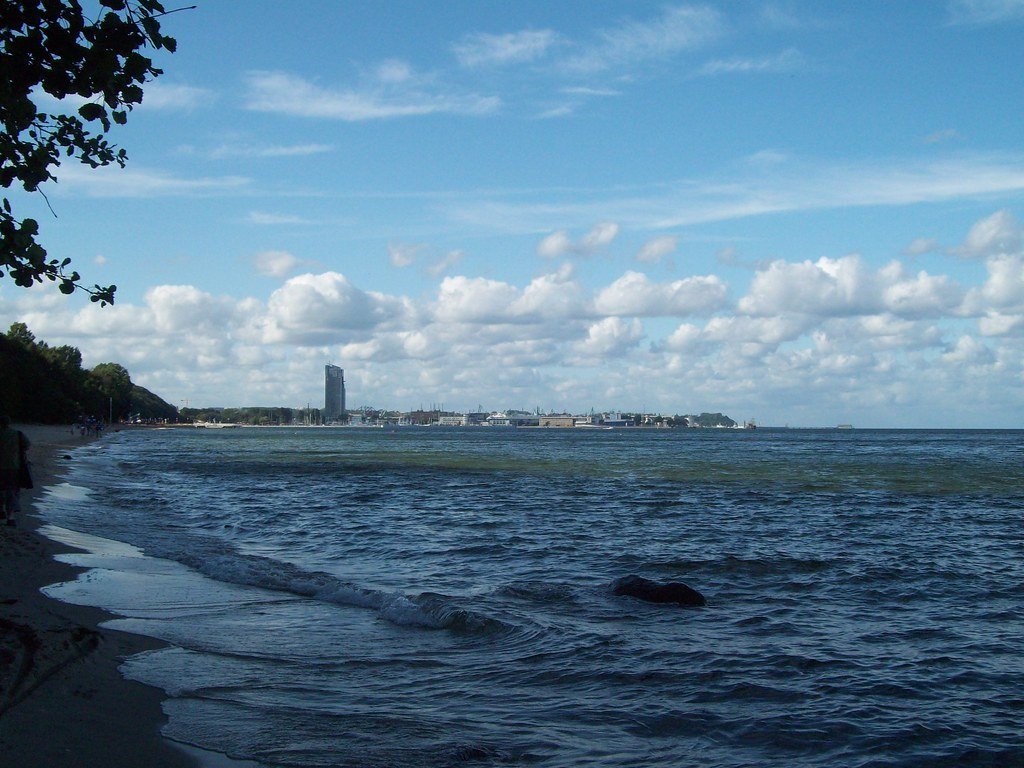
Gdynia is the youngest of the Tri-City trio — together with Gdańsk and Sopot, it forms a continuous urban strip along the Bay of Gdańsk on Poland's Baltic coast. While Gdańsk has medieval streets and Sopot has its seaside promenade, Gdynia's identity is rooted in the 20th century. The city was built almost from scratch in the 1920s after Poland regained independence and needed its own port. The result is a city with a striking collection of modernist architecture and a harbour that still feels like the engine of the place.
The waterfront is the heart of Gdynia. The Southern Pier stretches out into the bay past two museum ships — the tall ship Dar Pomorza and the destroyer ORP Błyskawica, both open to visitors. Behind them, the Emigration Museum in the old marine station tells the story of the millions of Poles who sailed from this port to new lives in the Americas. The Gdynia Aquarium sits at the foot of the pier; the twin glass Sea Towers rise immediately behind.
Further along the coast, the cliffs of Kępa Redłowska offer wooded walking trails with views over the water; the Orłowo beach, backed by a wooded cliff, is one of the nicest on the Polish coast. The forested inner-city hill of Kamienna Góra — reached by a free funicular — gives the best view over the harbour.
Gdynia hosts the Polish Film Festival each autumn and has a lively cultural scene for a city its size. Getting between the three Tri-City towns is easy on the SKM commuter train, which runs every few minutes — you can have breakfast in Gdynia, lunch in Sopot, and dinner in Gdańsk without ever needing a car.