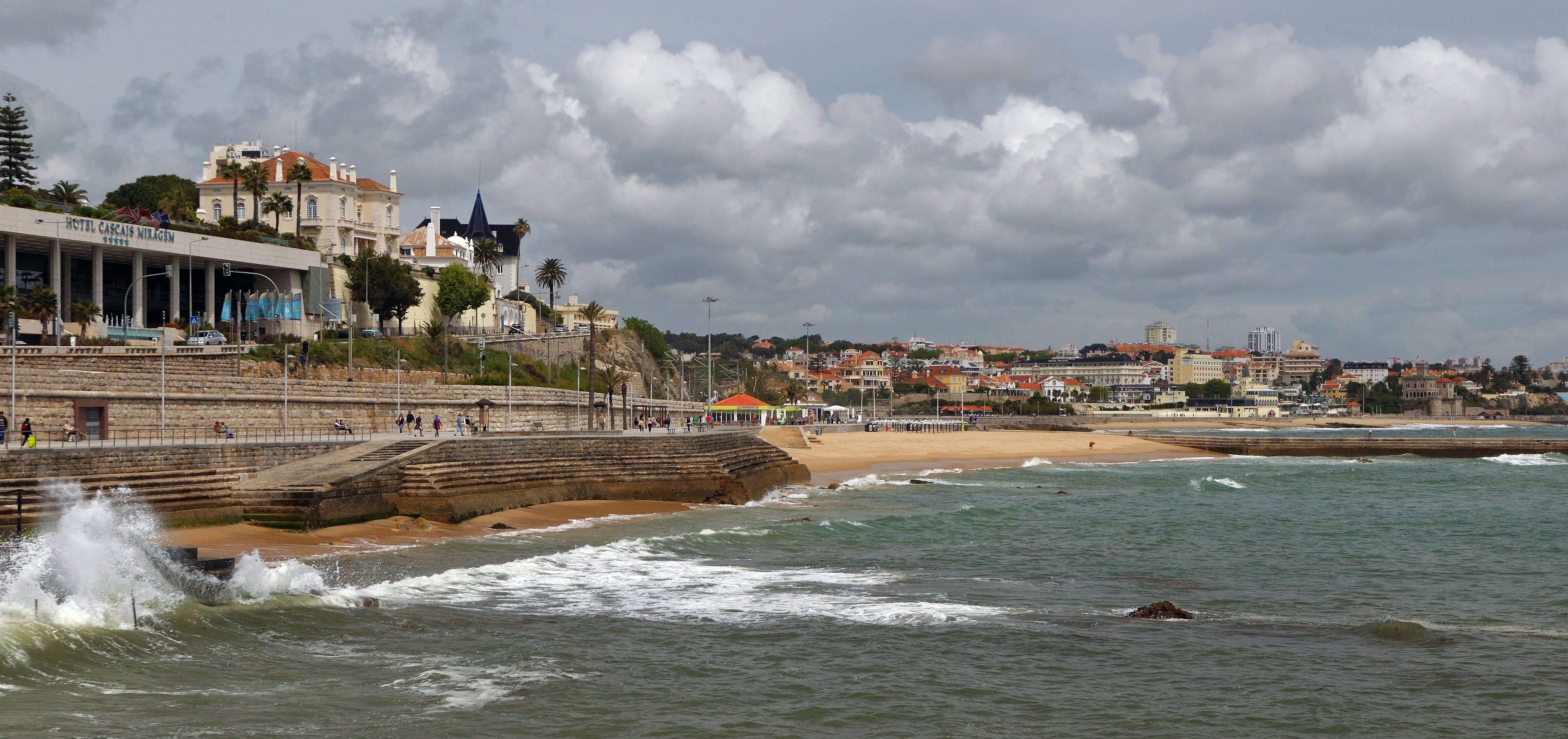
Cascais is a small coastal town about 30 kilometres west of Lisbon, where the Tagus estuary meets the open Atlantic. It spent much of the nineteenth and early twentieth centuries as Portugal's royal resort — King Luís I built a summer palace here in the 1870s — and it has kept something of that genteel character ever since.
The old town is compact and walkable, with cobbled lanes, whitewashed houses, and a working fishing harbour sitting alongside boutique restaurants and pavement cafes. The seafront promenade runs along three small bays, each with a sandy beach, and on a fine day the light off the water is remarkable. The Boca do Inferno — a dramatic sea cave a short walk west of town — draws visitors who come to watch waves crash into the rocks, and the Cidadela de Cascais anchors the harbour end of the old town. Two excellent small museums — the Museu dos Condes de Castro Guimarães and the Casa das Histórias Paula Rego, in Souto de Moura's striking red-pyramid building — bracket a town that punches above its weight culturally.
Cascais is an easy day trip from Lisbon by train, and many visitors arrive for the afternoon and leave by evening. Those who stay overnight find a quieter and more relaxed town once the day crowds have thinned. It makes a comfortable base for exploring the Sintra hills inland, the windswept beaches at Guincho, and the dramatic coastline running west to Cabo da Roca, the westernmost point of mainland Europe.