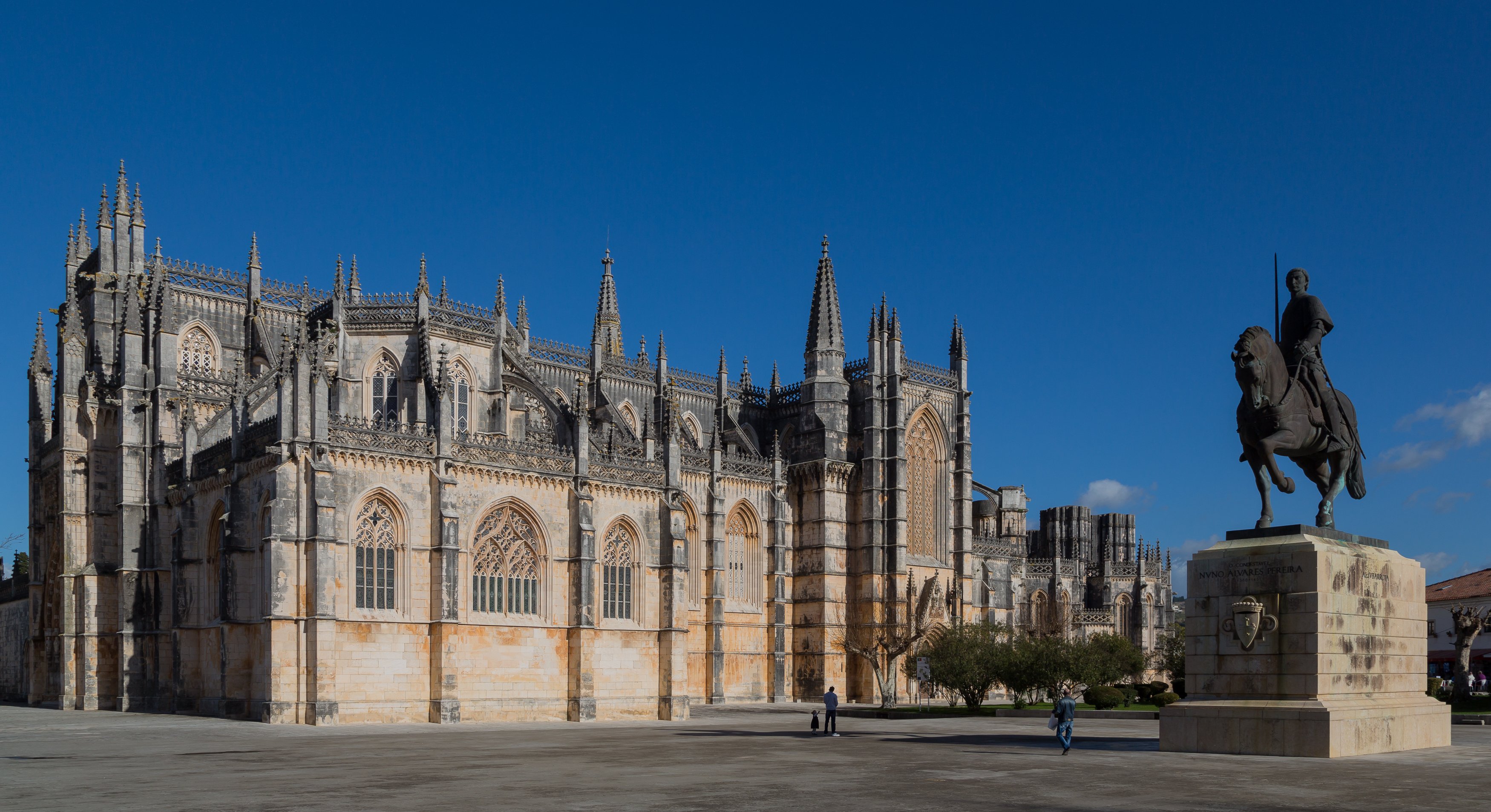
Batalha exists for its monastery. The town is otherwise a quiet country place of 7,000 in the Leiria district of central Portugal — a single main square, a couple of cafés, a stretch of low whitewashed houses — but the Mosteiro da Batalha is one of the great Gothic buildings in Europe. King João I commissioned it in 1386 to thank the Virgin Mary for victory at the Battle of Aljubarrota, fought a few kilometres south the year before. Construction continued for more than 150 years across the reigns of seven Portuguese kings, accumulating layers of Gothic, Manueline, and Renaissance work, none of it finished and all of it extraordinary.
The monastery is a UNESCO World Heritage Site and the reason almost everyone comes. The Founder's Chapel, with the joint tomb of João I and Philippa of Lancaster — the marriage that anchored the Anglo-Portuguese alliance still in force today — is the architectural highlight. The Unfinished Chapels behind the apse, roofed by sky, contain some of the most ambitious Manueline stone carving in the country. The Royal Cloister is delicate enough to look fragile.
A short walk away, the Tomb of the Unknown Soldier honours Portuguese dead from the First World War and the colonial wars, guarded around the clock in the Chapter House. The smaller Igreja da Exaltação de Santa Cruz on the main square is the town's parish church, worth a glance after the monastery.
Batalha is most often visited as a stop on the route between Fátima and Alcobaça, or as a day trip from Leiria or Coimbra. Two to three hours is enough for the monastery and a coffee. Combined with Alcobaça and Tomar, it makes a satisfying day of Portugal's three great monastic complexes.