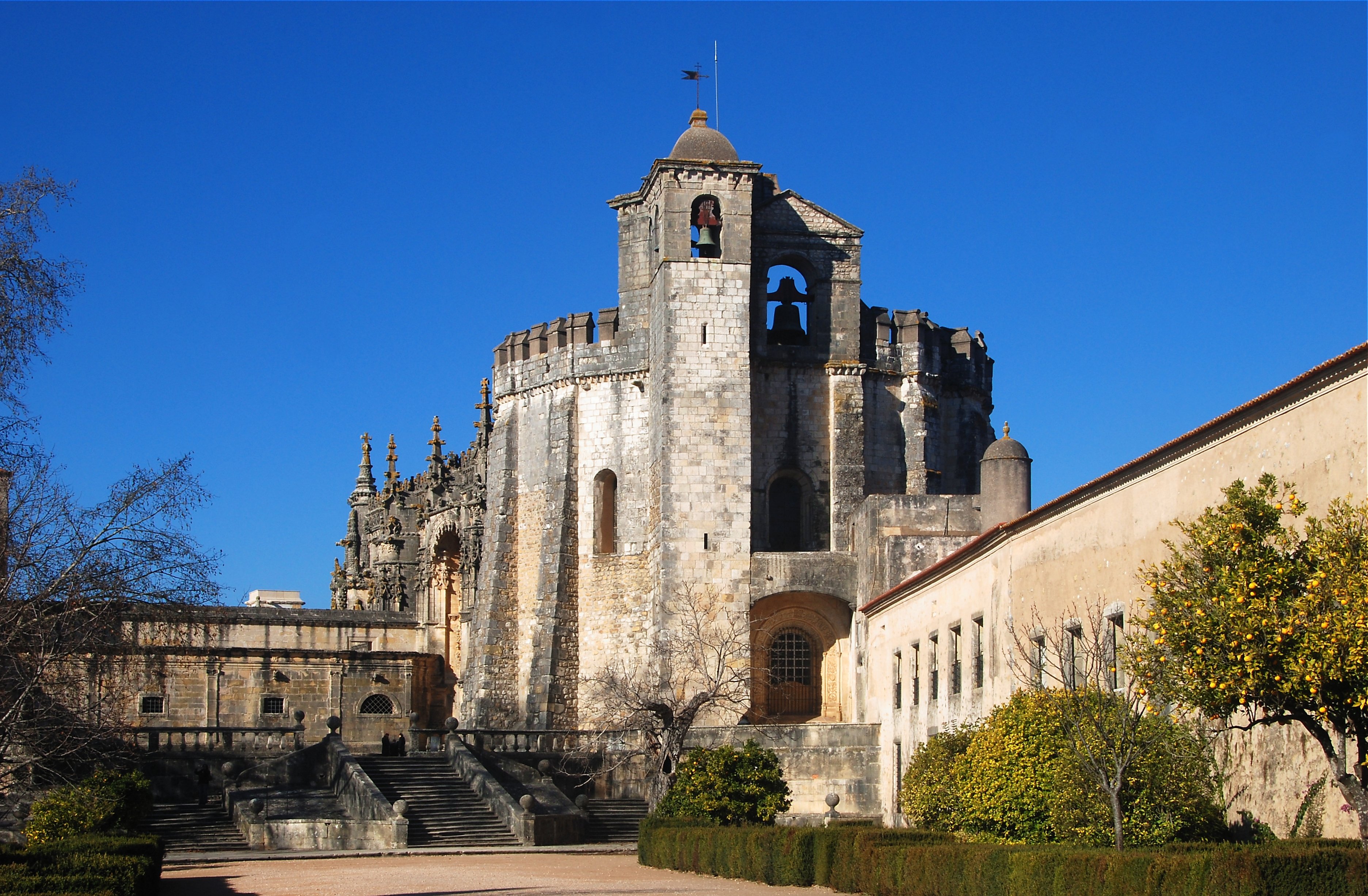
Tomar sits astride the Rio Nabão in the heart of Portugal's Ribatejo province, its past written into the stone of a hilltop that the Knights Templar chose as their headquarters in the twelfth century. What they built there — a fortified convent of astonishing ambition — became one of the greatest monuments of the Portuguese Age of Discovery and draws visitors from around the world. Yet the town below the castle hill is quiet, provincial, and genuinely pleasant: a grid of low white houses, a main square with a pelourinho, and a riverside park where locals take their evening walk.
The Convent of Christ crowns everything. This UNESCO World Heritage Site began as a Templar stronghold and kept growing for five centuries under successive architectural fashions, producing a layered marvel of Romanesque, Manueline, Renaissance, and Gothic styles, all within a single complex. The centrepiece is the Charola — a sixteen-sided Templar chapel where knights could hear Mass without dismounting — and the Manueline window on the chapter house is among the most photographed ornaments in Portugal. Come early or late; crowds arrive in force by mid-morning.
Down in the town, the Synagogue of Tomar is a rare survivor from medieval Iberian Jewish life. Built in the early fifteenth century, it functioned as a place of worship for barely a generation before the forced conversions of 1497 and the subsequent expulsions ended Jewish life in Portugal. The building survived as a prison, a granary, and a chapel before being designated a national monument; it is now a small museum and one of the best-preserved medieval synagogues on the peninsula.
Tomar's other pleasures are more modest. The Matchbox Museum (Museu dos Fósforos) at the Convento de São Francisco holds what is claimed to be Europe's largest collection of matchbox labels — over 60,000 of them, assembled by a Franciscan friar with an inexhaustible appetite for the ephemeral. The Aqueduct of Pegões just outside town is a handsome seventeenth-century engineering work, 6 kilometres long, built to supply water to the convent. Walk or cycle along the road beneath it.