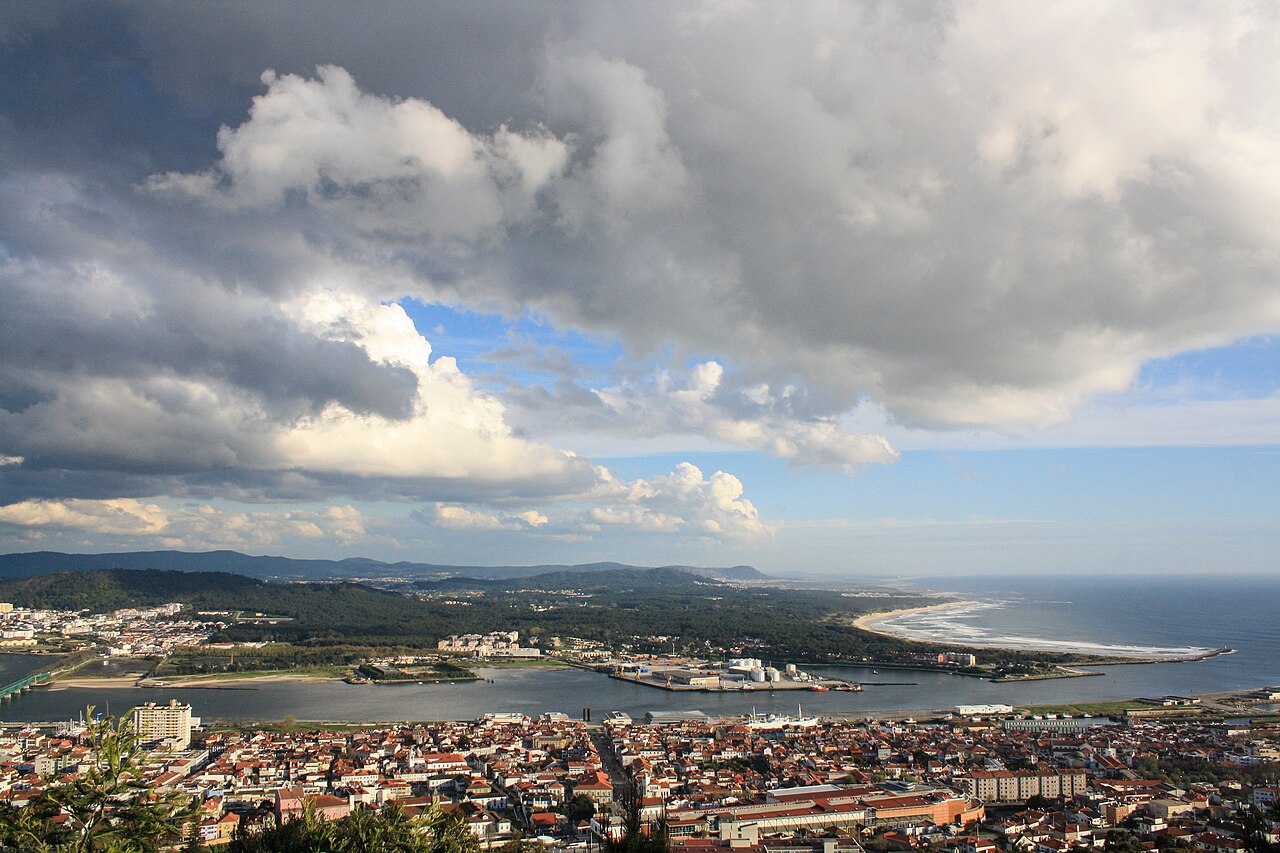
Viana do Castelo sits where the Rio Lima meets the Atlantic, a handsome northern Portuguese city with medieval bones and a dramatic hilltop church watching over it all. Founded in 1258, it grew wealthy on cod fishing and colonial trade, and the old centre still shows it — ornate Manueline facades, wrought-iron balconies, and a compact web of streets that reward aimless wandering.
The city's crown jewel is the Basilica of Santa Luzia, perched on the hill above town. You can take the funicular up or walk the steep path through the pines. The views from the top — across the city, the river estuary, and the coast — are among the finest in Portugal. At the summit you will also find the ruins of the Citânia de Santa Luzia, a pre-Roman Iron Age hillfort whose circular stone foundations are still clearly legible.
Down in the centre, the Praça da República anchors everything. The 15th-century cathedral, the Renaissance Igreja da Misericórdia, and the old town hall cluster around this square and the streets radiating from it. On the waterfront, the hospital ship Gil Eannes — once the floating clinic for Portugal's Grand Banks cod fishermen — is now a museum and hostel. A short walk south, the Ponte Eiffel crosses the Lima on iron lattice girders designed by Gustave Eiffel's company in 1878. Viana is small enough to cover on foot in a day, but the food and the setting tend to make people stay longer than they planned.