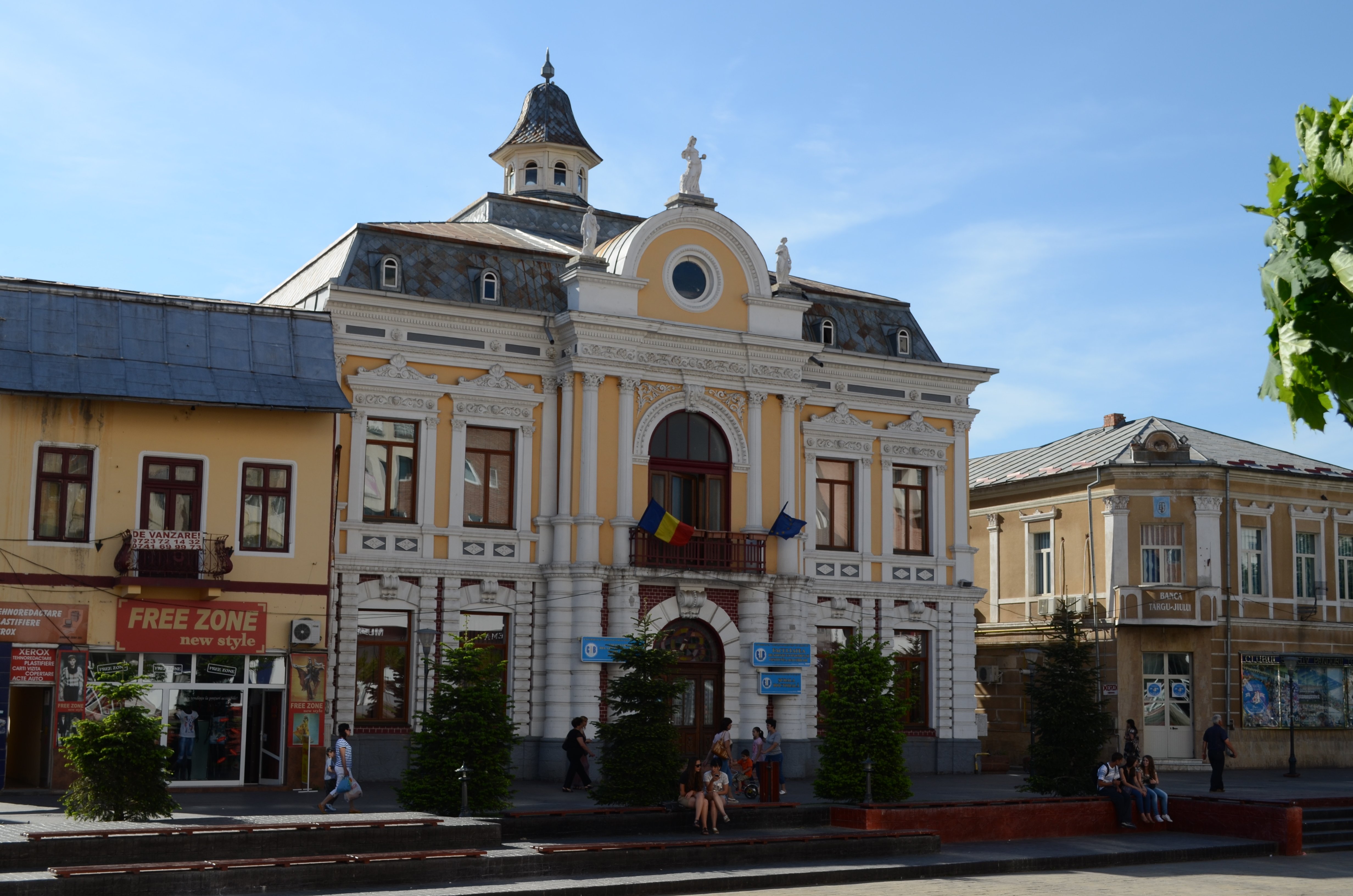
Târgu Jiu is a small city in the Jiu Valley of southwestern Romania, and it would be entirely unremarkable if not for one thing: Constantin Brâncuși was born nearby, and in 1937–38 he created an extraordinary ensemble of monumental sculptures here that ranks among the most important public art in Europe.
The three works — the Table of Silence, the Gate of the Kiss, and the Endless Column — are arranged along a 1.3-kilometre axis running through the city from the Jiu River eastward. The ensemble was designed as a memorial to the Romanian heroes of the First World War, and every element is precisely calculated: the hourglass seats around the Table represent souls, the kiss motifs on the Gate symbolise union and sacrifice, and the Column rises as if it might extend infinitely upward. Walking the axis from west to east takes twenty minutes and is one of Romania's most affecting experiences.
The city itself is a modest regional centre. The Gorj County Museum has good Dacian period collections, and the Church of the Holy Archangels on Piața Victoriei is worth a look. Most visitors come for the sculptures alone, and that is reason enough. For committed Brâncuși enthusiasts, the village of Hobița, 24 kilometres south, is the sculptor's birthplace.