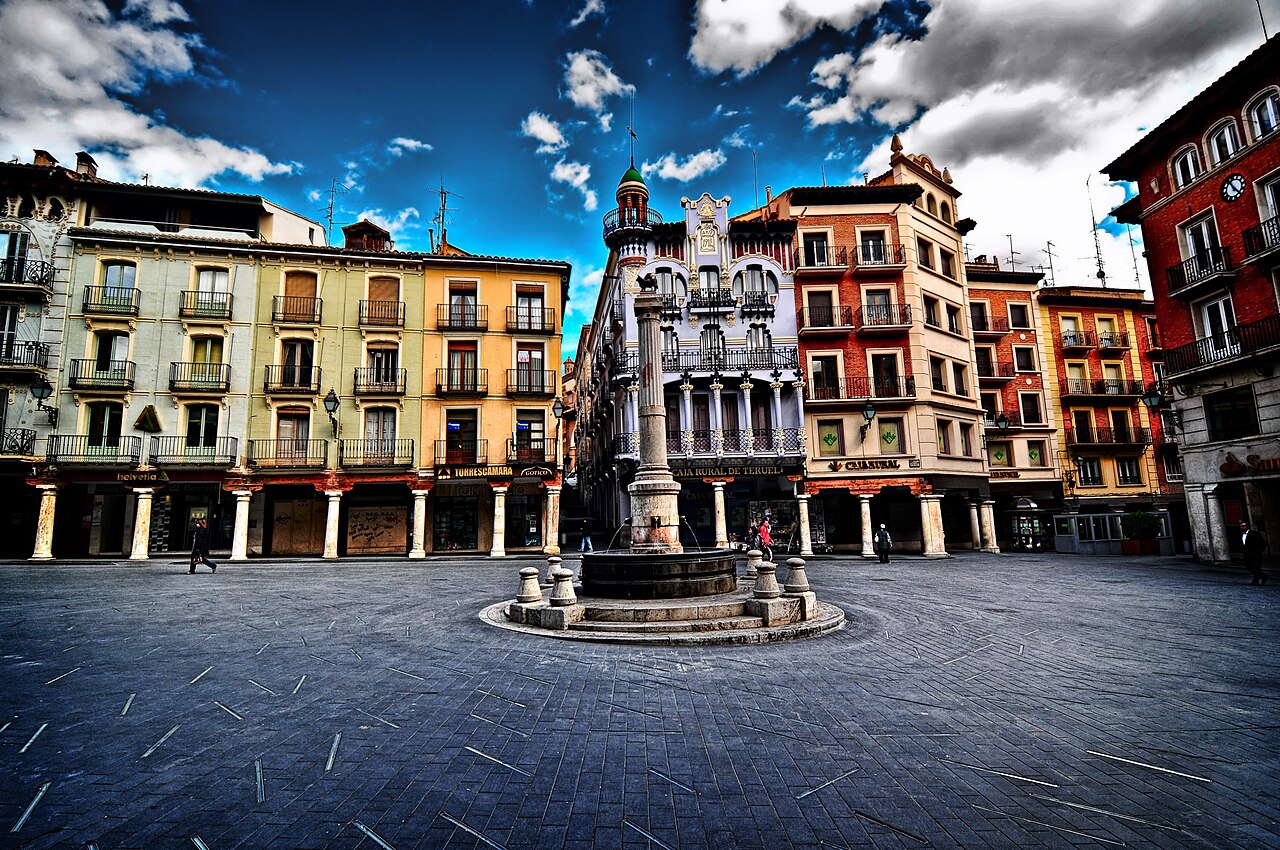
Teruel is a small provincial capital in Aragon, perched on a high plateau between Madrid and Valencia. It's not large and its sights aren't far apart — you can cover the highlights on foot in a day. What makes it remarkable is its collection of Mudéjar architecture: four towers decorated in elaborate geometric brickwork and glazed ceramic tiles, all dating from the 13th to 16th centuries and collectively named a UNESCO World Heritage Site. The finest is El Salvador Tower, which you can climb for views across the city; San Martín Tower, the Cathedral, and the tower of San Pedro complete the quartet.
The city is also famous for its medieval love story — the Lovers of Teruel (Los Amantes), Diego and Isabel, whose tragic tale of forbidden love and death rivals Romeo and Juliet. Their mausoleum in the church of San Pedro is one of the most visited sites in the city. The Escalinata del Óvalo — a monumental Neo-Mudéjar staircase connecting the train station with the old town — is an impressive architectural introduction to the place, and the Los Arcos Aqueduct, a Renaissance structure designed to look Roman, spans the ravine at the city's edge.
The Museo Provincial de Teruel is consistently underrated; its Iberian-age collection from the 6th to 4th centuries BCE is of outstanding quality, and the Renaissance building is worth seeing in its own right. For something more unexpected, Dinópolis on the city's outskirts covers the region's remarkable dinosaur heritage — Teruel province is one of Europe's richest Mesozoic fossil sites. Teruel is compact enough to make a comfortable day trip from Zaragoza or Valencia, though it rewards an overnight stay.