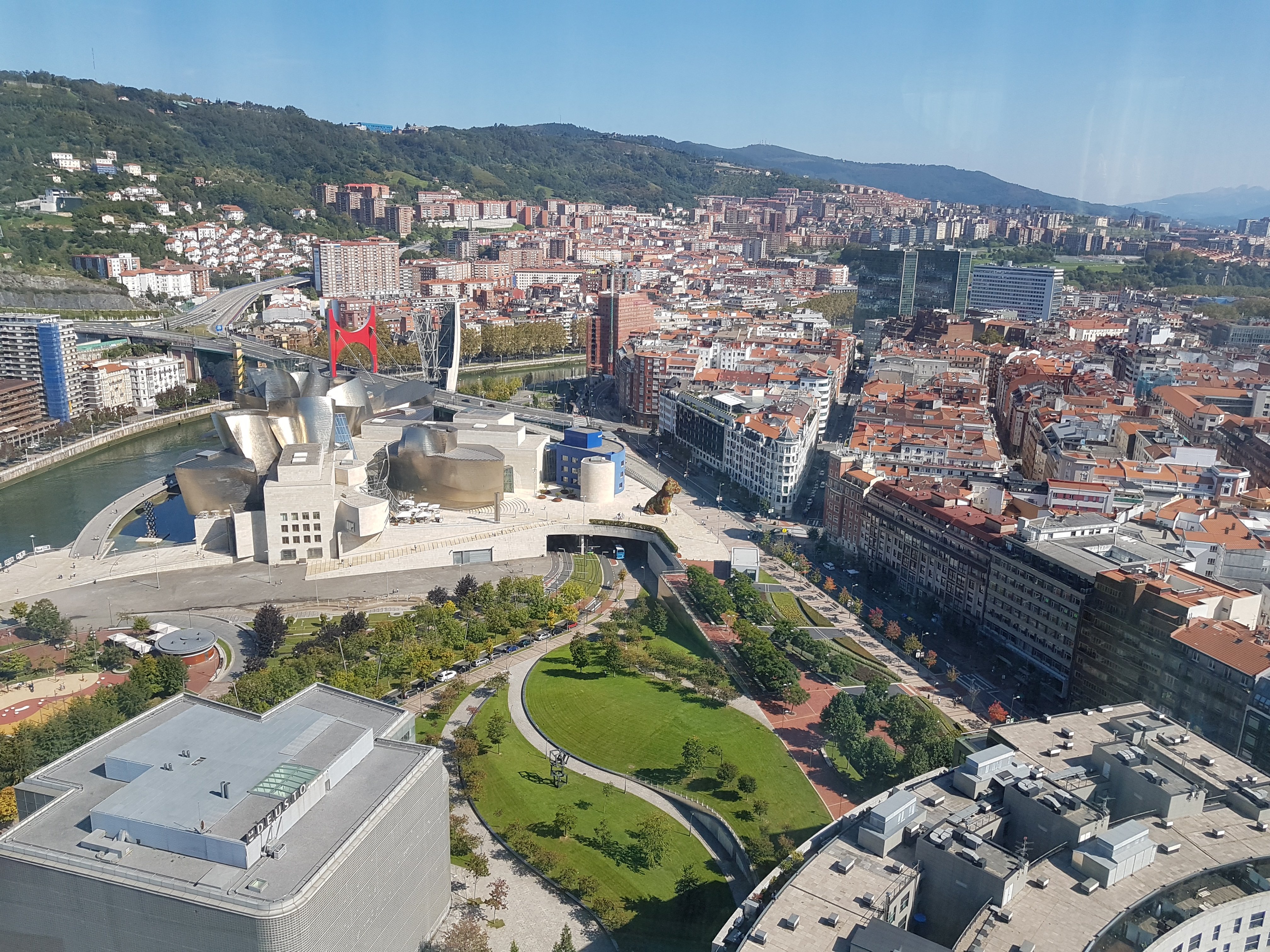
Bilbao is the largest city in the Basque Country and the industrial heart of northern Spain — a gritty port on the Nervión river that spent most of the 20th century producing steel and shipping it out to the world. Then, in 1997, Frank Gehry's Guggenheim Museum Bilbao opened on the waterfront, and the city changed overnight. The building — a swirling, titanium-clad explosion that looks different from every angle and shimmers like a fish in the rain — is genuinely one of the most important pieces of architecture built in the last fifty years, and the art inside (large-scale contemporary installations, with a permanent Richard Serra room that justifies the trip on its own) matches the exterior's ambition.
But Bilbao is not just the Guggenheim. The city has used the museum as a catalyst for a broader transformation that has turned the whole riverfront from derelict docks into a handsome promenade of parks, bridges (including Santiago Calatrava's Zubizuri footbridge), and new buildings. The Casco Viejo (old town), on the opposite bank, is a dense grid of narrow streets centred on the seven original calles (streets) of medieval Bilbao, full of pintxo bars, small shops, and the 14th-century Gothic Cathedral of Santiago. The covered Mercado de la Ribera, the largest indoor market in Europe, sits on the riverbank at the edge of the old town and is worth a morning for the fresh produce, the pintxo counters, and the building itself.
The pintxos are the other essential Bilbao experience. The bars of the Casco Viejo — particularly along Calle Ledesma, Calle del Perro, and the Plaza Nueva — lay out elaborate small plates on the counter every evening, and the tradition is the same as in San Sebastián: walk from bar to bar, eat one or two at each, drink txakoli or a small beer (zurito), and keep moving. The food quality is exceptional. The Museo de Bellas Artes next to the Doña Casilda park is often overlooked by Guggenheim visitors but holds a serious collection of Spanish Old Masters and Basque painters.
The Bilbao Metro is worth riding just for the architecture — the glass entrance canopies, nicknamed fosteritos, have become city icons in their own right. And the drive or bus ride from Bilbao to San Sebastián along the Basque coast, past the fishing villages of Lekeitio, Getaria, and Zarautz, is one of the finest coastal roads in Spain.