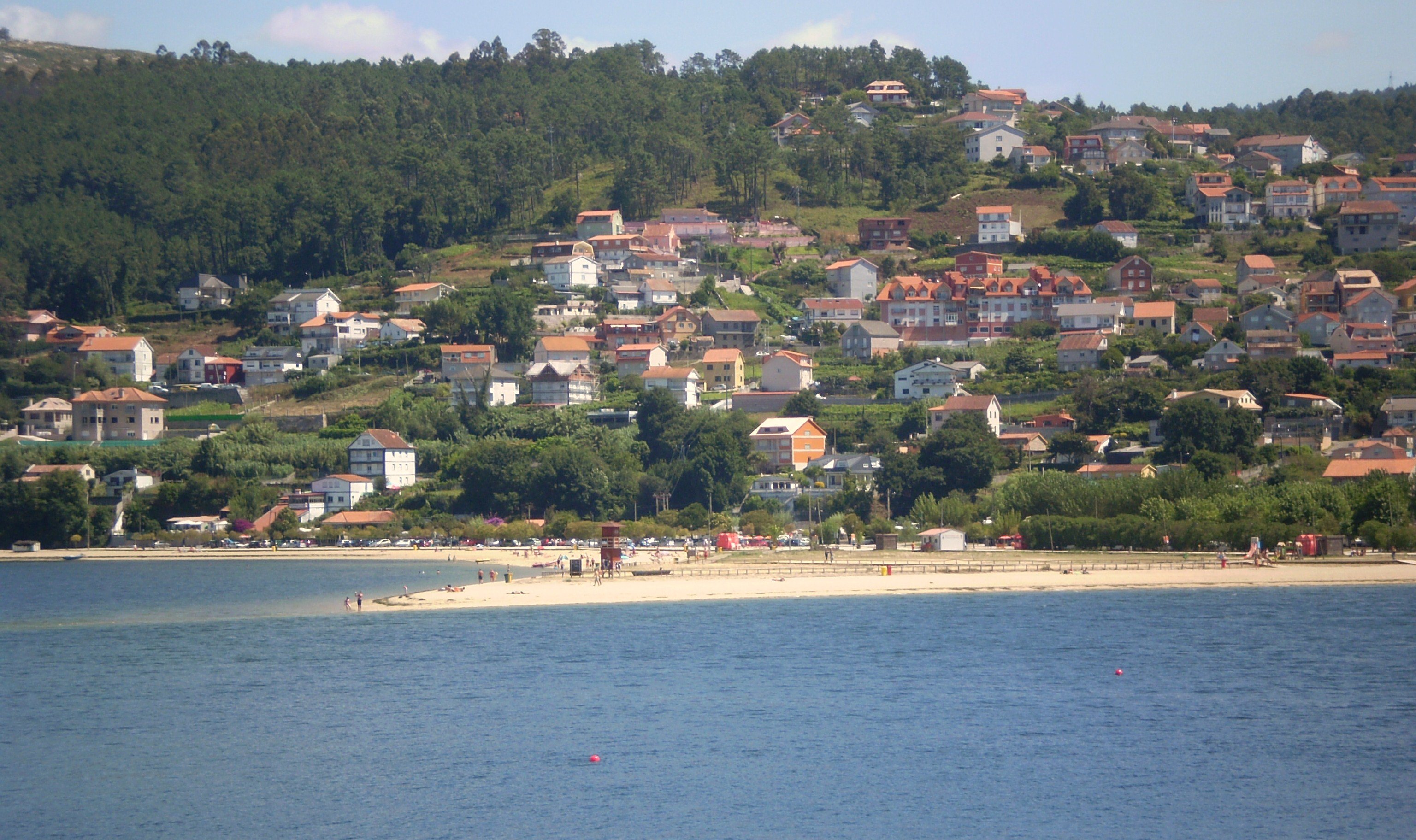
Redondela is a small town on the inner shore of the Ría de Vigo, in the southwest corner of Galicia. It is best known for its dramatic railway viaducts — the Viaduct of Madrid and the Viaduct of Pontevedra, two 19th-century stone arched bridges that carry the main Vigo–Ourense line high above the town. Their reflection in the ría below is a striking image, and the sound of a train crossing overhead from the streets below is one of those small, memorable travel moments.
The town sits on the Camino Portugués, the Portuguese route of the Camino de Santiago, and pilgrim traffic passes through year-round. The Festa da Coca in late June — a midsummer celebration involving a dragon effigy parading through the streets — is one of the livelier local festivals in the province. The Colexiata de Santiago at the heart of the old town is the pilgrims' traditional stop.
The ría coast here is mussel and clam country. The choco (small cuttlefish) is the local specialty and the subject of its own spring gastronomy festival. Just offshore lies the Isla de San Simón, a small island with a layered history — monastery, quarantine station, Civil War prison — now a protected natural area you can visit by boat in summer. The historic cemetery of Os Eidos, up on the hill above town, has been voted the most beautiful cemetery in Spain and is worth the short walk. Redondela is a short train or bus ride from Vigo and makes a very good day trip.