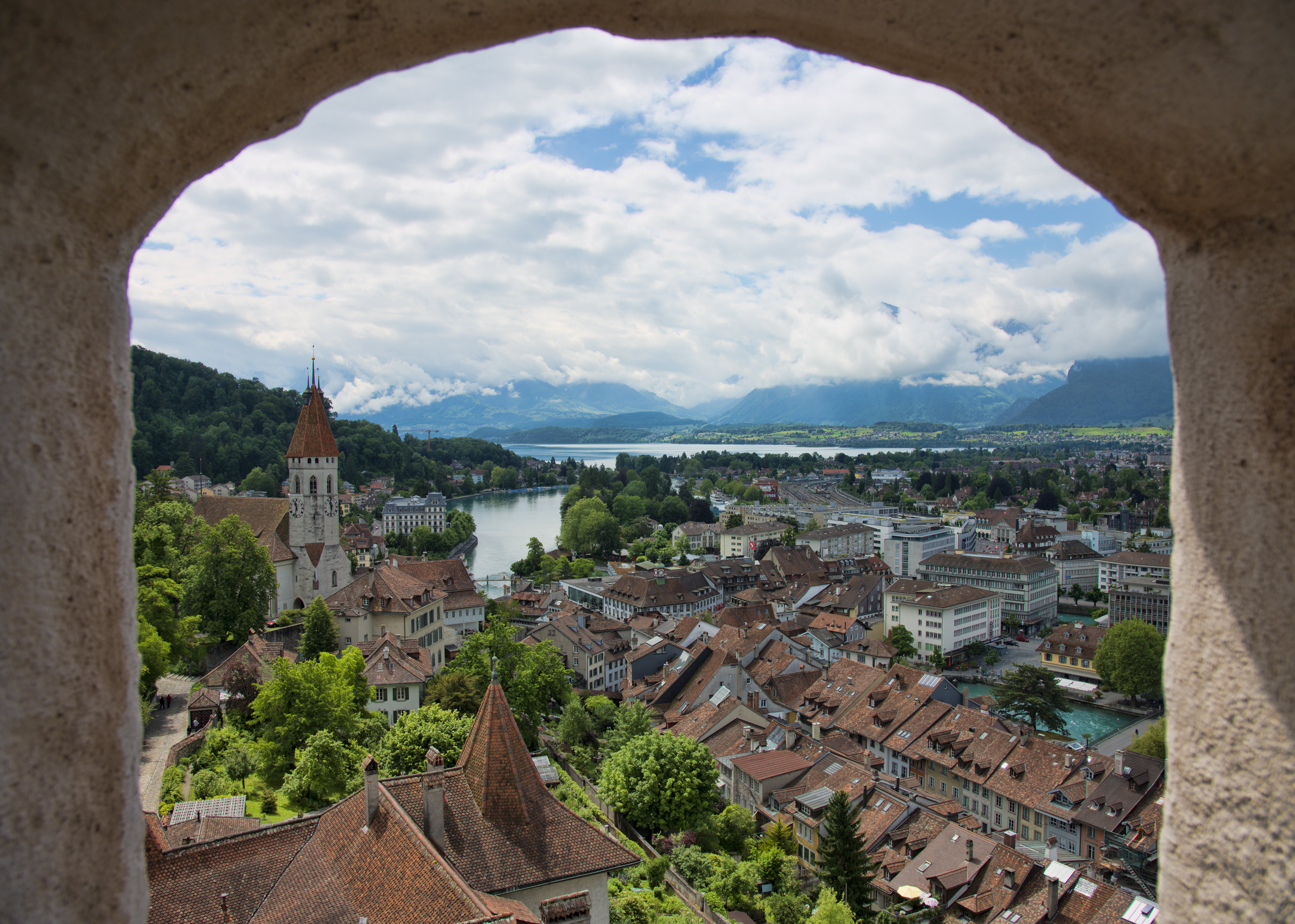
Lakeside Swiss city and Bernese Oberland gateway, with a castle-topped old town above the Aare.
Thun is a small city of around 40,000 at the northwest end of Lake Thun, just 20 minutes by train from Bern. It is the gateway to the Bernese Oberland — Interlaken, Grindelwald, and the Jungfrau region are all easily reached from here — and has more character than its transit-hub status might suggest.
Thun Castle, built in 1191, is the dominant feature of the old town. Today a museum, it sits on a hill above the river with views over the rooftops to the lake and the Alps beyond. The old town centre has barely changed in centuries: the Rathausplatz still has its massive 16th-century city hall, and the Hauptgasse is famous for its two-level layout, with shops at street level and a raised pedestrian walkway running along the first-floor arcades. The covered wooden bridges over the Aare and the flower-filled ramparts add to the medieval character.
One sight that most visitors miss entirely: the Wocher Panorama in the Kunstmuseum — a 360-degree cylindrical painting of Thun as it appeared in 1814, the oldest surviving panorama painting in the world.
Lake Thun offers boat trips, swimming, and kayaking in summer. Paddle-steamer cruises connect Thun with Spiez and Interlaken. At the southern end of town, Schadau Castle and its lake-view park make a perfect afternoon walk. On the south shore of the lake, Hünegg Castle at Hilterfingen is one of the best-preserved 19th-century interiors in Switzerland.
Guide
Day Trips
Thun's position on the main Bern–Interlaken rail line makes it an ideal base. Interlaken is 30 minutes by train, giving access to the Jungfrau railway and the mountain villages of Grindelwald and Lauterbrunnen. Bern, the Swiss capital, is 20 minutes north and easily done in a day.
Spiez, on the south shore of Lake Thun, is worth a short visit for its own castle and the beautiful bay below it — reachable in 15 minutes by train or 45 minutes by paddle steamer. The lake cruise from Thun to Interlaken via Spiez (about 2.5 hours) is one of the most scenic boat journeys in Switzerland.
Guide
When to Go
Thun is a year-round destination, but the seasons make a significant difference. Summer (June to August) is when the lake is at its best for swimming and boat trips, the Thunerseespiele runs its open-air shows, and the mountain views are clear. The Bernese Oberland has its best hiking weather from late June through September.
Spring is excellent: the snowmelt feeds the Aare, the castle gardens and Schadau park are in flower, and crowds are thin. May is arguably the best month — long days, mild temperatures, and the old town nearly to yourself.
Winter in Thun is mild by Swiss standards — the lake moderates temperatures and heavy snowfall in the town itself is uncommon. The Christmas market on the Rathausplatz is one of the better ones in the region. Ski resorts in the Bernese Oberland are a short train journey away.