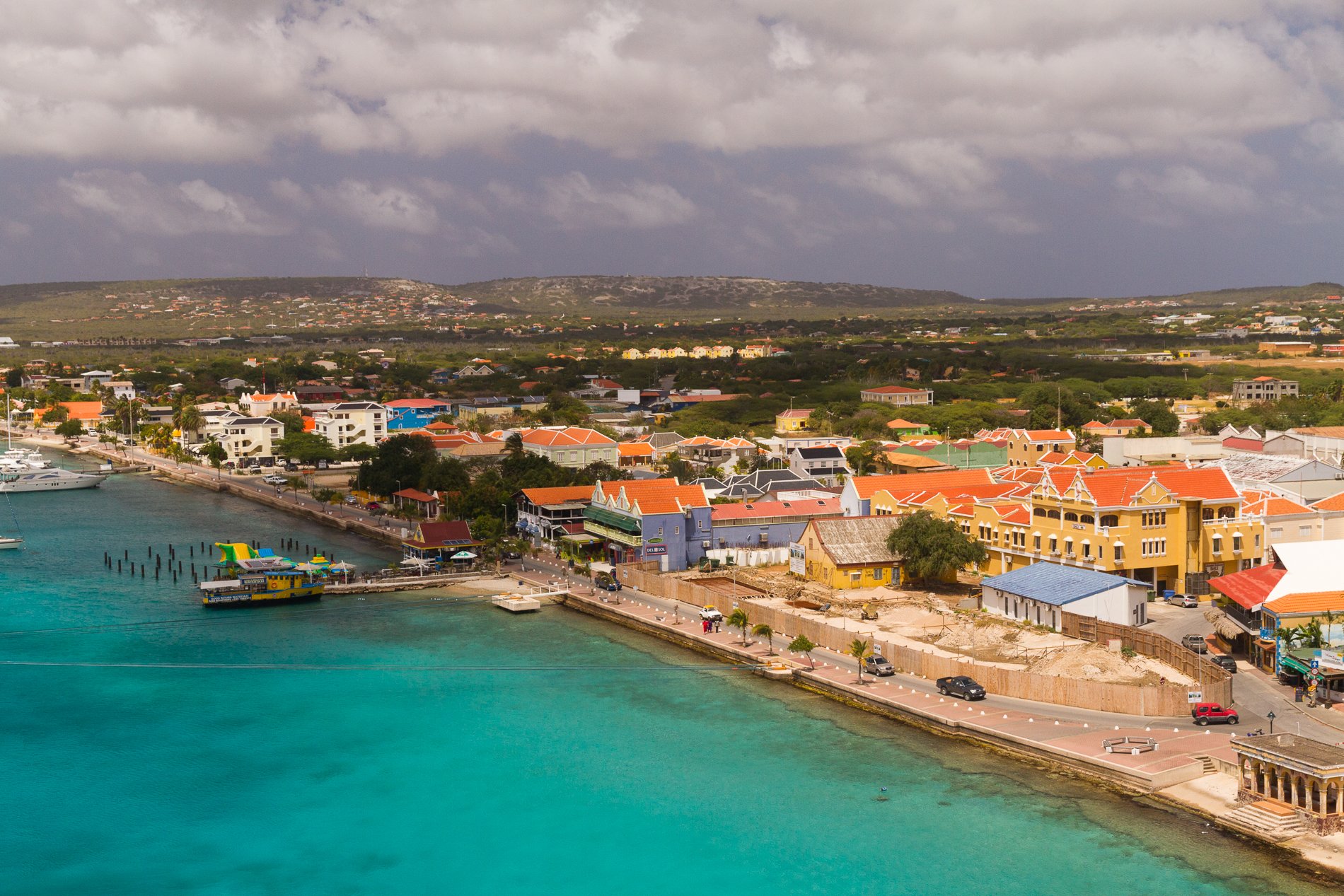
Bonaire is the quietest of the ABC islands, a dry strip of cactus country wrapped in protected Caribbean water. Diving shapes travel here, but not in the usual resort-island way: numbered yellow stones beside the coast mark shore entries, pickup trucks carry tanks in the back, and much of the best reef lies only a short swim from the road.
The Bonaire National Marine Park protects the sea around the main island and Klein Bonaire. First-time visitors should start with an easy snorkel or dive, then work up to the reef wall at 1000 Steps, the fish-filled pillars of Salt Pier, or the Hilma Hooker wreck. The freedom is real, but so is the responsibility: pay the nature fee, use the marked entries, and do not stand on coral.
Kralendijk, usually called Playa, is the practical base and the only place that feels even slightly urban. Its low waterfront is pleasant once the cruise crowds leave. Rincon, tucked into a northern valley, carries more of the island's cultural life through its food, festivals, and places such as Mangazina di Rei.
The two road loops are as important as the towns. Northbound, the coast passes 1000 Steps and Gotomeer before reaching Washington-Slagbaai National Park, a long, rough drive through cactus scrub, beaches, salt lakes, and the island's highest ground. Southbound, the road runs between open sea and working salt pans, past the slave huts and obelisks that make the human cost of that landscape impossible to ignore.
On the east coast, shallow Lac Bay catches the trade wind and supports mangroves as well as windsurfing. The island is expensive, public transport is close to nonexistent, and a car is hard to avoid. It is also easy to understand: allow the reef to set the pace, give the north and south a day each, and do not treat everything above water as an interval between dives.