Poteau (pronounced "puh-TOE") is the county seat of LeFlore County in southeastern Oklahoma, set in a valley nearly encircled by mountains: Sugar Loaf Mountain to the east, the Winding Stair range to the south, and Cavanal Hill to the west — which lays claim to being the world's highest hill at just under 548 metres. The distinction is dubious, but the setting is genuine.
The area has a deep pre-Columbian history. Between 500 and 1300 AD, the Spiro people built ceremonial mounds across the valley, and the Spiro Mounds Archaeological Center east of town is one of the most significant Native American archaeological sites in the country. Nearby, the Heavener Runestone — a carved stone bearing what may be Norse runes — has generated a century of debate about pre-Columbian European contact; it now sits in a state park.
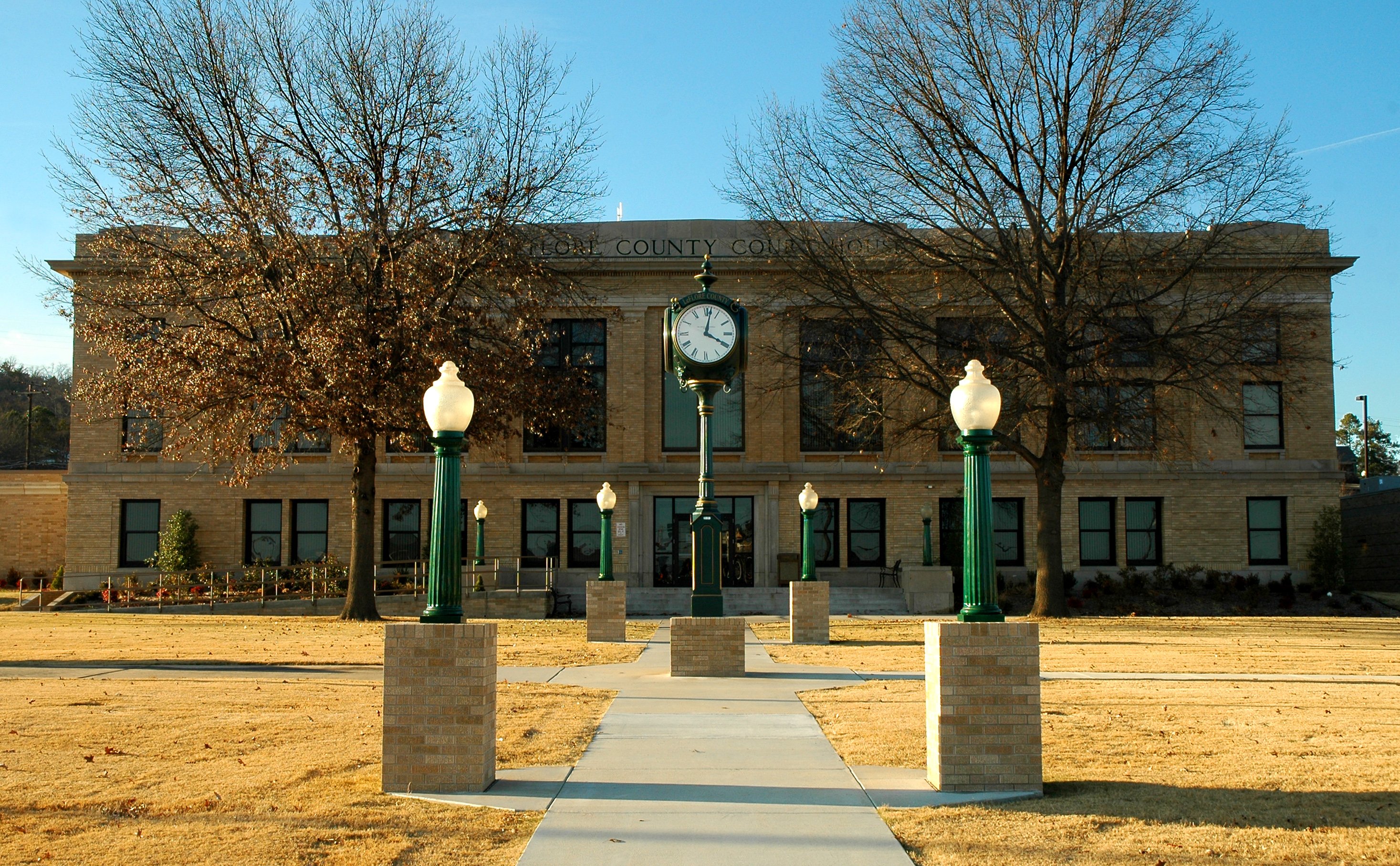
The Kerr Museum holds a wide-ranging collection covering the full history of the Poteau River Valley, from Spiro Mound artifacts to an improbably large collection of barbed wire (over 300 types). Carl Albert State College, founded in 1933, was the first two-year community college in Oklahoma and the first public school in the state to fully integrate. Downtown, the 1926 LeFlore County Courthouse and the old Hotel Lowrey anchor a modest historic centre.
The Talimena National Scenic Byway begins just south of town, climbing through the Ouachita Mountains with long views across the forested ridgelines — best in mid-October when the hardwoods turn.