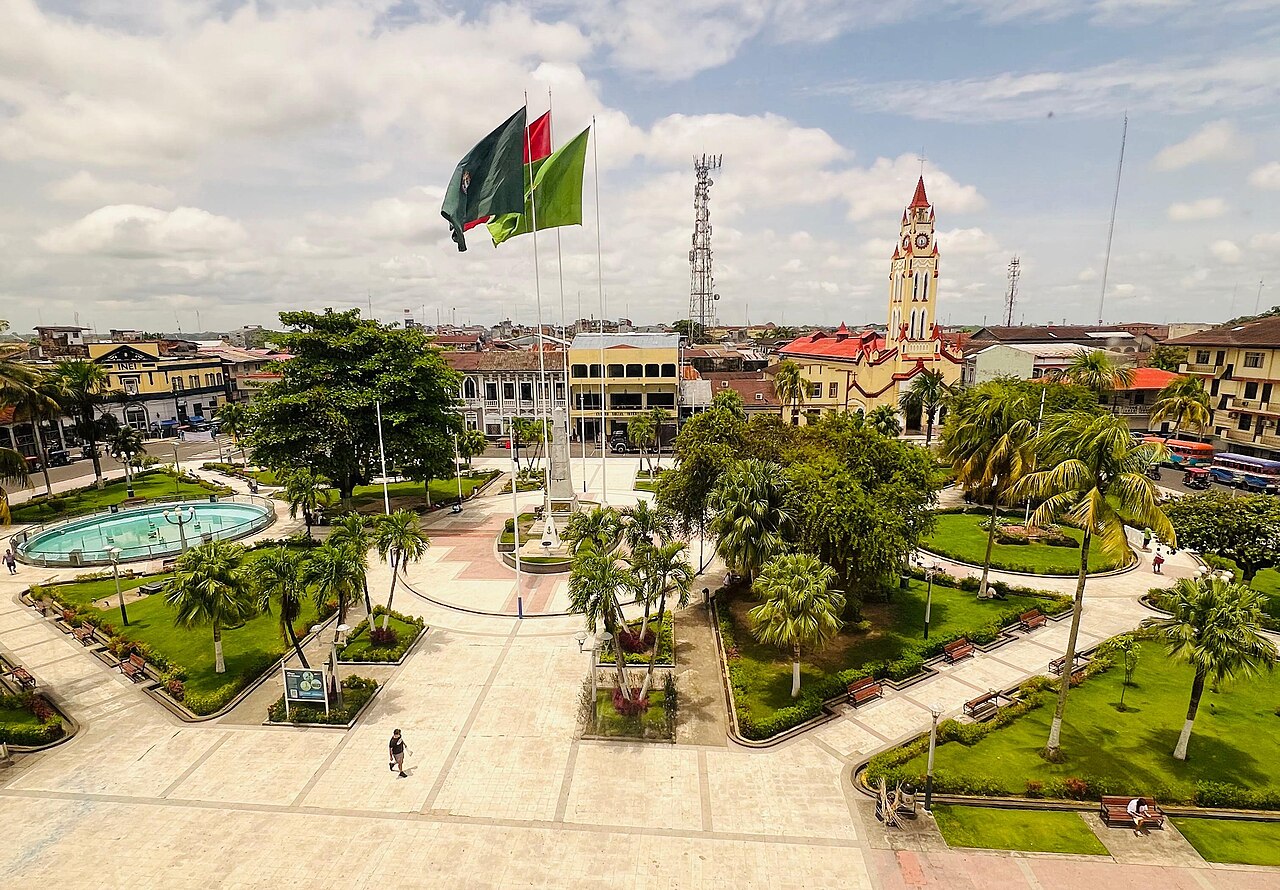
Iquitos is the largest city in the world that cannot be reached by road — the only access is by river or air. It sits on the west bank of the Amazon in the heart of the Peruvian rainforest, and serves as the main gateway to the Peruvian Amazon. In the late 19th century it was the centre of a rubber boom that made it briefly one of the richest cities on the continent; the ornate mansions and the Iron House on the Plaza de Armas — prefabricated in France by Eiffel's company and shipped upriver — are the most visible legacy. The Ayapua Boat Museum nearby houses a working river steamer from 1906 that hauled rubber for decades.
Today the city is a base for jungle lodges and river expeditions. The Pacaya-Samiria National Reserve, the largest protected wetland in Peru, lies to the southwest and is accessible by river. Day trips run to Belén, the floating village built over the Amazon floodplain on the city's southern edge, and to Lake Quistococha 14 km south. The Malecón Tarapacá is the riverside promenade where the city gathers in the evenings. The city has a good range of restaurants and a lively waterfront scene.